+86-400-1866-598 cs@chinasteelmarket.com +86-18864881658 (Whatsapp&Wechat)
Login | Register
Empowering small and medium-scale steel purchasing
Quickly obtain FOB/CIF price
Home > Articles

 Articles

Short News
15/05 17:26
< Welded Steel Pipe, size: DN125(5"*4.0mm), grade: Q235(ASTM A36 Gr.D), brand: YOUFA. Tianjin - Gangrui reduction by --30.03 tons
15/05 17:24
< Shipbuilding Steel Plate, size: 8, grade: CCSB(ABS-B), brand: WUGANG. Shanghai - Caoan reduction by --29.92 tons
15/05 17:21
< Seamless Steel Pipe, size: Φ325*9, grade: 45#(ASTM 1045), brand: YANGTERIVER. Liaocheng - Pipe City reduction by --40.51 tons
15/05 17:20
< On May 15, the price of stainless steel welded pipe rose in Tianjin. 316L Youfa Φ219*4 (Pickled) 4898.43, up 191.23. (USD/ton)
Read More
15/05 17:19
< On May 15, the price of cold heading steel in Jiaxing remained stable. 22A (SWRCH22A) Magang Φ6.5 (hot rolling) 514.85. (USD/ton)
15/05 17:18
< On May 15, the price of stainless steel strip coil in Foshan did not fluctuate significantly. 304/NO.1 Dingxin 3.0*485-730 (hot rolled, slit edge) 2206.50. (USD/ton)

Answers

  • What are the essential steel performance indicators to consider when selecting materials?

    Steel performance parameters directly affect its engineering applicability.

    Strength:
    Yield Strength (ReH): The stress value at which steel begins to undergo plastic deformation. For example, the yield strength of Q235 steel is ≥235MPa (GB/T 700-2006).
    Tensile Strength (Rm): The maximum stress that steel can withstand before fracture. For example, the tensile strength of 45# steel is ≥600MPa (GB/T 699-2015).

    Plasticity:
    Elongation (A): The percentage elongation of the specimen after fracture in a tensile test. The elongation of ordinary carbon steel is typically ≥20% (GB/T 228.1-2021).
    Reduction of Area (Z): Reflects the material's ability to deform locally; the Z value of high-quality alloy steel can reach over 50%.

    Toughness:
    Impact Energy (KV): The energy absorbed by the specimen at fracture in a Charpy impact test, measured in Joules (J). Temperature Effects: Steel toughness decreases at low temperatures, necessitating the selection of high-toughness materials such as 9Ni steel used in LNG storage tanks.

    Strength, plasticity, and toughness are key properties of steel; actual material selection requires a comprehensive evaluation considering operating conditions, cost, and processing technology.


  • How effective is hot-dip galvanizing in protecting steel?

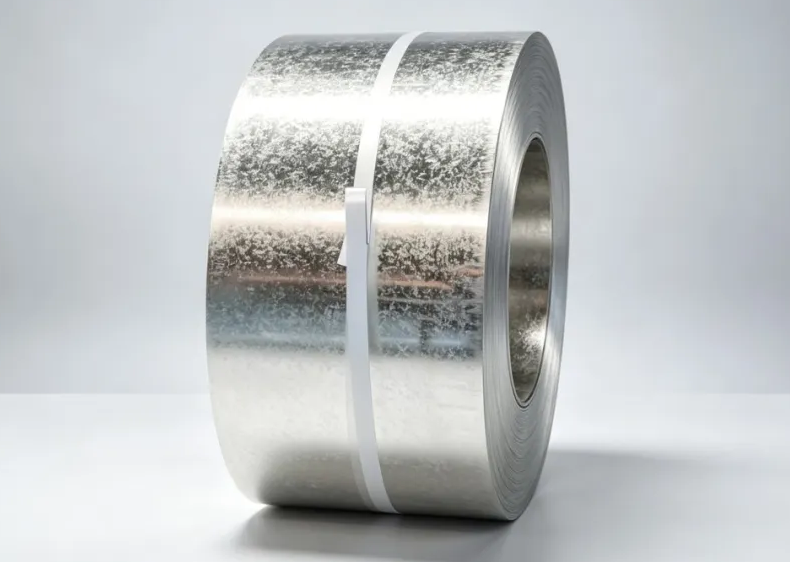
    Hot-dip galvanized coatings offer far better protection for steel than paint or plastic coatings. During hot-dip galvanizing, zinc diffuses between the zinc and steel to form an intermetallic compound layer, i.e., an alloy layer.
    When the galvanized layer has small cracks or damage, the zinc continues to prevent the steel at the crack or damage site from rusting into a sacrificial anode. This is the main feature that makes the galvanized layer superior to other coatings.
    Because zinc can dissolve in acids and strong alkalis, hot-dip galvanizing is only suitable for general atmospheric and natural water environments. When the zinc plating comes into contact with air and water, it will undergo slight electrochemical corrosion. In rural areas and areas with relatively clean air, the galvanized coating can last for many years, while in polluted industrial areas and coastal areas, the service life of the galvanized coating is shorter. Furthermore, the thicker the coating, the longer the service life; the service life is almost directly proportional to the thickness. 


  • Which is more corrosion-resistant, tinned steel coil or galvanized steel coil?

    The answer to whether tinned steel coil or galvanized steel coil is more corrosion-resistant is not absolute. It depends on whether the coating is intact or damaged.

    With intact coating: Galvanized steel coil is very corrosion-resistant; tinned steel coil is extremely corrosion-resistant and has a bright, stable finish, making it practically food-grade safe.

    With damaged coating: In galvanized steel coil, the reactive zinc will corrode preferentially, protecting the steel and making it more corrosion-resistant; in tinned steel coil, the steel at the damaged area will corrode faster than before plating, posing a very high risk of corrosion.


Timely Info Independent Platform Multiple guarantees Self-operated storage

China Steel Market

Empowering small and medium-scale steel purchasing


How can I help you?