+86-400-1866-598 cs@chinasteelmarket.com +86-18864881658 (Whatsapp&Wechat)
Login | Register
Empowering small and medium-scale steel purchasing
Quickly obtain FOB/CIF price
Home > Articles

 Articles

Short News
09/05 17:21
< On May 9, the price of angle steel in Tangshan rose slightly. Q235B (ASTM A36) Zhengfeng 125*125*10mm 505.68, up 8.82. (USD/ton)
Read More
09/05 17:18
< On May 9, the price of shipbuilding steel plates in Shanghai rose slightly. CCSB (ABS-B) Shougang 8mm 590.94, up 7.35. (USD/ton)
Read More
09/05 17:14
< On May 9, the price of galvalume steel sheet & coil in Guangzhou remained stable. DX51D+AZ150 (ASTM A792/A792M CS) Panzhihua Steel 1.0*1250*C 708.54 (USD/ton)
09/05 17:10
< On May 9, the price of hot rolled steel plate in Tangshan rose slightly. Q235B (ASTM A36) HBIS 7.5*1500*6000mm, 504.21, up 5.88. (USD/ton)
Read More
09/05 17:03
< On May 9, the price of cold rolled ribbed rebar in Nanjing rose slightly. CRB600H (ASTM A615 Grade 80) Qingyan Φ12mm 608.58, up 5.88. (USD/ton)
Read More
09/05 17:02
< On May 9, the price of hard cold-rolled coils in Shanghai rose slightly. SPCC-1B (ASTM A1008 CS) common 0.25*1000*C 577.71, up 4.41. (USD/ton)

Answers

  • What are the effects of changes in the hot-dip galvanized coating at high temperatures on its properties?

    Under high temperature conditions, the hot-dip galvanized layer will undergo a series of changes, which will affect its performance as follows: Appearance changes: High temperature may cause the color of the hot-dip galvanized layer to change, turning yellow, gray, or even black. This is because high temperatures cause the zinc layer to oxidize, generating different zinc oxides, which in turn affect the appearance and color of the coating.
    Changes in microstructure: The microstructure of the hot-dip galvanized layer changes at high temperatures. Zinc grains grow, and grain boundaries become blurred. This change in organizational structure alters the mechanical properties of the zinc layer, typically resulting in decreased hardness and increased toughness.
    Changes in corrosion resistance: Generally speaking, within a certain temperature range, the corrosion rate of hot-dip galvanized layers will accelerate as the temperature increases. This is because high temperatures accelerate the chemical reaction between zinc and oxygen, moisture, and other corrosive media in the air, and may also damage the passivation film on the zinc layer surface, reducing its protective effect on the substrate. When the temperature exceeds a certain limit, the zinc layer may peel or flake off, further losing its protective properties.


  • What precautions should be taken when storing and transporting galvanized steel sheets?

    1. The environment must be dry and well-ventilated. This is the primary condition for storage. Galvanized steel sheets must never be exposed to rain or moisture. Once water droplets condense on the surface and remain damp for a long time, the zinc layer will undergo a chemical reaction, forming a white corrosion product, also known as "white rust." White rust not only affects the appearance but can also reduce the thickness of the galvanized layer and weaken its corrosion resistance in severe cases. Therefore, ideally, they should be stored in a closed, well-ventilated indoor warehouse. If outdoor storage is necessary, the storage must be tightly covered with a good waterproof tarpaulin, and care should be taken to ensure that the tarpaulin does not fit tightly against the surface of the sheet to prevent condensation from directly contacting the sheet surface.

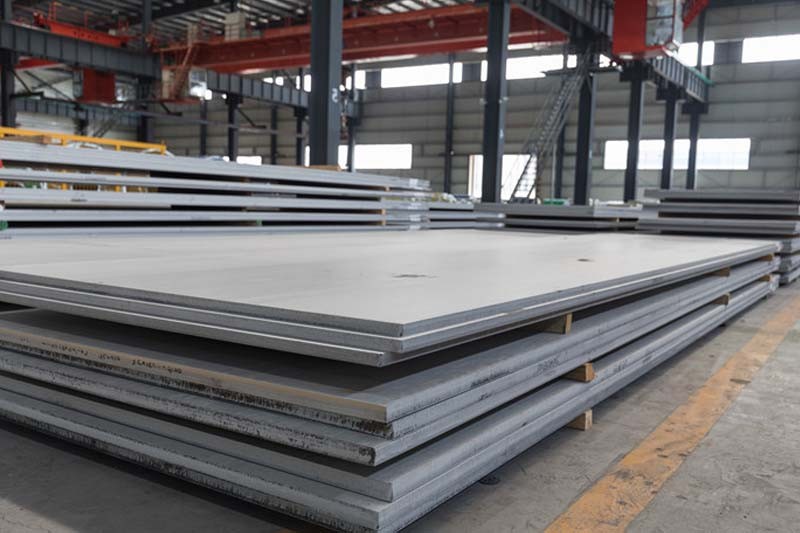
    2. The bottom must be elevated for isolation. Galvanized steel sheets must never be stacked directly on the ground. Ground moisture (dampness) is one of the main culprits of rust. When stacking, the sheets must be elevated using sleepers, rubber mats, or special padding strips. It is generally recommended to raise the sheets at least 20 cm off the ground to ensure air circulation at the bottom of the sheets and to remove moisture.

    Transportation Process:
    1. Prevent Physical Damage
    Although the galvanized layer is hard, it also has flexibility. If it is not securely fixed during transportation, the sheets will slide and rub against each other, causing scratches or abrasions that are difficult to repair. Therefore, it must be securely tied during loading to prevent displacement during long-distance travel. At the same time, "rough handling" is strictly prohibited during loading and unloading. Do not throw the sheets or allow the sharp teeth of forklifts to hit the edges, as this may cause deformation or damage to the zinc layer on the ends.

    2. Avoid Contact with Corrosive Substances
    During transportation, special care must be taken not to mix galvanized sheets with corrosive or strongly absorbent chemicals such as acids, alkalis, salts, and cement. If these substances leak or generate dust that adheres to the surface of the galvanized sheets, it will quickly cause severe localized corrosion, resulting in permanent defects.


Timely Info Independent Platform Multiple guarantees Self-operated storage

China Steel Market

Empowering small and medium-scale steel purchasing


How can I help you?