+86-400-1866-598 cs@chinasteelmarket.com +86-18864881658 (Whatsapp&Wechat)
Login | Register
Empowering small and medium-scale steel purchasing
Quickly obtain FOB/CIF price
Home > Articles > Steel Industry

Steel Industry Articles

Short News
26/12 17:10
< On December 26, the price of hot-rolled stainless steel plates in Wuxi saw a slight increase. 304/NO.1 TISCO 4.0*1500*6000 (slit edge) 1847.96, up 21.40 (USD/ton)
Read More
26/12 17:09
< On December 26, the price of scaffolding steel pipe in Tianjin remained stable. Q235 (ASTM A36 Gr.D) Yizhouda 48*2.75*900 (horizontal pipe) 654.99. (USD/ton)
26/12 17:08
< On December 26, the price of stainless steel welded pipe in Wuxi rose slightly. 304 common Φ108*4 (rough) 1897.91, up 14.27. (USD/ton)
Read More
26/12 17:06
< On December 26, the price of stainless steel round bars in Wenzhou increased. 316L Qingshan Φ60mm 3239.29, up 28.54. (USD/ton)
Read More
26/12 17:05
< On December 26, the price of spring steel round bars in Shanghai remained stable. 65Mn (ASTM 1065) common Φ10-12mm 576.51. (USD/ton)
26/12 00:00
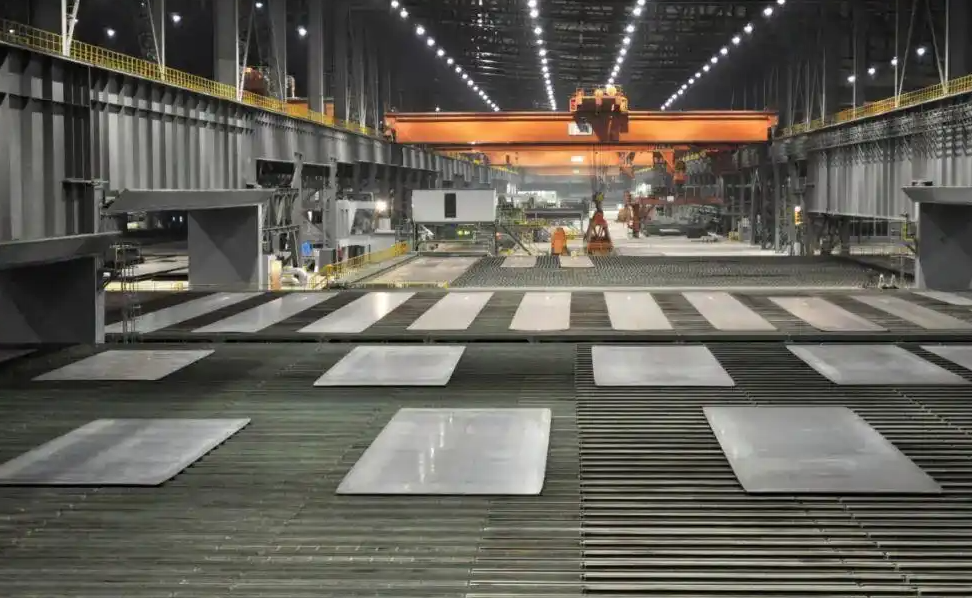
< 100mm! JISCO Successfully Produces Extra-thick Wide Plates.
Read More

Answers

  • What are the standard thicknesses for FBE coatings?

    Generally, the thickness of a single-layer FBE coating is 300–450 μm, but for some special applications, the thickness may reach 1000 μm.

    The corrosion protection effect of double-layer FBE coatings can be divided into standard and reinforced grades depending on the coating thickness. The standard grade coating thickness is 600 micrometers, while the reinforced grade reaches 800 micrometers.


  • How to secure thin-walled welded pipes during transportation to prevent collisions?

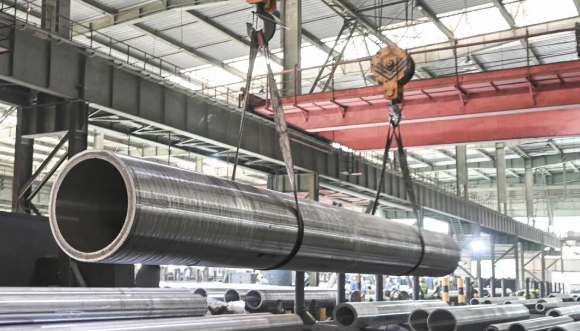
    Appropriate vehicles should be selected based on the pipe specifications. During loading, ensure the center of gravity is centered and secure the pipes using wire ropes or specialized clamps to avoid direct contact with the pipe surface. For thin-walled pipes, it is recommended to add flexible spacers such as rubber sheets, straw ropes, fiber cloth, or plastic gaskets between the pipes to reduce mutual friction and localized stress concentration. Additionally, internal pipe supports (such as wooden or metal brackets) or external pipe frames (made of steel matching the pipe material) can provide extra protection to prevent bending and deformation.


    Due to their thin walls, thin-walled welded pipes are highly susceptible to deformation and weld cracking during transportation due to vehicle bumps and collisions. Therefore, basic protection measures must be taken during packaging. Flexible protective materials can be used to wrap the surface of the pipes, especially vulnerable areas such as the pipe ends and welds, which require focused reinforcement to prevent direct contact and friction/collision damage. For batch transportation of welded pipes, they can be bundled together, tightly binding several pipes into a single unit with flexible straps to reduce the movement of individual pipes. The tightness of the straps must be controlled during binding to ensure the pipes within the group remain secure without causing pressure damage to the pipe surface due to excessive tightness.
    During loading, the welded pipes should be placed stably on the load-bearing surface of the transport vehicle, avoiding tilting that could shift the center of gravity.
    For box-type transport vehicles, cushioning materials such as foam or pearl cotton can be filled between the welded pipes and the vehicle walls, ensuring a tight seal to prevent collisions between the pipes and the walls during transport. For open-top transport vehicles, in addition to bundling the pipes together, high-strength reinforcing ropes or straps should be used to securely connect the welded pipe assemblies to the vehicle's anchor points, ensuring the pipe assemblies do not shift during transport.


  • What is the standard thickness of the anti-corrosion coating for anti-corrosion steel pipes?

    The national standard thickness for 3PE reinforced anti-corrosion grade is 2.5–3.7 mm. Generally, 3PE anti-corrosion steel pipes of the same specifications are 0.7 mm thicker than the ordinary grade.


    The 3PE anti-corrosion coating consists of an epoxy powder layer, an adhesive layer, and a polyethylene layer. The epoxy powder layer provides adhesion and chemical resistance. The thickness of the epoxy powder layer varies depending on the pipe diameter and grade requirements: no less than 120 μm for DN≤500 mm and no less than 150 μm for DN>500 mm; the total thickness can reach 2.7–2.9 mm in reinforced anti-corrosion applications.


Timely Info Independent Platform Multiple guarantees Self-operated storage

China Steel Market

Empowering small and medium-scale steel purchasing


How can I help you?