11/06/2026
Jingye Yingkou Medium Plate Successfully Completes Delivery of First Order for Turkish Classification Society
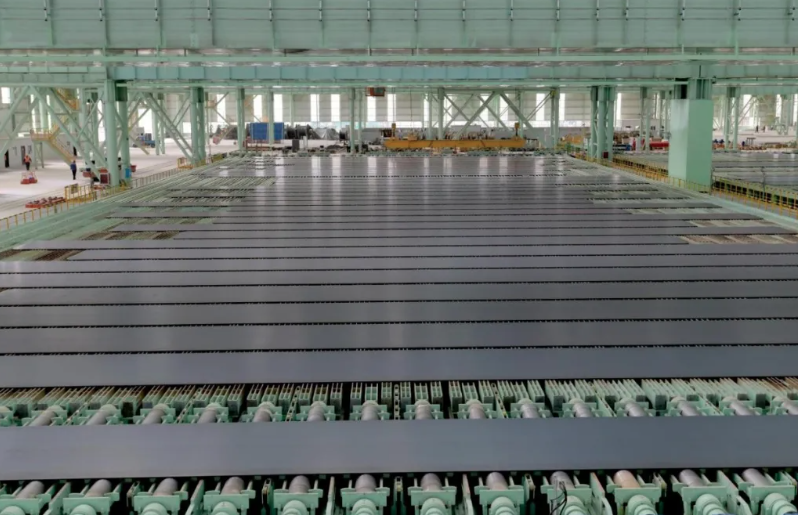
Recently, Jingye Yingkou Medium Plate successfully delivered its first batch of export ship plates ordered by the Turkish Classification Society.
Read More
Silicon steel sheets are essentially very low-carbon steel sheets with a silicon mass fraction of 0.5% to 5%.Based on application, they can be classified into motor-grade silicon steel sheets (silicon content usually below 2.5%, thickness generally 0.5 mm) and transformer-grade silicon steel sheets (silicon content usually 2.5%–4.5%, thickness generally 0.35 mm).Based on production method, they are categorized into hot-rolled and cold-rolled silicon steel sheets; cold-rolled sheets are further subdivided based on grain orientation into grain-oriented silicon steel (used for transformers) and non-oriented silicon steel (used for motors).They can also be classified according to operating conditions: those used in strong magnetic fields (predominantly in the electric power industry; this is the most common and widely used type) versus weak magnetic fields (mainly in the telecommunications industry), as well as those designed for power frequency versus high-frequency applications.For high-frequency applications, silicon steel sheets typically have a thickness of 0.1–0.2 mm to minimize eddy current losses, while those used in pulse transformers can be as thin as 0.05 mm or less.
Euro-standard (EN) H-beams offer a wider variety of dimensions and specifications; their section heights and widths can be adjusted to meet specific project requirements. Their cross-sectional shapes are generally more flexible and can be customized according to specific design needs.Chinese-standard (GB/T) H-beams have relatively fixed dimensions and specifications, offering a more limited range of choices. Common designations include 10#, 12#, 14#, and 16#, each corresponding to specific cross-sectional dimensions and shapes. Their cross-sectional shapes are generally uniform, lacking flexibility.EN H-beams are typically manufactured from high-quality alloy steel, offering superior strength and toughness. GB/T H-beams are primarily made from ordinary carbon steel, resulting in relatively lower strength and toughness. These materials differ in terms of mechanical properties and chemical composition.EN H-beams made of S235JR steel correspond to the GB/T Q235B;EN H-beams made of S355J0 steel correspond to the GB/T Q355C;EN H-beams made of S355J2 steel correspond to the GB/T Q355D;EN H-beams made of S355JR steel correspond to the GB/T Q355B.
Ductile iron pipes achieve mechanical properties similar to steel through graphite spheroidization treatment while retaining the corrosion resistance of cast iron, offering comprehensive advantages in pressure resistance, service life, and ease of construction.Compared to PE pipes, ductile iron pipes are simpler and faster to install, and offer better internal and external pressure resistance after installation.In terms of sealing and corrosion resistance, ductile iron pipes provide better sealing after installation, and their corrosion resistance can be further improved through various anti-corrosion methods.Regarding hydraulic performance, since ductile iron pipe specifications generally refer to the inner diameter, while PE pipe specifications generally refer to the outer diameter, ductile iron pipes can achieve a larger flow rate under the same specifications.In terms of overall installation and maintenance costs, ductile iron pipes offer superior cost-effectiveness. Inner wall zinc spraying and cement mortar anti-corrosion materials further reduce costs.
High Strength and Toughness: Ductile iron pipes possess higher strength than standard gray iron pipes, enabling them to withstand greater pressure. Their excellent toughness allows them to absorb impact energy and resist fracture, ensuring stable performance even in high-pressure environments.Wear and Corrosion Resistance: Ductile iron pipes feature high surface hardness and superior wear resistance, making them resistant to damage from friction. The material is homogeneous—free from voids or inclusions—and highly resistant to rust and corrosion. These attributes ensure reliable performance across a wide range of harsh operating conditions.Excellent Mechanical and Sealing Properties: Following the annealing process, the microstructure consists of ferrite with a small amount of pearlite, resulting in excellent mechanical strength, corrosion resistance, ductility, and sealing performance. Furthermore, the use of flexible joints combined with rigorous leak-tightness testing effectively prevents various forms of seepage and erosion, thereby minimizing leakage rates at pipe connections.Ease of Installation and Environmental Friendliness: Ductile iron pipes are easy to install and do not require complex welding procedures, which reduces both installation time and costs. Additionally, their superior corrosion resistance and long service life decrease the frequency of pipe replacement and maintenance, contributing to environmental protection and sustainable development.
China Steel Market
Empowering small and medium-scale steel purchasing
Hot search words:
China Rebar prices China Wire Rod Prices Welded Steel Pipe Prices