
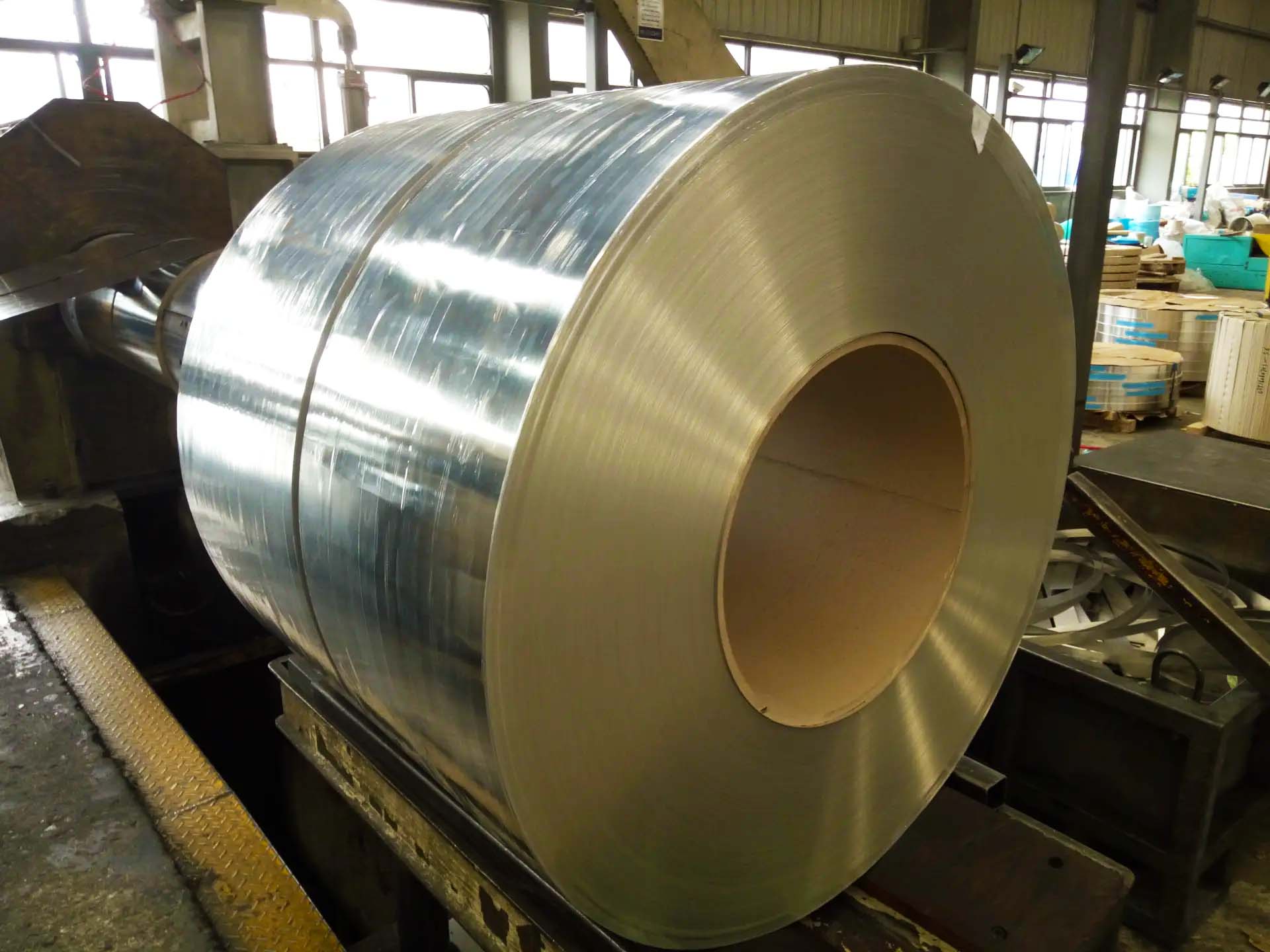
Tinned steel coil, also known as cold-rolled electroplated tin steel sheet and strip, commonly called "tinplate," refers to thin steel sheets or strips with a pure tin coating, made from low-carbon steel as the base material through processes such as cold rolling, annealing, electroplating, remelting, and chemical passivation. The tin used for plating is high-purity tin (Sn>99.8%). The product is available in two forms: steel sheet (supplied in flat sheets) and steel strip (supplied in coils).
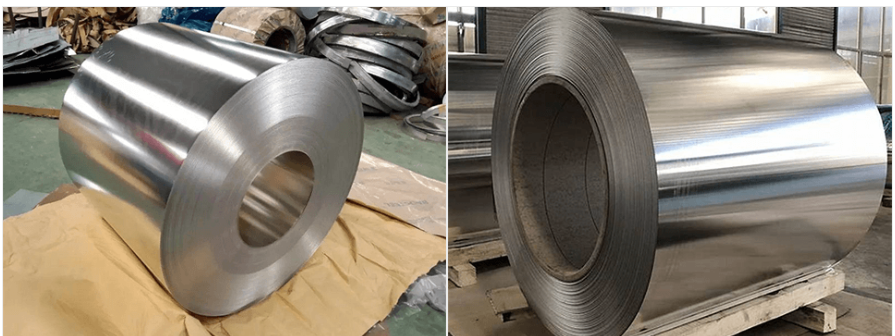
The core value of tinned steel coil lies in:
1. Excellent corrosion resistance: The tin layer is chemically stable, non-toxic, and harmless, effectively resisting corrosion from organic acids in food.
2. Good processability and formability: It possesses both good ductility and strength, allowing for complex forming processes such as deep drawing and stretching.
3. Food contact safety: It meets food safety standards, with no migration of harmful elements.
4. Good coating and printing performance: The surface is uniform, suitable for printing, coating, resistance welding, and other processes.
5. High recyclability: As a metallic material, it can be recycled and reused indefinitely.
Production Process:
Tin-plated steel coils are produced using a continuous electroplating tin process.
1. Core Process Flow: Hot-rolled strip steel → Pickling → Cold rolling → Electrolytic cleaning → Annealing → Leveling → Edge trimming → Cleaning → Electroplating tin → Soft melting → Passivation treatment → Oiling → Shearing → Finished product
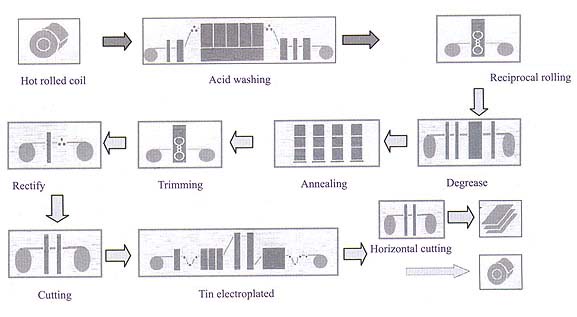
Tin-plated steel coils can be classified in various ways, including by original steel type, cold rolling method, tin plating amount, and surface treatment.
1. Classification by Base Steel Type
According to the national standard GB/T 2520, tinplate is classified into three grades based on its steel base:
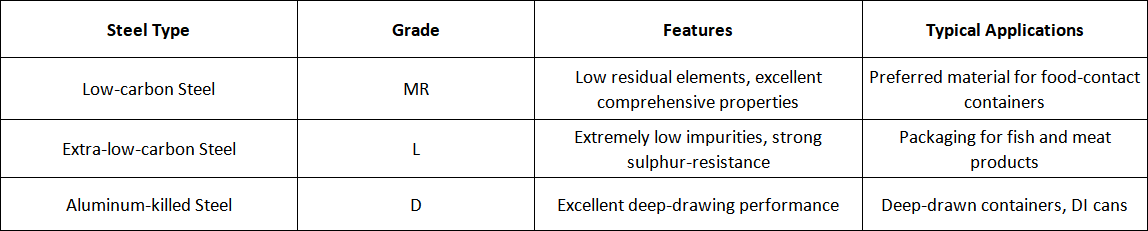
2. Classification by Cold Rolling Method

3. Classification by Tin Plating Weight
Tinplate with a low tin plating weight is generally used for containers with less stringent corrosion resistance requirements and for painted containers; tinplate with a high tin plating weight is generally used for iron cans with high corrosion resistance requirements and for containers used directly without painting.
4. Classification by Surface Treatment
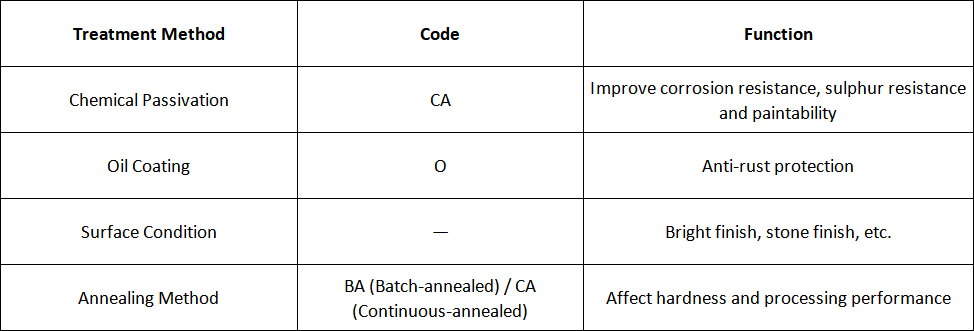
Core Performance Characteristics
1. Excellent Corrosion Resistance
Tinplate is widely used in the manufacture of food canning containers. The tin plating layer and passivation film together provide protection, offering good resistance to weak acids and sulfur. The tin layer is non-toxic and can be used as packaging material for canned goods.
2. Excellent Processing and Forming Performance
Different tempering grades correspond to different processing performances:
T-1 to T-3: Good plasticity, suitable for deep drawing or multiple deep drawing of containers with large depths and complex shapes.
T-4 to T-5: Good rigidity, suitable for lids and general-purpose containers.
DR series: Thinner thickness and higher strength, suitable for high-strength thin-walled containers.
3. Food Contact Safety
The passivation process and coating of tinned steel coil meet food contact standards, with no migration of harmful elements. Zero detection of heavy metal content can be achieved.
4. Excellent Coating and Printing Performance
The surface is uniform, suitable for printing, coating, resistance welding, and other processes, and is suitable for high-speed automated can-making lines.
5. Main Limitations
Limited Tin Resources: Limited metallic tin resources and high costs. Thinner Coating: The tin plating amount is much lower than that of hot-dip galvanized products.
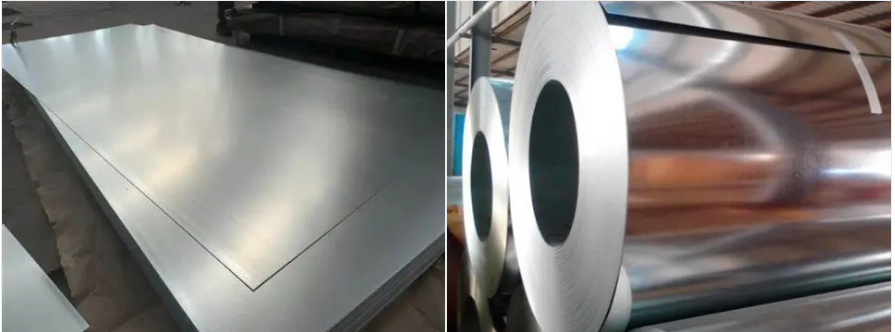
Tinned steel coils are widely used in food cans, beverage cans, milk powder cans, bottle caps, chemical drums, and electronic components due to their excellent corrosion resistance, food contact safety, and good processability. Currently, tinned steel coils are continuously developing towards increasing the proportion of secondary cold rolling, higher strength and thinner designs, and the integration and upgrading of standard systems.
In China, the standards for Tinned Steel Coil are set and regulated by the Chinese National Standards (GB/T) issued by the Standardization Administration of China (SAC). The relevant GB/T standard for Tinned Steel Coil is:
GB/T 2520-2017: Cold-reduced electrolytic tinplate.
GB/T 2520-2017 specifies the requirements for cold-reduced electrolytic tinplate, which is commonly known as tinplate or Tinned Steel Coil. The standard covers the mechanical properties, tin coating weight, surface finish, and other characteristics of the tinplate.
In the United States, the standards for Tinned Steel Coil are set and maintained by the American Society for Testing and Materials (ASTM) and the American Iron and Steel Institute (AISI). The most commonly referenced ASTM standard for Tinned Steel Coil is:
ASTM A623: Standard Specification for Tin Mill Products, General Requirements.
ASTM A623 covers the general requirements for tin mill products, which include electrolytic tin-coated steel (Tinplate) and tin-free steel (TFS) coils. The standard specifies the requirements for the steel substrate, tin coating, and other properties of the Tinned Steel Coil.
It's important to note that while ASTM A623 provides the general requirements for tin mill products, specific applications or industries may require additional standards or specifications for Tinned Steel Coil. For example, tin-coated steel used for food packaging may need to comply with regulations from the U.S. Food and Drug Administration (FDA) to ensure food safety.
Additionally, the American Iron and Steel Institute (AISI) may also publish guidelines and standards related to Tinned Steel Coil used in various applications.
Manufacturers and suppliers of Tinned Steel Coil in the US generally follow these ASTM and AISI standards to ensure the quality and performance of their products.
In the United Kingdom, the standards for Tinned Steel Coil are generally aligned with the European standards set by the European Committee for Standardization (CEN). The most relevant European standard for Tinned Steel Coil is:
EN 10202: Cold-reduced tin-coated blackplate (tinplate).
EN 10202 specifies the requirements for cold-reduced tin-coated blackplate, which is commonly known as tinplate or Tinned Steel Coil. The standard covers the steel substrate, tin coating, surface finish, and other mechanical and dimensional properties of the tinplate.
In Japan, the standards for Tinned Steel Coil are set and regulated by the Japanese Industrial Standards (JIS). The relevant JIS standard for Tinned Steel Coil is:
JIS G 3303: Tinplate and blackplate.
JIS G 3303 specifies the requirements for electrolytic tin-coated steel sheets and coils, commonly known as tinplate or Tinned Steel Coil, and blackplate, which refers to the uncoated steel sheets. The standard covers the mechanical properties, tin coating weight, surface finish, and other characteristics of the tinplate.

Copyright Notice © 2022 - 2023 ChinaSteelMarket.com All rights reserved.