
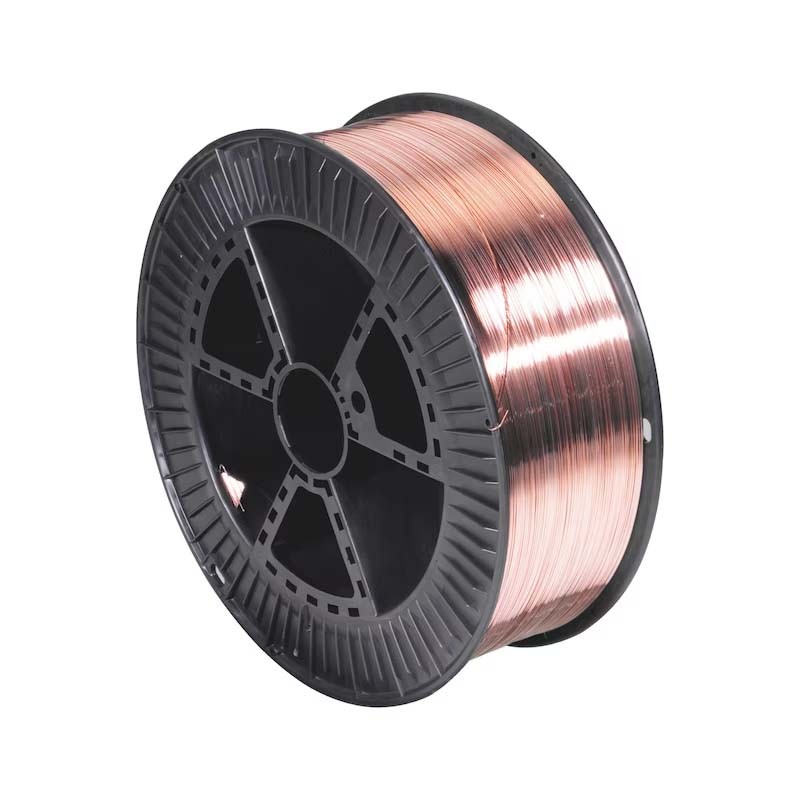
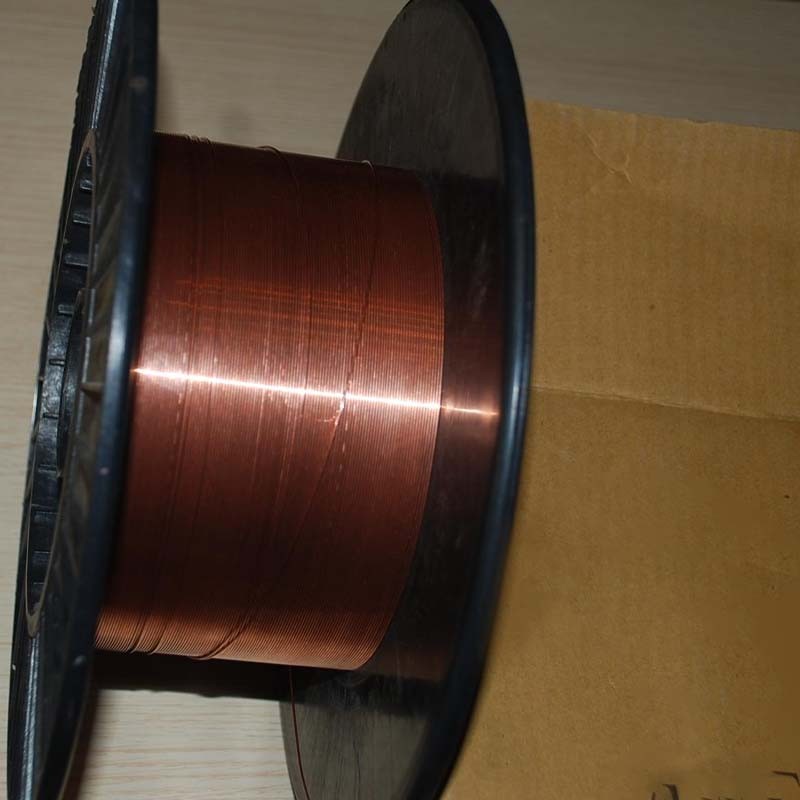
Steel welding wire, also known as steel wire for welding or welding wire, refers to a metal wire that serves as a filler metal and conducts electricity during the welding process. After being heated and melted by the arc, the welding wire is deposited into the weld joint, where it forms a strong metallurgical bond under the action of shielding gas or flux. It is one of the most widely used welding consumables in modern metalworking. Welding wire is typically manufactured from high-quality carbon structural steel, low-alloy steel, stainless steel, and non-ferrous metals through processes such as drawing and copper plating. Key requirements include stable chemical composition, smooth wire feeding, a stable arc, minimal spatter, and welds that meet mechanical property standards.
Categories
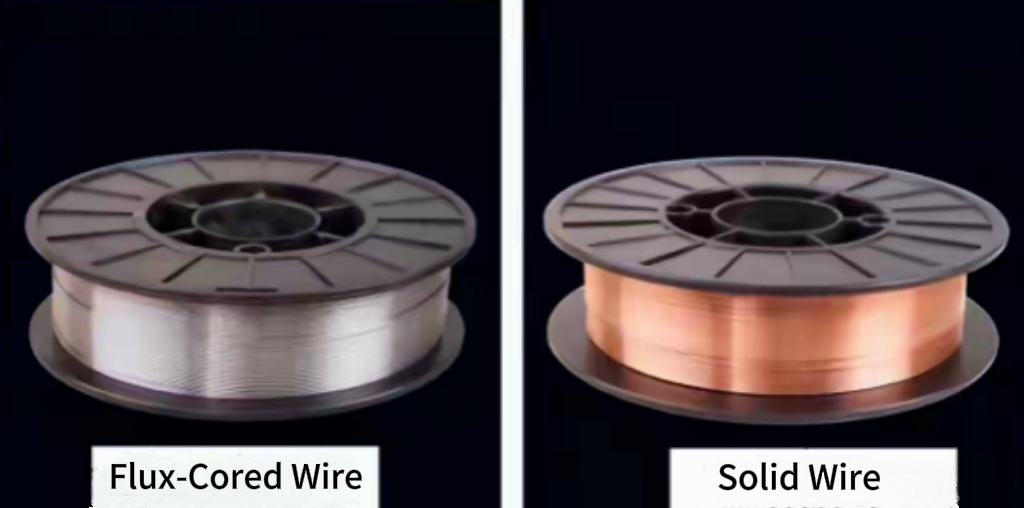
Steel welding wires are primarily divided into two major categories: solid welding wires and flux-cored welding wires. Their classifications, characteristics, specifications, and selection criteria are as follows:
I. Solid Welding Wire
Solid welding wire is drawn from a single metal or alloy, contains no internal filler, and has a solid cross-section.
Characteristics: The composition is highly compatible with the base metal; wire feeding is stable; welding precision is high; and it is suitable for automated welding. However, it relies on external shielding gas (such as CO₂ or argon) or flux; it has poor resistance to wind; and spatter is relatively heavy when using CO₂ shielding.
Common classifications and applications:
Solid carbon steel welding wires (e.g., ER50-6, H08Mn2Si): Used for welding general-purpose structural steel; they are cost-effective and the most widely used.
Solid low-alloy steel welding wires (e.g., ER55-B2): Used for welding low-alloy steel with higher strength grades; they require a corresponding shielding gas.
Solid stainless steel welding wire (e.g., ER308): Used for welding austenitic stainless steel to ensure the weld’s corrosion resistance.
Designation: Typically begins with “ER” (e.g., ER50-2), where “ER” stands for welding wire, followed by a number indicating the minimum tensile strength of the deposited metal, and a hyphen followed by a code classifying the chemical composition.
Flux-cored wire
Flux-cored wire consists of a metal sheath (thin steel strip) surrounding a core (containing flux and alloy powders), and has a tubular cross-section.
Features: High deposition efficiency; capable of withstanding higher welding currents, making it suitable for welding thick plates; minimal spatter and aesthetically pleasing weld bead formation; high adaptability (some types are self-shielded, requiring no external gas and making them suitable for outdoor work); however, slag must be removed after welding, costs are relatively high, and welding produces a significant amount of fumes.
Common Classifications and Applications:
Carbon steel flux-cored wires (e.g., E71T-1): Used for structural steel welding; they offer high deposition efficiency and are suitable for all-position welding.
Low-alloy steel flux-cored wires (e.g., E551T1-B2): Used for welding critical low-alloy steel components; they provide good low-temperature impact toughness in the weld.
Stainless steel flux-cored wires (e.g., E308LT1-1): Used for welding stainless steel, ensuring corrosionFlux-Cored Wire resistance.
Self-shielded flux-cored wires: Require no external gas and are suitable for field use or environments without a gas supply.
Designation: Typically begins with “E” (e.g., E501T-1), where “E” stands for welding wire, “T” stands for flux-cored wire, followed by a number indicating the mechanical properties of the deposited metal, and a hyphen followed by characteristics of the wire category (e.g., shielding gas type, welding position).
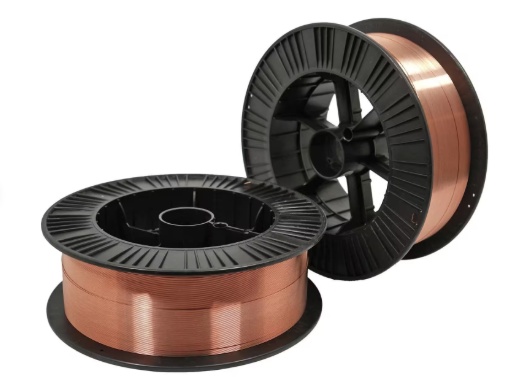
Production Process
The typical production process for welding wire is as follows:
High-carbon steel wire rod or wire rod specifically for welding wire → Inspection → Pickling, phosphating (or boron coating) → Rough drawing → Annealing → Intermediate drawing → Finishing → Copper plating (or electrolytic cleaning) → Final inspection → Coiling → Packaging → Storage.
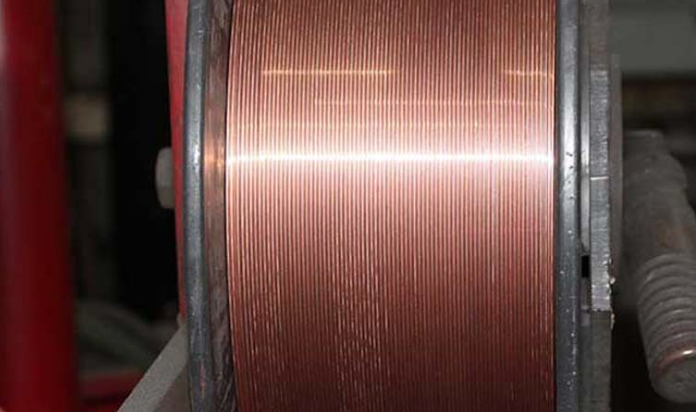
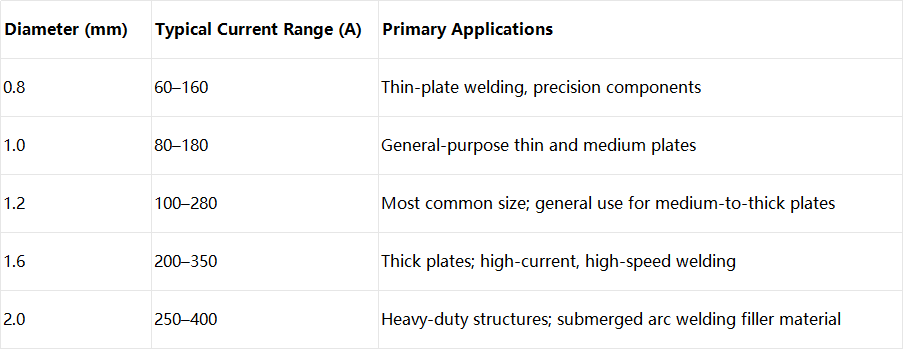
Taking φ1.2 mm gas-shielded welding wire as an example, the typical process flow is as follows: φ5.5–7.5 mm wire rod undergoes surface rust removal in the pretreatment line, followed by rough drawing to 2.1–2.35 mm. After annealing, it is fine-drawn to φ1.2 mm. During the drawing process, the compression ratio (70%–85% for rough drawing, 50%–85% for fine drawing) and drawing speed (7–10 m/s for rough drawing, 12–16 m/s for fine drawing) must be strictly controlled, with dimensional deviations kept within ±0.02 mm. The copper plating process is a critical step in the production of gas-shielded welding wire. The wire undergoes a series of processes—alkali washing and scrubbing, acid pickling and rinsing, copper plating, water washing and neutralization, and hot water cleaning—to complete the surface copper plating. The copper plating layer improves electrical conductivity, enhances wire feeding performance, and prevents rusting of the welding wire. Some high-end products use a copper-free process, involving ultrasonic electrolytic cleaning followed by oil coating, to meet the requirements of specific welding conditions.
Principles for Selecting Steel Welding Wire
Base Metal Compatibility: The composition of the welding wire must be compatible with the base metal; strength and chemical composition should match (e.g., equivalent strength or similar composition) to ensure the performance of the weld.
Process Requirements: Solid welding wires are suitable for automated, high-precision welding; flux-cored wires are suitable for thick plates, high-efficiency welding, and complex environments (such as outdoor welding without gas shielding).
.Shielding Conditions: Use solid welding wires or gas-shielded flux-cored wires when gas shielding is available; use self-shielded flux-cored wires when gas shielding is unavailable or during outdoor operations.
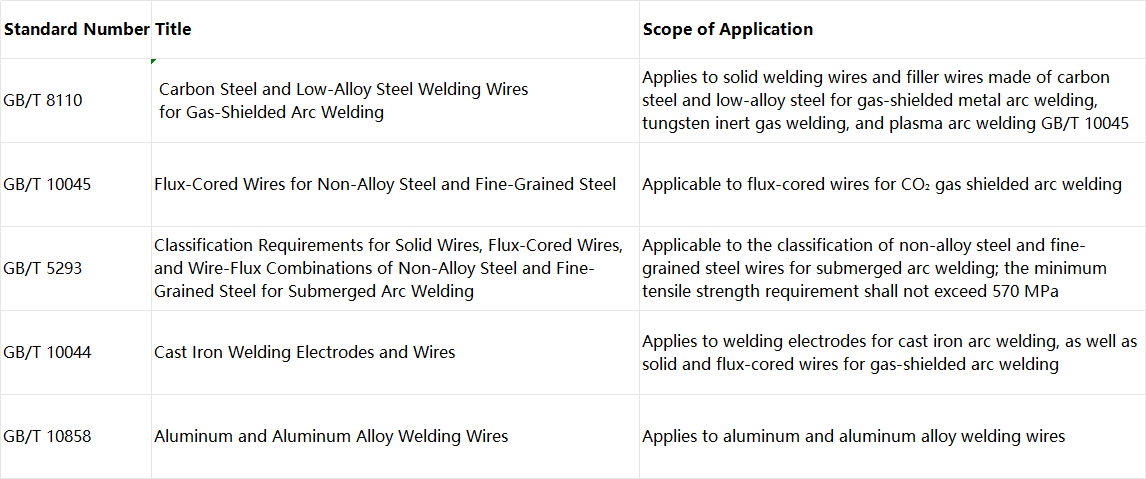
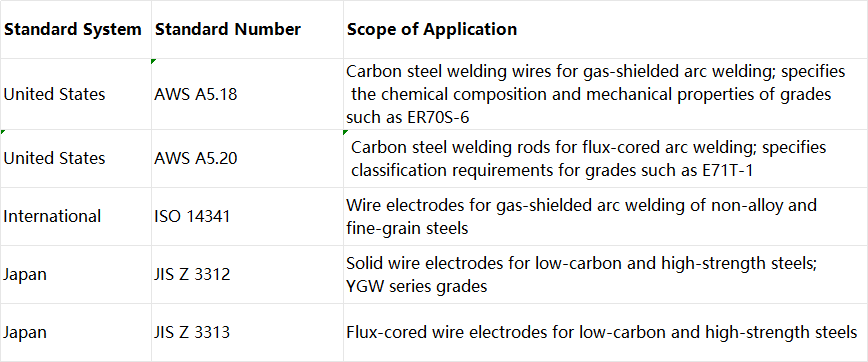
Here are some examples of possible Chinese, British, American and Japanese national standards for Welding Wire:
Chinese standard:
International standard:
Copyright Notice © 2022 - 2023 ChinaSteelMarket.com All rights reserved.