
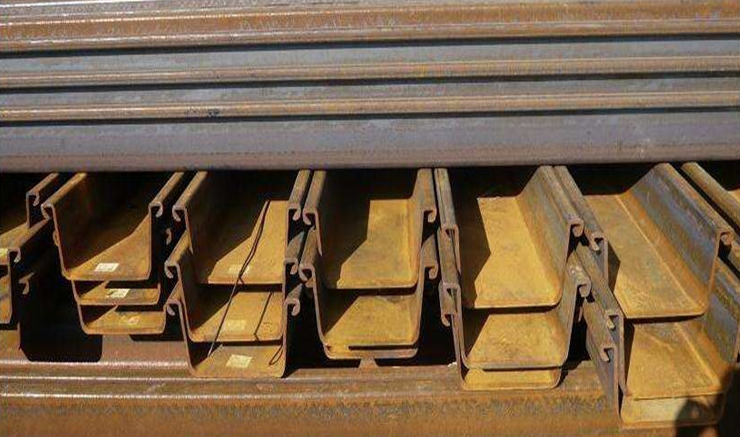
Steel sheet piles are steel sections with interlocking mechanisms (locking joints) along their edges. They come in various cross-sectional shapes, including straight, U-shaped, and Z-shaped. Through the interlocking of the locking joints, steel sheet piles can be assembled into cofferdams or retaining walls of various shapes.
Advantages of Steel Sheet Piles:
1. High strength and strong driving ability: Easily driven into hard soil layers.
2. Excellent waterproof performance: The interlocking structure allows for continuous retaining walls with good waterproofing properties.
3. Reusable: Can be assembled into cofferdams of various shapes as needed and can be reused multiple times.
4. Highly efficient construction: Not restricted by weather conditions, short construction period, and quick results.
5. Significant environmental benefits: Significantly reduces soil extraction and concrete usage, effectively protecting land resources.

Classification of Steel Sheet Piles:
1. Steel sheet pile products are mainly divided into two categories according to the production process.

Cold-formed steel sheet piles have a relatively narrow application range and are mostly used as a supplementary material in engineering construction. Common types include:
Non-interlocking type: Also known as trench sheet piles.
Interlocking type: Divided into L-type, S-type, U-type, Z-type, etc.

2. Classification by Sheet Pile Cross-Section
Based on different stress characteristics and construction requirements, sheet piles are mainly classified into the following categories:
· Z-shaped sheet piles: The cross-section is Z-shaped, with the interlock located at the edge of the sheet pile. They possess excellent bending resistance, especially suitable for bearing large lateral earth pressures. Commonly used in permanent retaining structures and heavy engineering projects with high stress requirements.
· U-shaped sheet piles: The cross-section is U-shaped, with the interlock located near the neutral axis. After assembly, they can form a stable and symmetrical wall. This type of sheet pile has wide applications, suitable for both temporary support and permanent structures.
· Straight web (flat plate) sheet piles: The cross-section is relatively straight or slightly curved, equipped with high-strength interlocks. Mainly used in circular or cellular structures. Their overall stability depends more on the structural geometry and the tensile force between the interlocks than on simple bending resistance.
· Combi Wall System: Composed of large-diameter main piles and sheet pile infill plates, this system boasts extremely high overall rigidity and load-bearing capacity, commonly used in port and marine engineering projects with complex conditions and stringent stress requirements.

Steel Sheet Pile Manufacturing Process:
1. Hot-Rolled Steel Sheet Pile: Hot-rolled sheet piles are produced using a universal rolling mill process. The core process is: Billet → Heating → Rough Rolling → Finish Rolling (Universal Rolling Mill) → Cooling → Straightening → Inspection. The hot rolling process is technically challenging. In 2018, China's first fully domestically produced large-diameter sheet pile and H-beam production line went into operation. Z-beam sheet piles are technically difficult to produce, and only a few companies worldwide are capable of manufacturing them.
2. Cold-Formed Steel Sheet Pile: Cold-formed sheet piles are formed using a roll forming process. The core process is: Hot-rolled/cold-rolled steel strip → Uncoiling → Leveling → Continuous roll forming → Cutting to length → Inspection. Cold bending production lines require less investment and have lower production costs, offering flexible length control. However, the processing method is relatively rudimentary, resulting in uniform thickness across all parts of the pile and limiting the optimization of cross-sectional dimensions.

Steel Sheet Pile Applications
Sheet piles, as an indispensable material in modern construction engineering, are widely used in various engineering fields due to their high strength, high durability, and reusability. This article will detail seven main applications of sheet piles, showcasing their versatility and importance in modern engineering.
1. Temporary Cofferdams
In underwater construction, sheet piles are widely used as temporary cofferdams. They can be quickly installed, forming a robust barrier to block water flow and provide a dry working environment for construction workers. This application not only improves construction efficiency but also ensures project safety.
2. Deep Foundation Pit Support
In urban construction, the excavation of deep foundation pits is a common engineering requirement. Sheet piles play a crucial role here, supporting the soil, preventing foundation pit collapse, and protecting the safety of construction workers and surrounding buildings.
3. Dock and Port Construction
Sheet piles are equally indispensable in dock and port constrThey not only provide essential structural support but also resist erosion from waves and tides, protecting the integrity of the dock structure.

4. Flood Control and Breakwaters
In flood control projects, sheet piles are used to construct flood walls and breakwaters. They withstand the impact of floods and waves, protecting coastal areas from natural disasters.

5. Tunnel Engineering
In tunnel engineering, sheet piles are used as support structures, especially in soft soil foundations. They prevent soil subsidence, ensuring the smooth progress of tunnel construction.
6. Bridge Construction
Sheet piles also have unique applications in bridge construction. They can serve as temporary support structures, helping builders construct bridges across rivers or canyons while protecting the construction area from water flow.
7. Land Reclamation and Environmental Protection
Sheet piles also play an important role in land reclamation and environmental protection projects. They can be used to create temporary soil barriers to prevent the spread of pollutants and protect the environment from the impact of construction activities.

Hot-rolled steel sheet piles, with their core advantages of standardized dimensions, superior performance, and excellent interlocking waterproofing, are the leading product in engineering applications. Cold-formed steel sheet piles, characterized by lower cost and flexible length, serve as a supplementary material. Steel sheet piles are widely used in water conservancy projects, port terminals, foundation pit support, bridge cofferdams, underground utility tunnels, and other fields, possessing advantages such as high strength, high construction efficiency, and reusability. Currently, steel sheet piles are continuously progressing towards deeper domestic production, breakthroughs in Z-type pile technology, and the development of weather-resistant products.
In China, the standards for steel sheet piles are primarily established and maintained by the Chinese National Standards (GB/T) and the Ministry of Housing and Urban-Rural Development (MOHURD). These standards ensure the quality, performance, and safety of steel sheet piles used in various construction and engineering applications.
The most relevant Chinese National Standards related to steel sheet piles include:
GB/T 20933-2021: Cold-formed steel sheet piles. This standard specifies the technical requirements for cold-formed steel sheet piles used in construction projects.
GB/T 20935: Hot-rolled steel sheet piles. This standard specifies the technical requirements for hot-rolled steel sheet piles used in construction projects.
GB 50018: Code for Design of Steel Structures. This code provides guidance on the design of various steel structures, including steel sheet pile retaining walls and other piling applications.
GB 50205: Code for Construction and Acceptance of Steel Sheet Pile Structures. This code provides guidelines for the construction and acceptance of steel sheet pile structures, ensuring proper installation and compliance with standards.
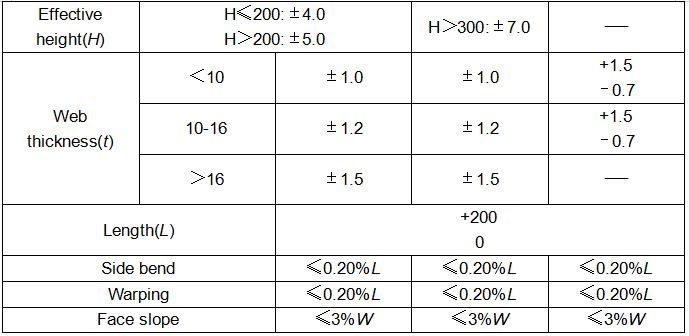
These standards cover various aspects, including material specifications, manufacturing processes, dimensions, tolerances, and design considerations for steel sheet piles in China.
In the United States, the standards for steel sheet piles are primarily established and maintained by the American Society for Testing and Materials (ASTM) and the American Association of State Highway and Transportation Officials (AASHTO). These organizations set the specifications and guidelines for various types of steel sheet piles used in construction and engineering applications.
ASTM standards related to steel sheet piles include:
ASTM A328 / A328M: Standard Specification for Steel Sheet Piling. This specification covers carbon steel sheet piling used in the construction of cofferdams, excavation shoring, and other applications.
ASTM A572 / A572M: Standard Specification for High-Strength Low-Alloy Columbium-Vanadium Structural Steel. While not specific to sheet piles, this specification covers the standard requirements for high-strength low-alloy structural steel, which can be applicable to certain types of steel sheet piles.
AASHTO standards are often used for transportation-related projects and may include specifications for steel sheet piles in specific applications. For instance:
AASHTO M270: Standard Specification for Structural Steel for Bridges. Similar to ASTM A572, this specification covers various grades of structural steel used in bridge construction, which may be relevant when considering steel sheet piles for bridge abutments or other bridge-related applications.
In the United Kingdom, the standards for steel sheet piles are mainly governed by the British Standards Institution (BSI) and Eurocodes. These standards ensure the quality, performance, and safety of steel sheet piles used in various construction and engineering applications.
The most relevant BSI and Eurocode standards related to steel sheet piles include:
BS EN 10248: Hot-rolled sheet piling of non-alloy steels - Part 1: Technical delivery conditions. This standard specifies the requirements for hot-rolled non-alloy steel sheet piling used for construction purposes.
BS EN 1993-5: Eurocode 3: Design of steel structures - Part 5: Piling. This Eurocode provides guidance on the design of steel structures, including steel sheet pile retaining walls and other piling applications.
BS 5950-1: Structural use of steelwork in building - Part 1: Code of practice for design - Rolled and welded sections. While not specific to sheet piles, this standard outlines the design requirements for various steel structures, which can be applicable to steel sheet pile designs.
BS 5950-5: Structural use of steelwork in building - Part 5: Code of practice for design of cold-formed thin gauge sections. Similar to BS 5950-1, this standard focuses on the design of cold-formed thin gauge steel sections, which may be relevant to certain types of steel sheet piles.
In Japan, the standards for steel sheet piles are primarily established and maintained by the Japanese Industrial Standards (JIS). The JIS sets specifications for various industrial products to ensure their quality, safety, and reliability.
The most relevant JIS standards related to steel sheet piles include:
JIS A 5523: Steel Pipe Piles. This standard covers steel pipe piles used for foundation construction, including steel sheet pile walls.
JIS A 5528: Hot Rolled Steel Sheet Piles. This standard specifies the technical requirements for hot-rolled steel sheet piles used in construction projects.
JIS A 5530: Steel Sheet Piles. This standard covers the general aspects of steel sheet piles, including dimensions, tolerances, material properties, and sectional properties.
JIS A 5372: Cold Formed Steel Sheet Piles. This standard specifies the technical requirements for cold-formed steel sheet piles used in construction applications.
These JIS standards ensure that steel sheet piles used in Japan meet specific performance criteria, and they cover various aspects, such as dimensions, material properties, and manufacturing processes.
Japanese construction and engineering professionals typically refer to these JIS standards when selecting and using steel sheet piles for different projects, including building foundations, waterfront structures, and other geotechnical applications.



Copyright Notice © 2022 - 2023 ChinaSteelMarket.com All rights reserved.