
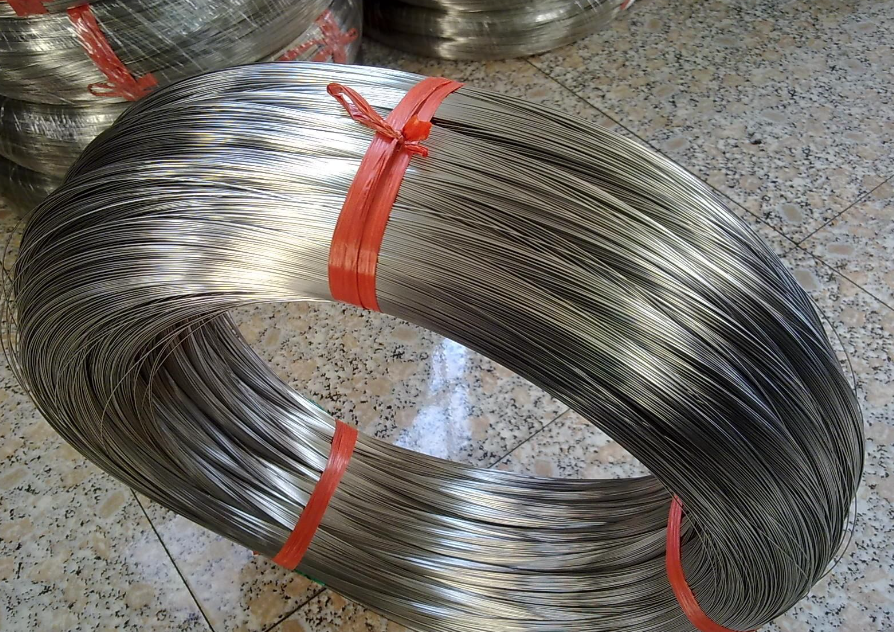
Stainless steel wire—also known as stainless steel rod or coil—is a linear steel product made from stainless steel; it belongs to one of the four major categories of steel products: plates, pipes, profiles, and wires. It is typically supplied in coils and generally features a circular cross-section, though shaped profiles (such as flat or square) are also available.
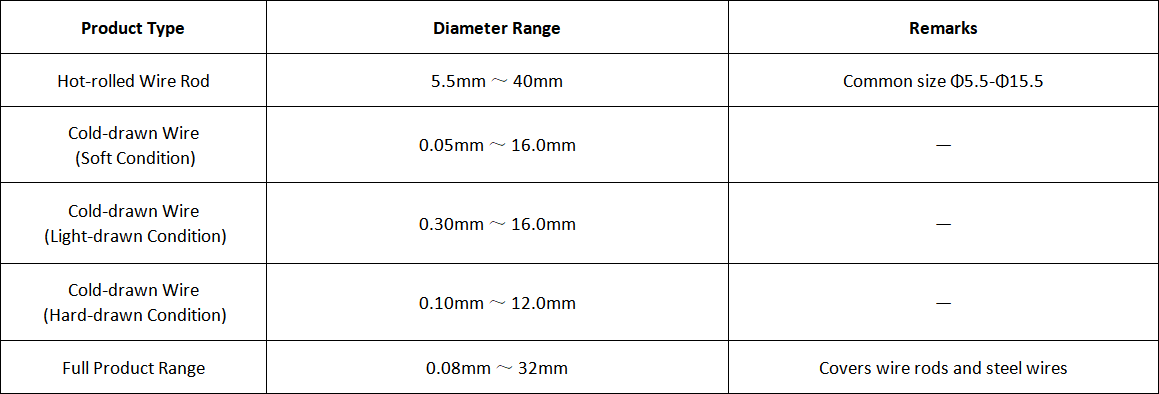
Wire products primarily fall into two categories: spring wire and screw wire. As the names imply, screw wire is mainly used for manufacturing screws, while spring wire is used for springs or other hardware products requiring elasticity.
The core value of stainless steel wire lies in its combination of excellent corrosion resistance, high strength, and good workability. It is widely used to manufacture downstream products such as fasteners, springs, welding wire, wire mesh, and steel ropes.
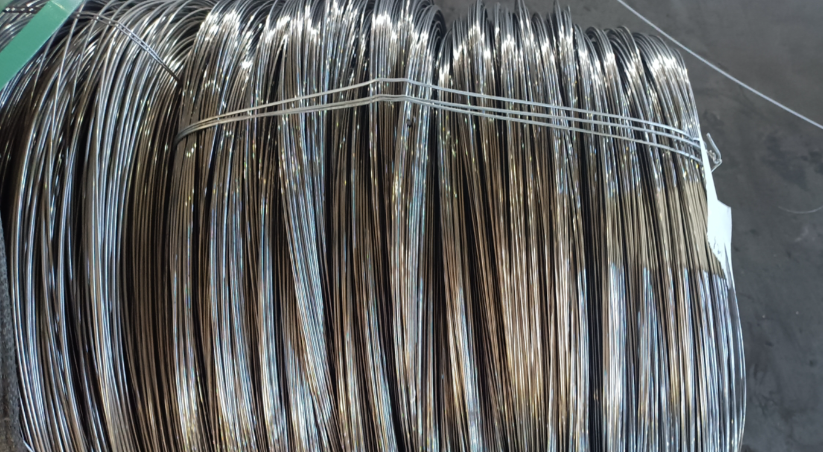
Classification of Stainless Steel Wire
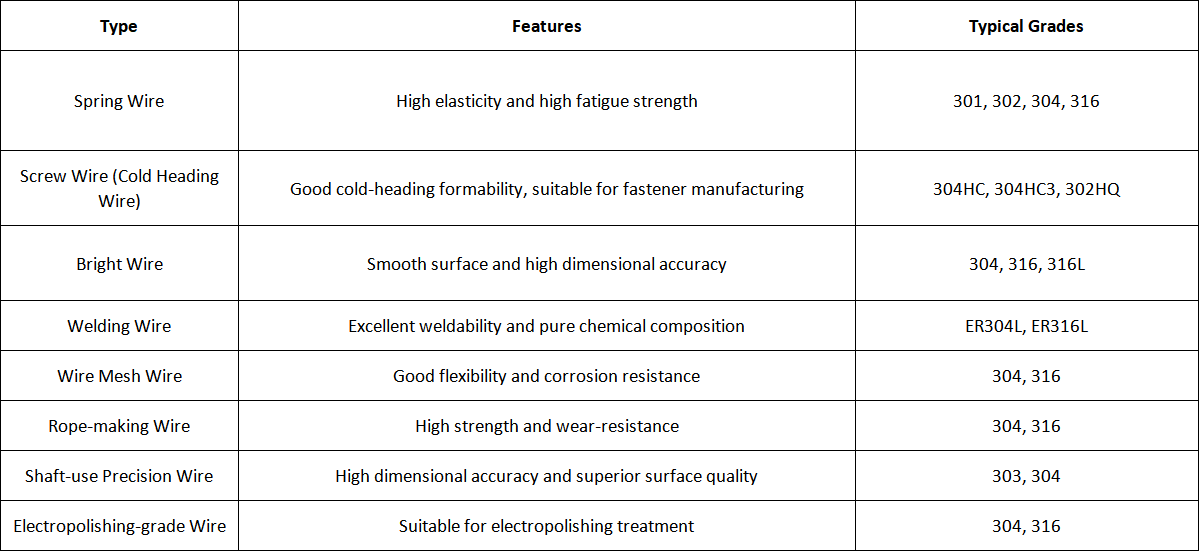
1. Stainless steel wire can be classified into various types based on application.
2. The materials used for stainless steel wire encompass all major stainless steel series.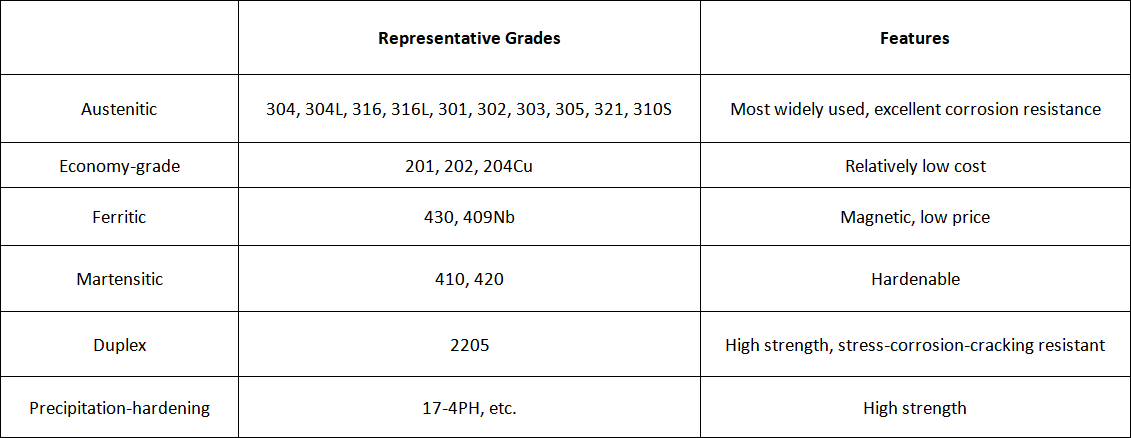
Stainless Steel Wire Production Process
The production of stainless steel wire is a multi-stage precision process comprising the following key steps:
1. Smelting and Continuous Casting
Raw materials are precisely proportioned according to the target grade's chemical composition. After melting in an electric arc furnace and refining (including VOD and ladle refining), billets are produced via processes such as horizontal continuous casting or ingot casting for electrodes.
2. Hot-Rolled Wire Rod
Steel billets are heated to over 1100°C and undergo rough, intermediate, and finish rolling. The material is then laid into coils by a laying head, cooled in an air-cooling section, and finally collected and bundled to produce hot-rolled wire rod.
3. Annealing and Pickling
Hot-rolled wire rod undergoes annealing to eliminate work hardening, followed by pickling to remove surface oxide scale, resulting in stainless steel wire rod stock.
4. Cold Drawing
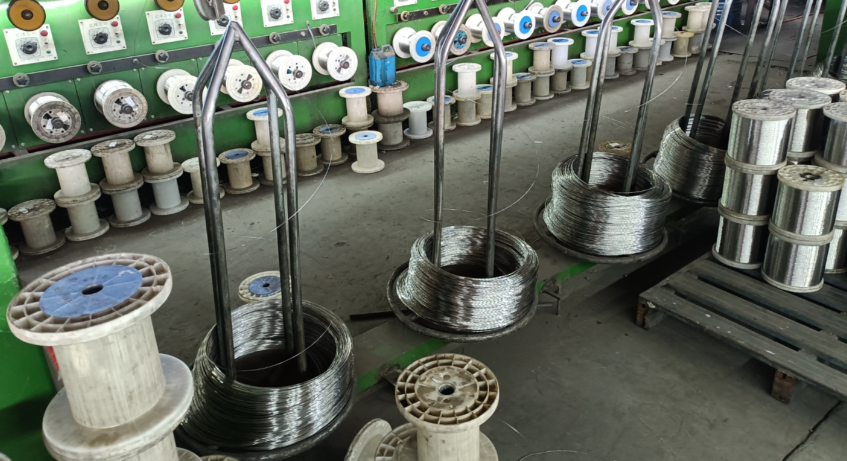
This is the core process of wire production. Under the action of a drawing force, the wire rod or stock is pulled through the die hole of a wire-drawing die to reduce its cross-section and achieve the target diameter. Cold drawing is typically performed at room temperature and may involve multiple passes to reach the final dimensions. 5. Heat treatment
6. Surface treatment and finished product
Depending on product specifications, surface treatments such as coating, copper plating, or electropolishing may be applied to produce the final cold-drawn wire.
Typical Process Flowchart
Raw materials → Electric arc furnace smelting → VOD refining → Continuous casting → Steel ingot/cast electrode → Electroslag remelting → Forging → Hot rolling (wire rod/bar) → Heat treatment → Pickling → Lubricant carrier coating → Rough cold drawing → Bright heat treatment → Fine wire drawing → Cold-drawn finished wire
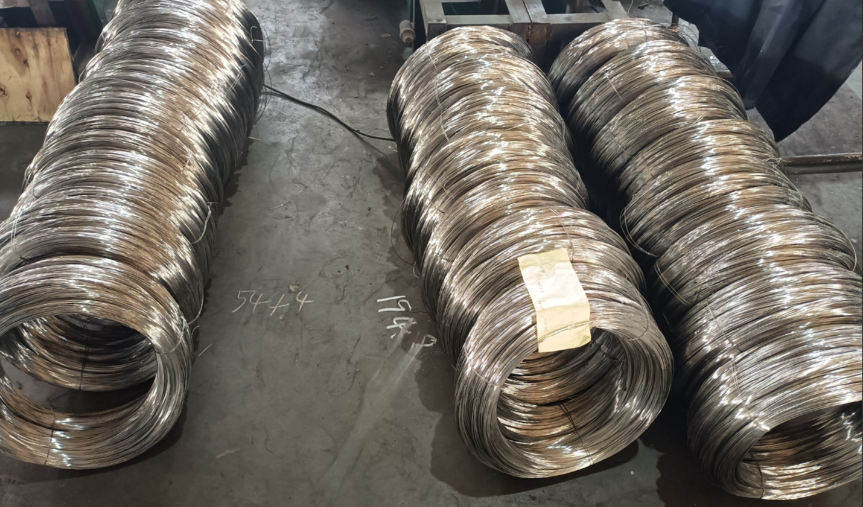
Characteristics of Stainless Steel Wire
1. Excellent corrosion resistance. Stainless steel wire contains chromium, which forms a dense protective chromium oxide film on the surface, preventing corrosion from most chemical substances. This allows the wire to maintain good performance in humid, acidic, and alkaline environments, thereby extending its service life.
2. Good mechanical properties. After undergoing processes such as cold drawing and heat treatment, stainless steel wire exhibits high strength and toughness, capable of withstanding significant tensile and bending forces. Consequently, it is widely used in various mechanical components, such as springs and bolts.
3. Good electrical and thermal conductivity. Stainless steel wire possesses high electrical conductivity—retaining it even at elevated temperatures—making it an ideal choice for the electrical and electronics industries. It also offers excellent thermal conductivity, allowing for efficient heat transfer, which makes it suitable for use in refrigeration equipment and heat-conducting devices.
4. Excellent fatigue resistance and high-temperature stability. Under long-term, high-load operating conditions, stainless steel wire maintains good toughness and strength, resisting breakage and deformation. It also demonstrates strong stability at high temperatures, allowing for prolonged operation without significant oxidation or corrosion.
5. Good weldability and workability. Stainless steel wire can be joined using various welding techniques, broadening its range of applications. Additionally, it is highly workable, allowing for the fabrication of parts in diverse shapes through processes such as cutting, punching, and bending.
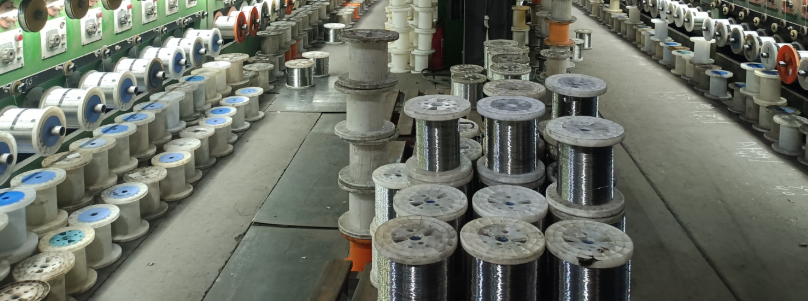
Applications of Stainless Steel Wire
Stainless steel wire has an extremely wide range of applications, spanning sectors from consumer goods and industry to high-end manufacturing:
1. Construction Sector
In the construction sector, stainless steel wire is commonly used to manufacture items such as wire ropes and reinforcing bars. For instance, stainless steel ropes are frequently utilized for bridge cables, suspension bridge railings, and elevator cables. Additionally, stainless steel wire is widely applied in construction hooks and the core reinforcement of building walls.
2. Electrical Equipment Sector
In the electrical equipment sector, stainless steel wire is used to create protective wire sheathing. Its excellent insulation properties and resistance to breakage help extend the service life and enhance the safety of electrical appliances and cables.
3. Food Processing Sector
In the food processing sector, stainless steel wire is widely used in the manufacture of production lines, baking tools, processing machinery, and oven safety guards. This is primarily because stainless steel offers a high level of safety; it does not release harmful substances upon contact with food and is resistant to rust.
4. Medical Device Sector
In the medical device sector, stainless steel wire is extensively used to manufacture medical instruments and supplies, such as hooks, surgical tools, and artificial heart valves. It is an essential material for medical devices due to its corrosion resistance, biocompatibility with human tissue, and the fact that it does not cause allergic reactions or contamination.
5. Aerospace Sector
In the aerospace sector, stainless steel wire is commonly used to manufacture aircraft engine components, bolts, and turbine air intakes. Capable of withstanding long-term use under conditions of high temperature, high pressure, and high stress, it ensures the safety, stability, and reliability of aircraft.
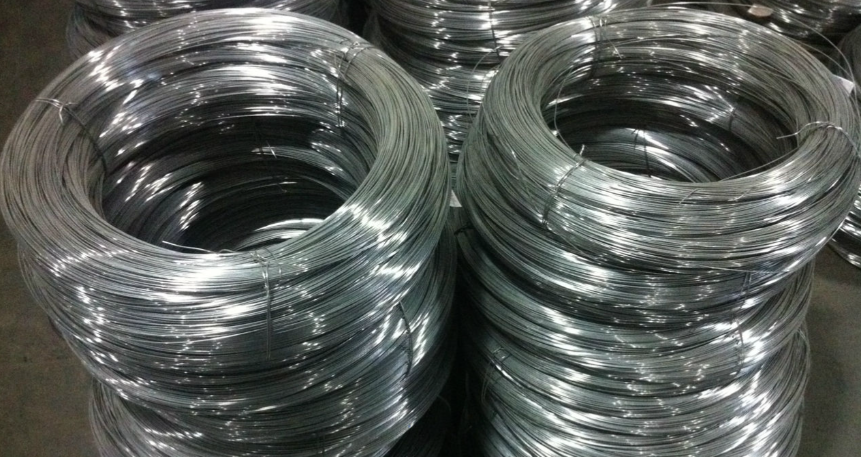
Stainless steel wire is a high-performance material distinguished by its excellent corrosion resistance, mechanical properties, electrical and thermal conductivity, fatigue resistance, and high-temperature stability. It finds widespread application across numerous fields, including construction, the chemical industry, aerospace, and electric power. With technological advancements and growing demand, the application prospects for stainless steel wire continue to expand.
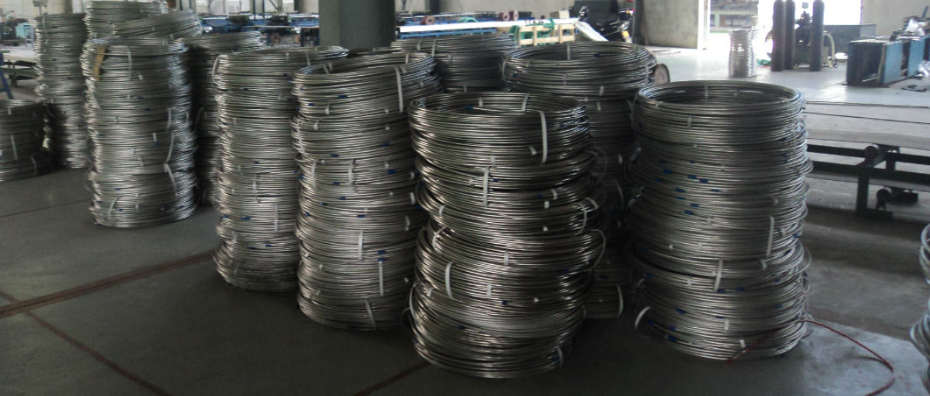
Stainless steel wire is a general-purpose metal material that is composed of different components and has good corrosion resistance and tensile strength. Therefore, stainless steel wire has been widely used in construction, petroleum, chemical, electric power, metallurgy and other industries. The following are the standards for stainless steel wire in some countries:
Chinese standard:
GB/T 4240-2019 "Stainless Steel Wire" is the fundamental and most widely applicable standard for stainless steel wire; it specifies terms and definitions, ordering information, classification and grades, dimensions, shape, technical requirements, test methods, inspection rules, packaging, marking, and quality certificates.
There is also a series of specialized standards for stainless steel wires intended for specific applications:
| Standard No. | Standard Title | Scope of Application |
| GB/T 4232‑2019 | Stainless Steel Wire for Cold Heading | Round stainless steel wire for manufacturing fasteners such as bolts, screws, rivets and other cold‑formed parts |
| GB/T 24588‑2019 | Stainless Steel Spring Wire | Austenitic and precipitation‑hardening stainless steel spring wire for spring fabrication |
| GB/T 29713‑2013 | Stainless Steel Welding Wire and Welding Strip | Stainless steel welding wire, filler wire and welding strip for MIG/MAG welding, submerged arc welding, plasma arc welding, laser welding, etc. |
| GB/T 17854‑2018 | Classification Requirements for Combination of Stainless Steel Welding Wire and Flux for Submerged Arc Welding | Classification requirements for combinations of stainless steel welding wire and flux used in submerged arc welding |
Among them, GB/T 4232-2019 applies to stainless steel wire with a circular cross-section used for manufacturing fasteners (such as bolts, screws, and rivets) and cold-formed parts. GB/T 24588-2019 applies to austenitic and precipitation-hardening stainless spring steel wire used for making springs.
British Standard:
The BS EN 10088 series of standards is part of European Standards (EN) and contains various specifications for stainless steel materials, including stainless steel wire.
American standard:
ASTM A313 is a standard issued by the American Society for Testing and Materials (ASTM), which regulates the mechanical properties and dimensional tolerances of stainless steel wire.
Japanese standard:
JIS G4309 is a specification for stainless steel wire in Japanese Industrial Standards (JIS for short), which includes the chemical composition and mechanical properties of stainless steel wire.
| Standard System | Representative Standards |
| USA | ASTM A276 (Stainless Steel Bars and Shapes), ASTM A313 (Stainless Steel Spring Wire) |
| Japan | JIS G4303 (Stainless Steel Bars), JIS G4314 (Stainless Steel Spring Wires) |
| Europe | EN 10088 |
Copyright Notice © 2022 - 2023 ChinaSteelMarket.com All rights reserved.