
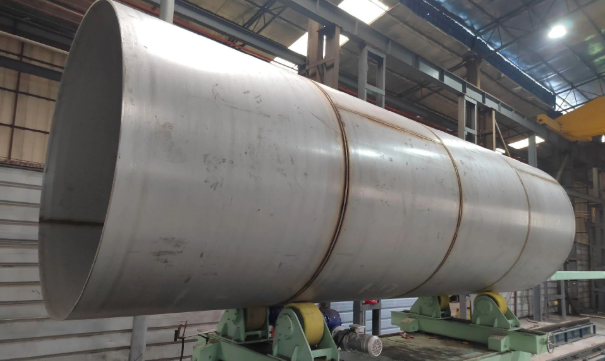
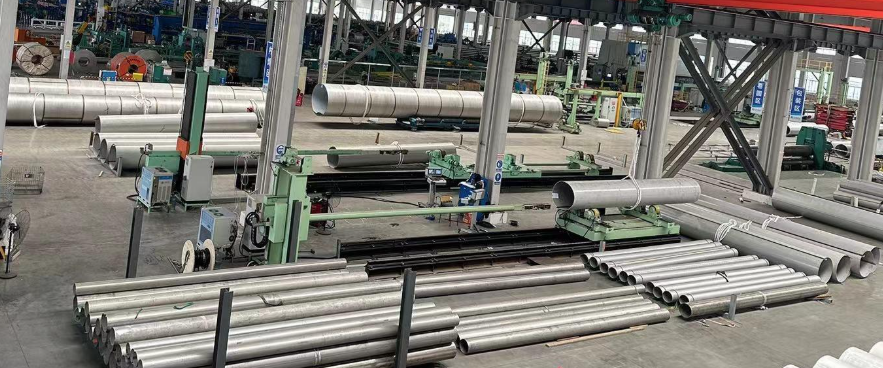
Stainless steel welded pipe (often simply referred to as "welded pipe") is a hollow tubular product manufactured by forming stainless steel plates or strips into shape using a production line and molds, followed by a welding process. Unlike seamless steel pipe, welded pipe features a weld seam along its inner wall.
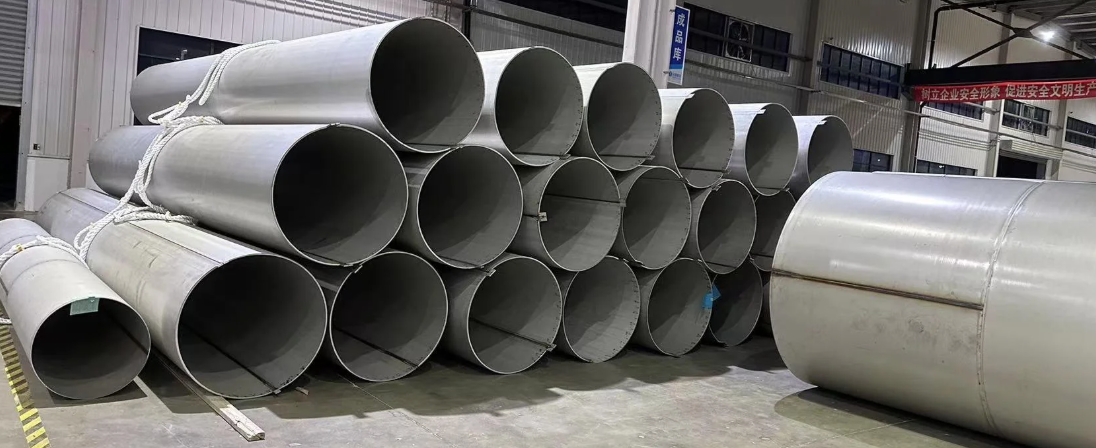
Stainless Steel Welded Pipe Production Process:
Slitting → Uncoiling → Leveling → Head/Tail Shearing & Butt Welding → Accumulator (Looping) → Tube Forming → Welding → External Weld Bead Removal → Cooling → Sizing → Flaw Detection → Cut-to-Length → End Facing & Beveling → Sorting (Prime vs. Sub-standard) → Polishing → Packaging & Warehousing
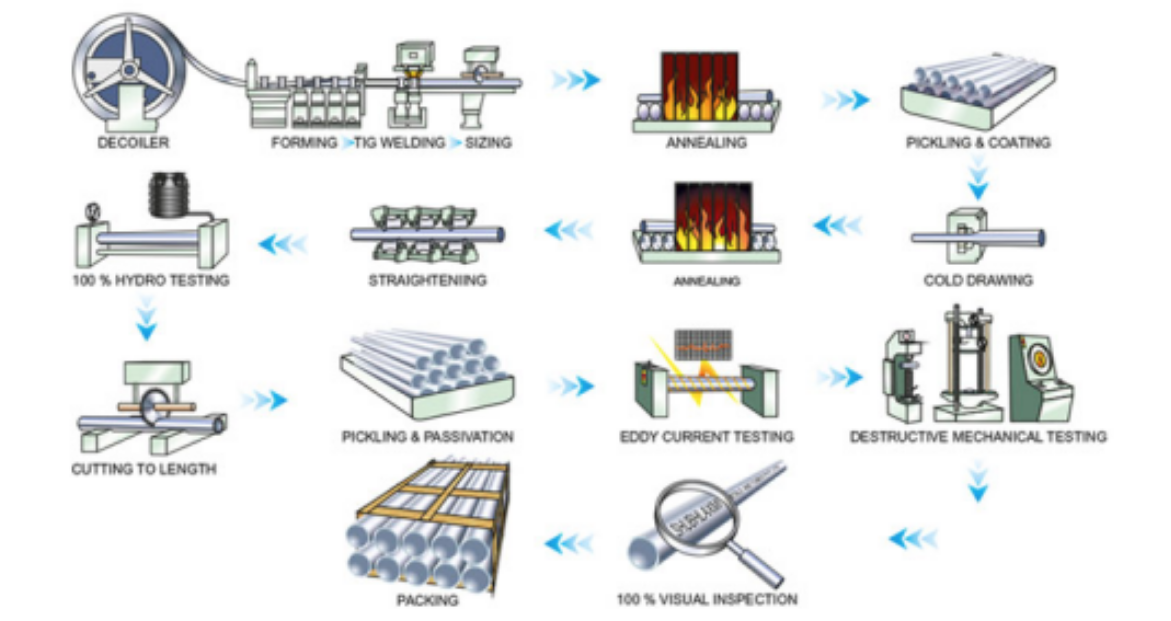
Production Process Characteristics
Continuous online production: Small-diameter welded pipes can be produced continuously with high efficiency.
High precision: Uniform wall thickness and high surface finish (both internal and external, depending on the steel plate's surface grade).
Flexible length: The length of the stainless steel coil determines the maximum length of the welded pipe.
Lower equipment investment: Production costs are approximately 25% lower than those for seamless pipes of the same specifications.
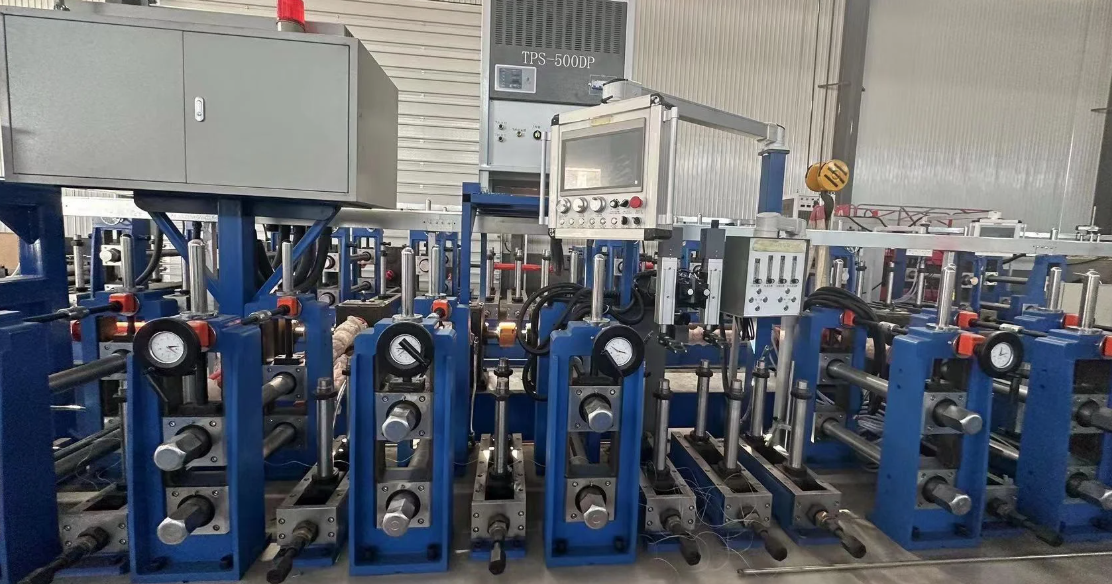
Classification of Stainless Steel Welded Pipes
1. Classification by weld seam type
Straight-seam welded pipe: The weld seam runs parallel to the pipe axis; this is the most common type.
Spiral-seam welded pipe: The weld seam follows a spiral path; suitable for large-diameter pipes.
2. Classification by application
Industrial welded pipe: Used for chemical fluid transport, pressure piping, heat exchangers, etc.
Decorative welded pipe: Used for architectural decoration, furniture, municipal guardrails, etc.
Common Grades of Stainless Steel Welded Pipe
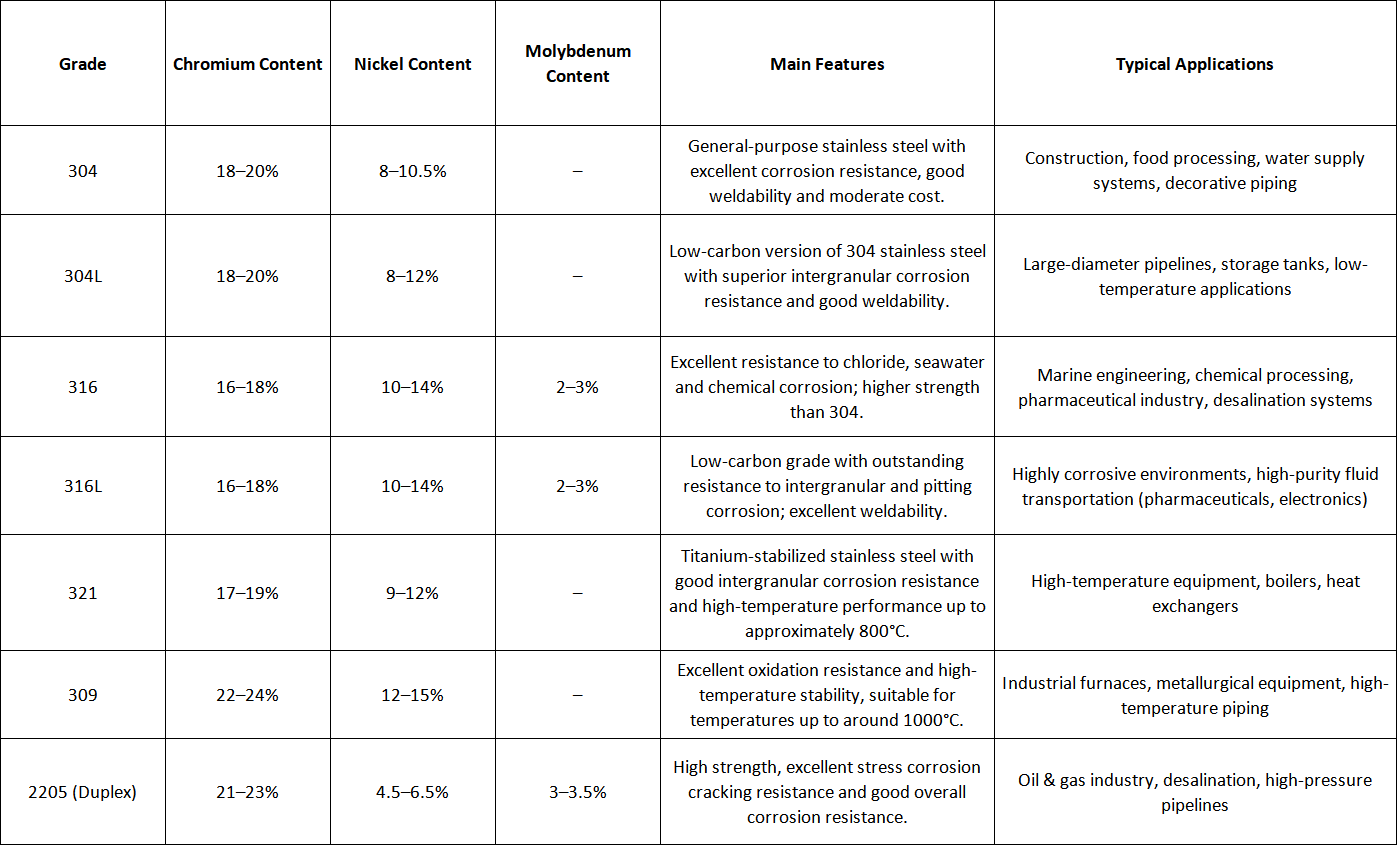
Based on their microstructure, welded pipes are generally categorized into four main types. Among them, austenitic stainless steel pipes are the most widely used.
Austenitic stainless steel welded pipe: The most common type used in industrial and commercial applications.
Typical grades: 304/304L and 316/316L.
1. 304/304L: Offers excellent corrosion resistance and good formability, making it suitable for construction, food processing, and water supply systems.
2. 316/316L: Contains molybdenum, which enhances resistance to chloride and chemical corrosion, making it an ideal choice for marine, chemical, and pharmaceutical environments. 3. Other grades: 309, 310, and 321 are used for high-temperature or specialized conditions.
Ferritic stainless steel welded pipes: These steels have lower nickel content and are generally more cost-effective. They offer good resistance to stress corrosion cracking but have lower toughness than austenitic steels. Typical applications include automotive exhaust systems and household appliances.
Martensitic stainless steel welded pipes: Known for high strength and hardness. They are less commonly used for piping but are suitable for applications requiring high wear resistance and strength, such as blades or mechanical components.
Duplex stainless steel welded pipes: These combine the microstructures of austenitic and ferritic stainless steels. Duplex stainless steel pipes offer higher strength and superior resistance to stress corrosion cracking, making them suitable for demanding industries such as oil and gas, desalination, and chemical processing.
Performance characteristics of welded stainless steel pipes
Key advantages
1. Simple production process and high efficiency: Continuous online production offers much higher efficiency than seamless pipe manufacturing.
2. Wide range of specifications: Covers everything from very small to extra-large diameters.
3. Lower equipment investment: Significant cost advantage; costs are approximately 25% lower than seamless pipes of the same specifications.
4. High dimensional accuracy: Uniform wall thickness and high surface finish (both internal and external).
5. Flexible length customization: Not limited by the length of the raw material billet.
Main limitations
1. Strength is generally lower than that of seamless steel pipes.
2. Presence of a weld seam: The weld may be susceptible to preferential corrosion in highly corrosive environments.
3. Weld seam behavior must be considered during bending operations.
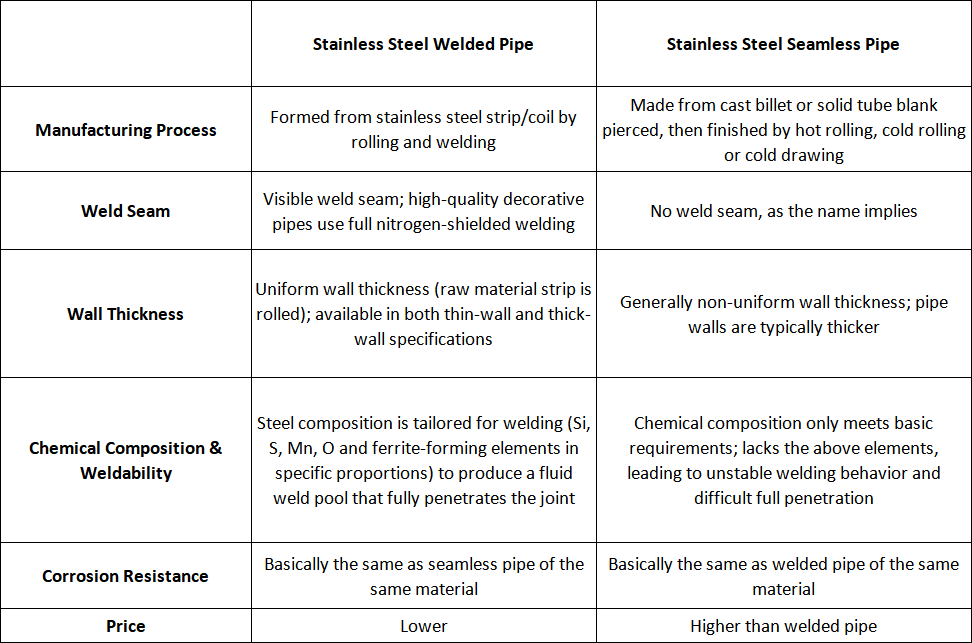
Differences between welded and seamless stainless steel pipes
Applications of welded stainless steel pipes
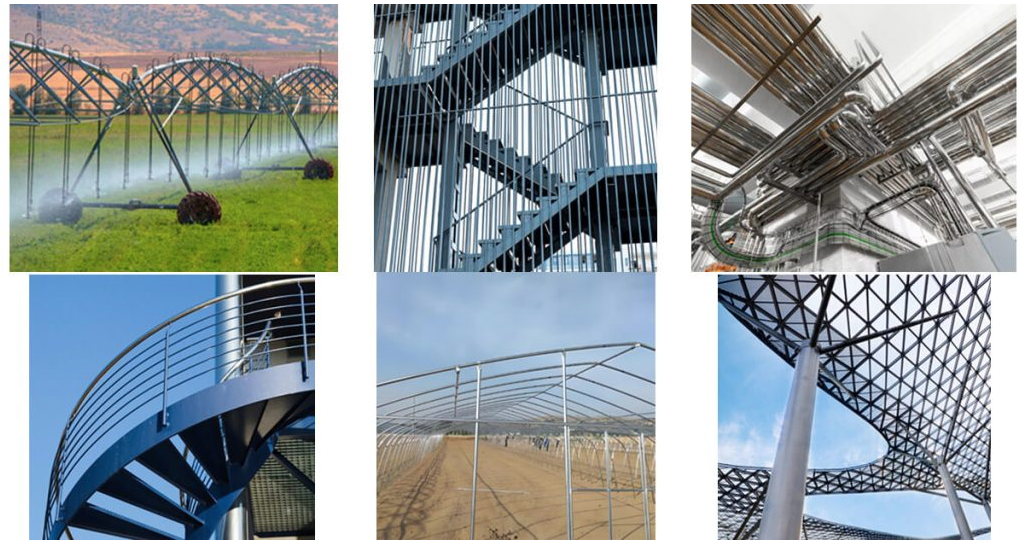
Due to their combination of high strength, corrosion resistance, and cost-effectiveness, welded stainless steel pipes are widely used across many industries. Typical application areas include:
1. Architecture and construction: Used for handrails, structural supports, decorative frames, and architectural components. Stainless steel pipes offer excellent weather resistance and are suitable for both indoor and outdoor environments.
2. Oil, gas, and petrochemical industries: Used for transporting oil, natural gas, and chemical fluids. These pipes can withstand high pressures and extreme temperatures, making them common in piping systems and oil refining equipment.
3. Food and beverage processing: Sanitary-grade welded stainless steel pipes are frequently used in breweries, dairies, and food processing plants to transport liquids and gases. They feature smooth surfaces that are easy to clean and resistant to contamination.
4. Water treatment systems: Widely used in seawater desalination and wastewater treatment plants. Their corrosion resistance and long service life make them suitable for water transport and treatment systems.
5. Automotive industry: Used in exhaust systems, hydraulic lines, and structural components. Stainless steel pipes offer heat and pressure resistance, along with an optimal balance of strength and weight.
6. Pharmaceutical and chemical industries: Used to transport acids, solvents, and high-purity fluids. Grades such as 316 and 316L are widely selected for their excellent corrosion resistance and ability to maintain fluid purity.
7. Other industries: Welded stainless steel pipes are also widely used in medical equipment, marine engineering, power generation, aerospace, and mining. In medical applications, precision small-diameter tubing is typically produced using specialized welding and coiling equipment. Different grades and specifications are selected based on the specific operating environment.
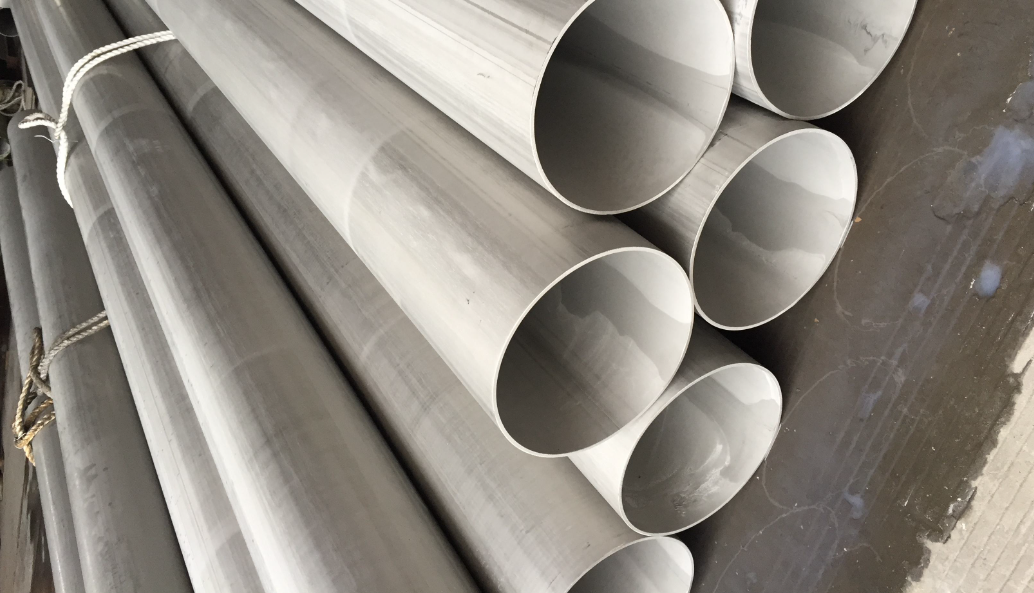
Stainless steel welded pipe is manufactured by rolling and welding stainless steel strip. Combining the corrosion resistance of stainless steel with the efficient production characteristics of welded piping, it is widely used in applications requiring rust resistance and durability. Compared to seamless steel pipe, welded pipe offers lower production costs and the capability for larger diameters, making it a highly cost-effective choice.
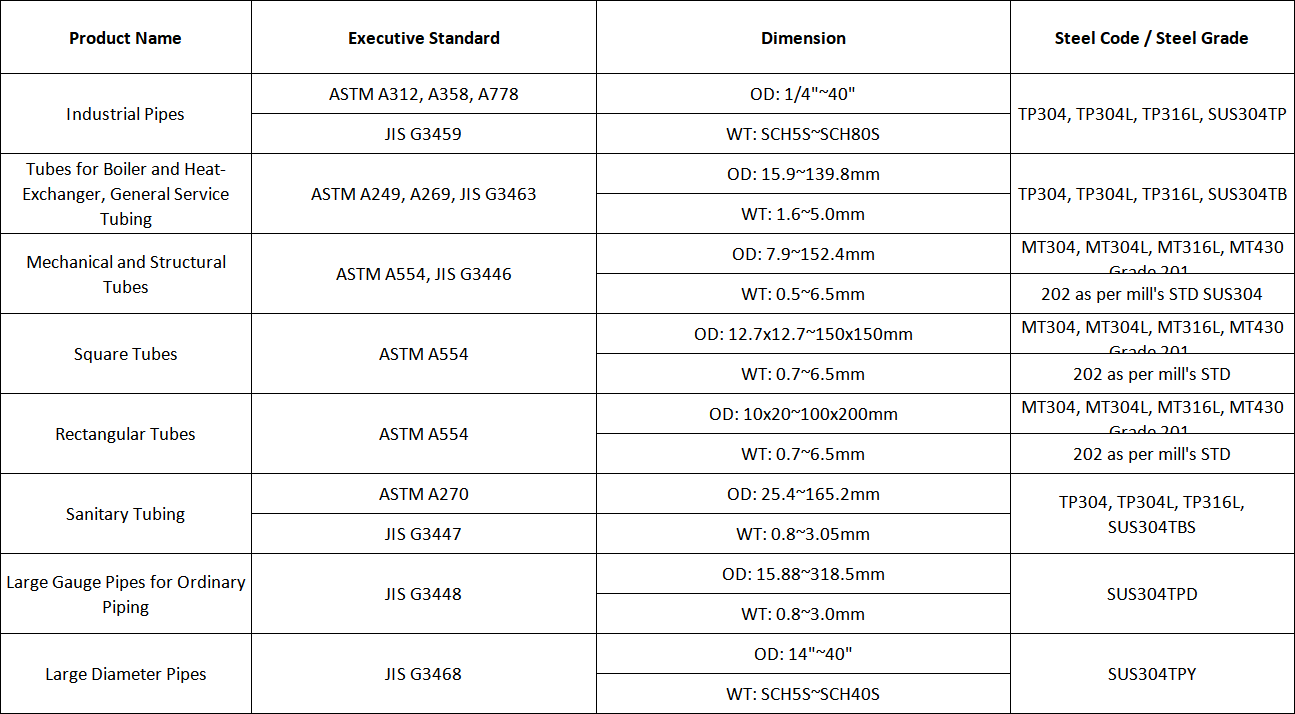
Different countries have their own national standards for stainless steel welded pipes. The following are some common national standards:
Chinese standard:
GB/T12770-2012 "Welded stainless steel tubes for mechanical structures". Mainly used in machinery, automobiles, bicycles, furniture, hotel and restaurant decoration and other mechanical parts and structural parts.
GB/T 12771-2019 "Welded stainless steel pipes for fluid transport". Mainly used for transporting fluids.
American standard:
ASTM A312/ASME SA312 Standard for Stainless Steel Seamless Tubing
This standard mainly stipulates the specifications for the manufacturing process, chemical composition and mechanical properties of stainless steel seamless pipes.
ASTM A358/ASME SA358 Stainless Steel Welded Pipe Standard
This standard stipulates the specifications for the manufacturing process and quality inspection of stainless steel welded pipes.
European standard:
European standard stainless steel welded pipe is a stainless steel welded pipe standard formulated within the European Union, mainly including EN 10217-7 and EN 10312. It stipulates the requirements for the material, specification, size and application range of stainless steel welded pipes, and is an important standard for the stainless steel welded pipe industry.
Japanese standard:
JIS G3459: Stainless steel welded steel pipes
JIS G3468: Stainless steel large diameter welded steel pipes, these standards cover the specifications and requirements for stainless steel welded pipes for different purposes and applications
Copyright Notice © 2022 - 2023 ChinaSteelMarket.com All rights reserved.