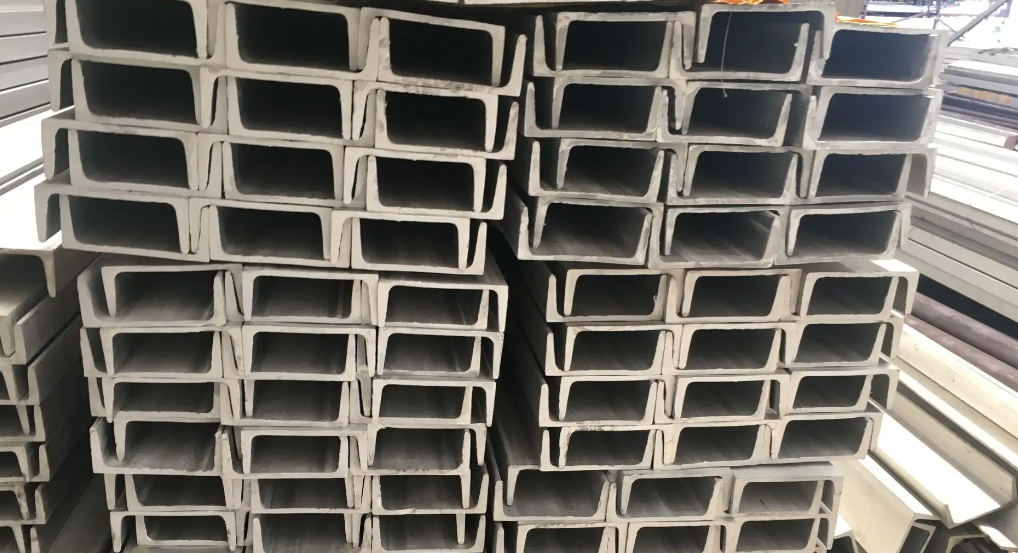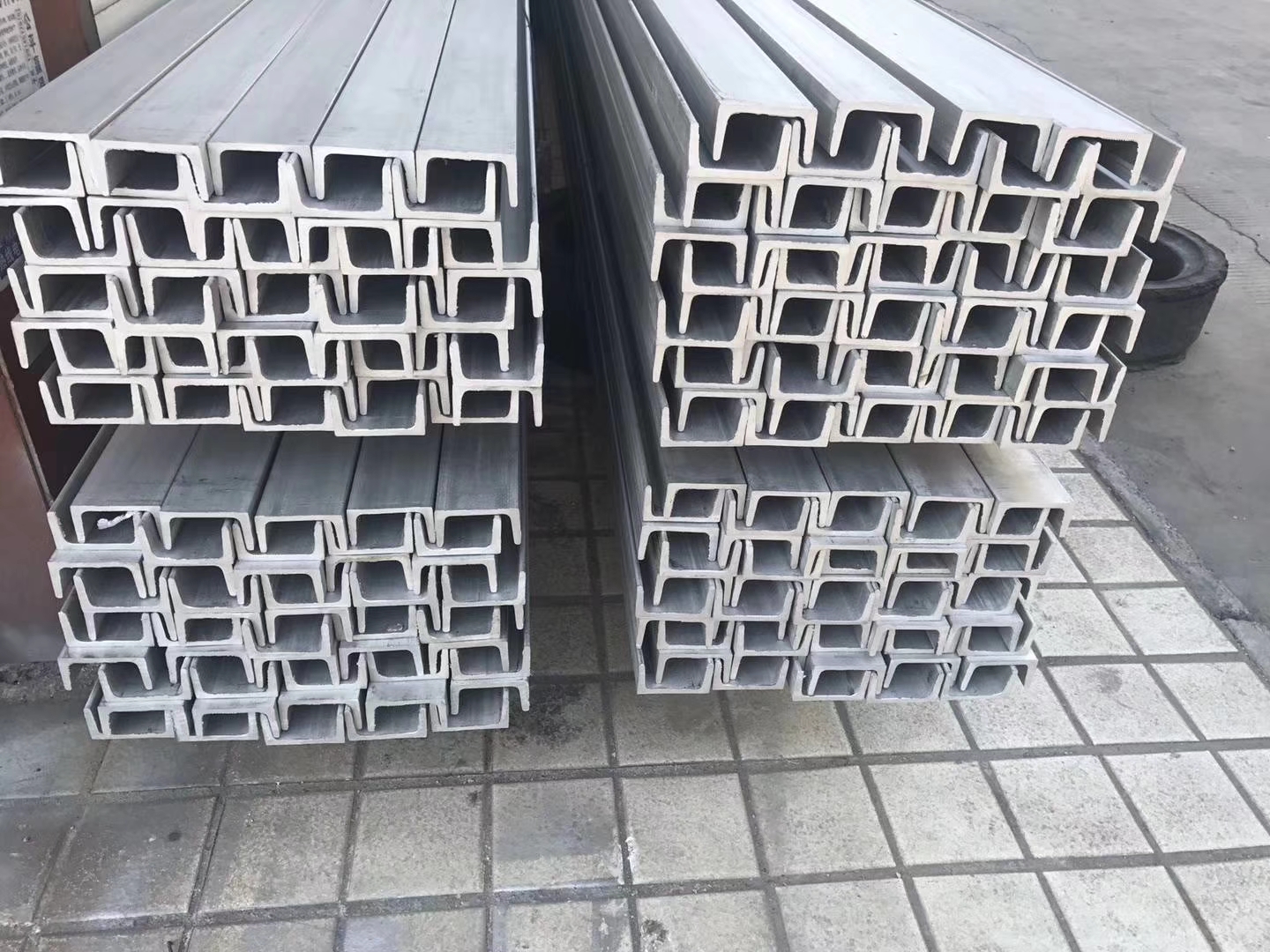

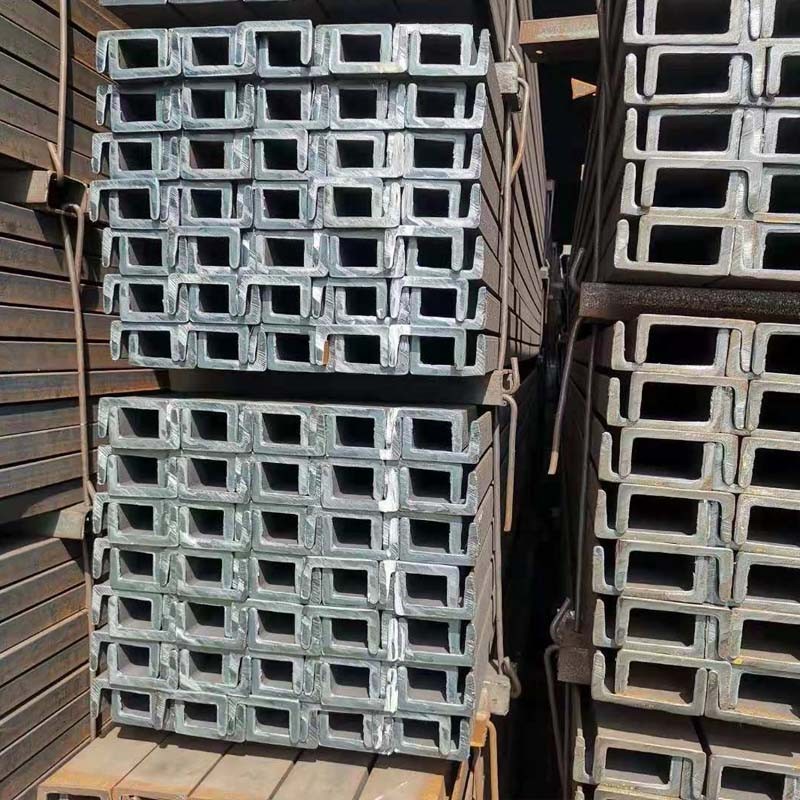
Stainless Steel Channel is a long strip of steel with a groove-shaped cross-section. It is the same as I-beam. Stainless steel channel is also divided into ordinary channel steel and light channel steel. The model and specification are also represented by waist height (h) × leg Width (b) × waist thickness (d) in millimeters, such as 120 × 53 × 5 channel steel, that is, waist height 120mm, round steel, need to add a, b, c, etc. on the right side of the model to distinguish.
Production process of stainless steel channel
1. Raw material preparation The main raw material of stainless steel channel is stainless steel coil, commonly used materials are 304, 316, 321 and so on. During the production process, quality testing of raw materials is required, including chemical composition, mechanical properties, etc.
2. Coil uncoiling The stainless steel coils are uncoiled according to certain requirements, usually using an uncoiler. After uncoiling, the plates need to be cleaned and pickled to remove oil and oxides on the surface.
3. Plate cutting Cut the uncoiled stainless steel plate according to the specified size. There are many cutting methods, commonly used are shearing, flame cutting, plasma cutting and so on.
4. Bending forming Bending and forming the cut plate, usually using a roll bender or bending machine. Bending forming needs to be adjusted and controlled according to the requirements and standards of the product.
5. Welding The bent and formed stainless steel sheet is welded. The commonly used welding methods include TIG welding and MIG welding. Welding needs to pay attention to the quality and firmness of the weld, and avoid welding deformation and cracks.
6. Surface treatment After the welding is completed, it is necessary to carry out surface treatment on the stainless steel channel steel, including grinding and polishing. Surface treatments can improve the finish and aesthetics of a product.
7. Inspection and packaging Conduct quality inspection on the finished stainless steel channel, including appearance inspection, size inspection, chemical composition analysis, etc. Qualified products are packaged to ensure product integrity and safety.
Stainless steel channel is a common metal material made of stainless steel. It has many unique features that make it widely used in various industries.
First of all, stainless steel channel has excellent corrosion resistance. Stainless steel itself is rich in chromium, which can form a dense chromium oxide film to prevent the steel from contacting with external oxygen, water vapor and some chemical substances, thereby preventing corrosion. This feature makes stainless steel channel work stably in humid, acid-alkaline environments, and is suitable for use in marine engineering, chemical equipment and other fields.
Secondly, stainless steel channel has strong heat resistance and high temperature resistance. Stainless steel has a high melting point and can work for a long time in a high temperature environment without deformation or melting. Therefore, stainless steel channel is often used as a structural material for high-temperature devices such as stoves, heat exchangers, and boilers.
In addition, stainless steel channel also has good tensile strength and compressive strength. The structure of stainless steel is stable, and it has undergone multiple processes during processing, so that it has good mechanical properties. This enables the stainless steel channel to withstand greater strength in construction, manufacturing and other fields, effectively enhancing the stability and firmness of the structure.
In addition, stainless steel channel steel also has good plasticity and weldability. Stainless steel has high ductility and plasticity, and can be easily processed into components of various shapes. At the same time, stainless steel channel steel can be connected by welding to form a larger structure or device. This characteristic makes stainless steel channel more widely used in fields such as construction, manufacturing and transportation.
Finally, stainless steel channels also have a good appearance and finish. The surface of stainless steel channel is smooth and silvery white with a certain luster. This makes stainless steel channels very popular in some occasions that require high appearance, such as interior decoration, furniture making and catering.
To sum up, stainless steel channel has the characteristics of corrosion resistance, heat resistance, high strength, strong plasticity and good appearance. These characteristics make stainless steel channel one of the ideal materials in various industries. Whether in marine engineering, petrochemical, construction or household life, the excellent performance of stainless steel channel can meet different needs and play an important role.







|

|

|

|

|
| Timely Info | Independent | Platform | Multiple guarantees | Self-operated storage |
China Steel Market
Empowering small and medium-scale steel purchasing

| About us | Channel | Useful tools |
|---|---|---|
| About China Steel Market | Prices | Steel Weight Calculation |
| Contact Us | Answers | Why Choose Us |
| Terms & Conditions | Inventory | |
| Privacy Policy | Help |
Hot search words:
China Rebar prices China Wire Rod Prices Welded Steel Pipe Prices