
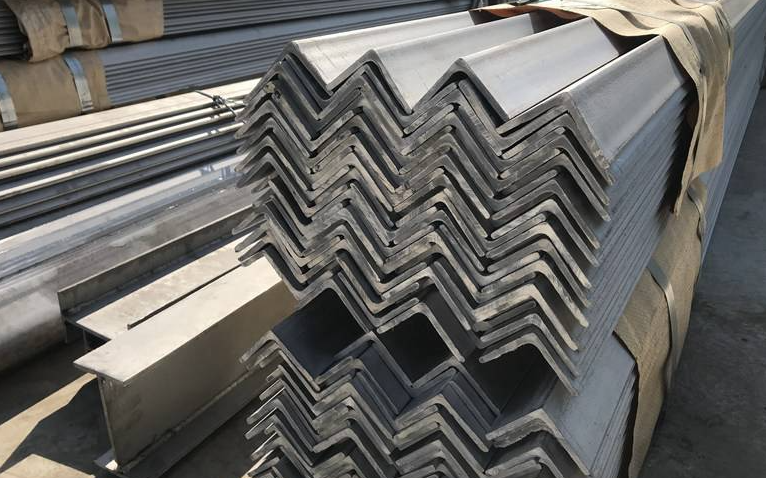
Stainless steel angle (commonly known as stainless steel angle iron) is a long steel product with two sides positioned at a right angle to each other. As a fundamental stainless steel profile, it is widely used in sectors such as construction, machinery, and the chemical industry due to its excellent corrosion resistance and high strength.
Classification of Stainless Steel Angles:
1. By shape: This is the primary classification method.
Equal-leg angle: The widths of the two legs are equal.
Unequal-leg angle: The widths of the two legs are unequal.
2. By material: Covers major stainless steel series.
Austenitic stainless steel: Includes grades such as 304, 304L, 316, 316L, 321, and 310S; this is the most widely used category.
Economical stainless steel: Includes grades such as 201 and 202.
Ferritic stainless steel: Includes grade 430.
Duplex stainless steel: Includes grade 2205.
3. By production process:
Hot-rolled angle: Formed via high-temperature rolling; this is the most common production method.
Cold-drawn angle: Produced via a drawing process at room temperature, offering higher dimensional accuracy.
Production Process and Performance Characteristics
Production process:
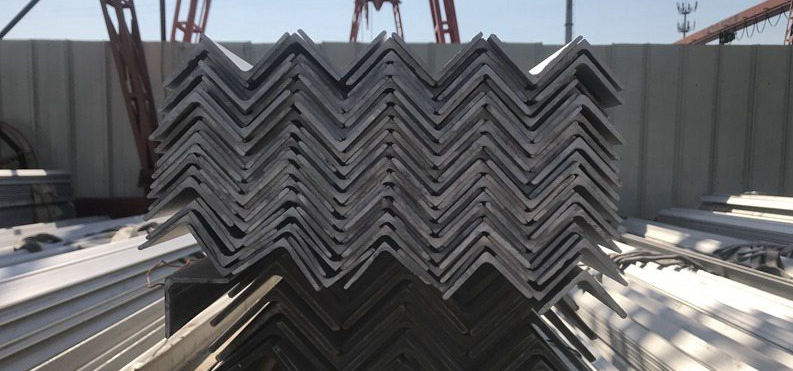
The core production method is hot rolling. The general workflow is: raw steel billet (usually low-carbon square billet) → heating (1150–1250°C) → multi-pass rolling → cooling → straightening → pickling/surface treatment.
Key properties:
Corrosion resistance: A dense, chromium-rich oxide film on the surface is key to its corrosion resistance. Grade 304 is a general-purpose type, while grade 316L offers superior resistance to pitting and chloride-ion corrosion due to the addition of molybdenum (Mo).
Mechanical properties: Taking grade 304 as an example, its yield strength is typically no less than 205 MPa; it features excellent weldability and moderate mechanical strength.
Workability: It supports secondary processing such as cutting, drilling, and welding, making it easy to fabricate into various structural components.
Application Areas of Stainless Steel Angles
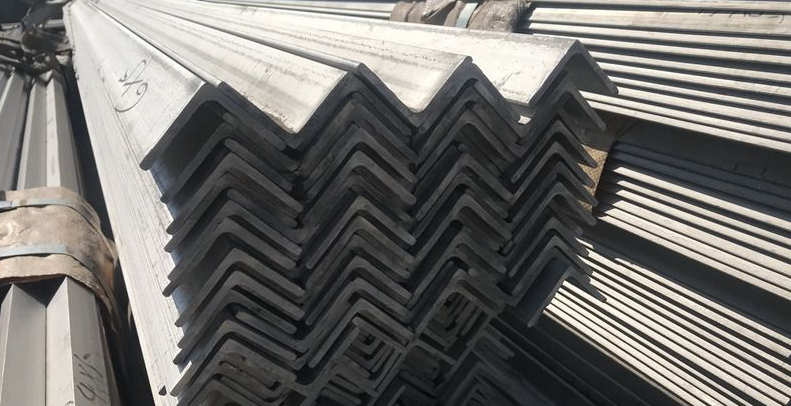
1. Construction sector: Stainless steel angles can be used for interior decoration materials, exterior wall cladding, roofing, and other architectural components.
2. Machinery Manufacturing: Stainless steel angle bars are widely used in the manufacture of machinery and equipment, lightweight steel structures, automotive components, and more.
3. Shipbuilding: Stainless steel angle bars can be used to fabricate ship hulls, plating, marine equipment, and other components.
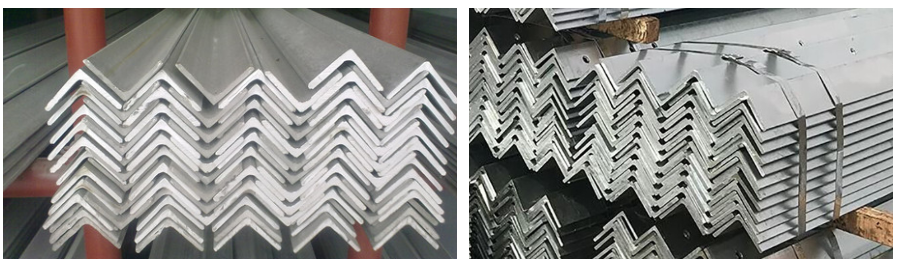
Stainless steel angle bars are a fundamental and important type of stainless steel profile. Their production primarily adheres to the YB/T 5309-2023 standard, and they are available in a wide range of specifications and material grades, such as 304 and 316L. Combining high strength, excellent corrosion resistance, and good workability, they serve as a key foundational material bridging industrial and civil applications, as well as traditional and emerging sectors.
When selecting the appropriate product, factors such as the specific operating environment, load-bearing requirements, and budget should be comprehensively considered alongside the material
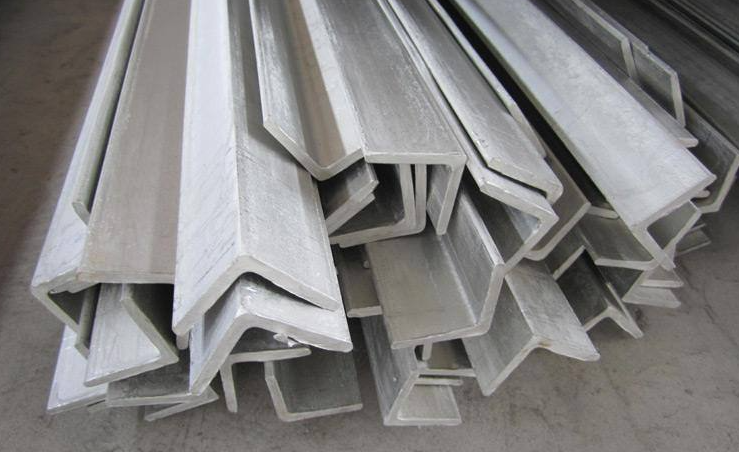
The specification size of stainless steel angle is reflected by its model number. Commonly used models in China are L-type, I-type, equilateral angle, etc., while internationally there are C-type, U-type, Z-type and other models. The size and thickness of the stainless steel angle size also differ, and must be selected in accordance with the specifications and actual use. In specific applications, should also pay attention to stainless steel angle hardness, toughness, processability and corrosion resistance and other aspects of the indicators. The following are common national implementation standards
Chinese standard.
GB/T 706-2016 "hot rolled steel sections
This standard specifies the hot rolled I-beam, hot rolled channel steel, hot rolled equilateral angle steel, hot rolled unequal angle steel, hot rolled order content, size, shape, weight and allowable deviation, technical requirements, test methods, inspection rules, packaging, marking and quality certificate. This standard applies to hot rolled equilateral angle steel, hot rolled unequal angle steel and hot rolled I-beam and hot rolled channel steel with sloping inside leg.
American Standard:
ASTM A276 standard specifies the chemical composition, mechanical properties, processing performance and marking information of stainless steel angle, ASTM A276 standard also specifies the processing performance index and marking requirements of stainless steel angle, which makes it easier for users to identify and select the required materials.
British Standard:
BS EN 10056-1 The standard specifies the stainless steel and other materials, "hot rolled equilateral equilateral angle" size, shape, allowable deviations and technical requirements.
Japanese Standard: JIS G 4317 This standard covers the chemical composition, mechanical properties and dimensional tolerances of stainless steel angles.
Copyright Notice © 2022 - 2023 ChinaSteelMarket.com All rights reserved.