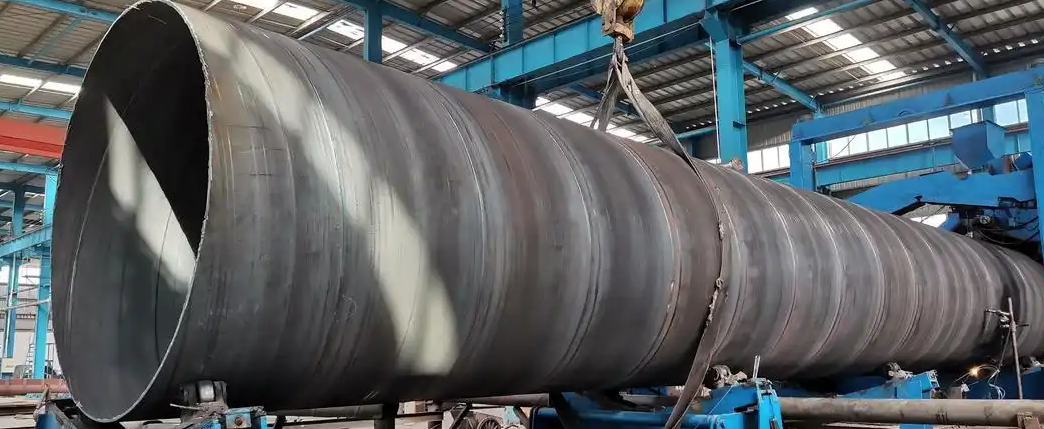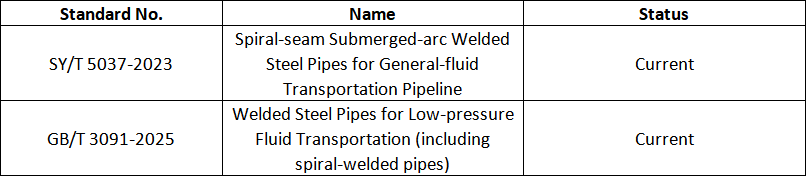

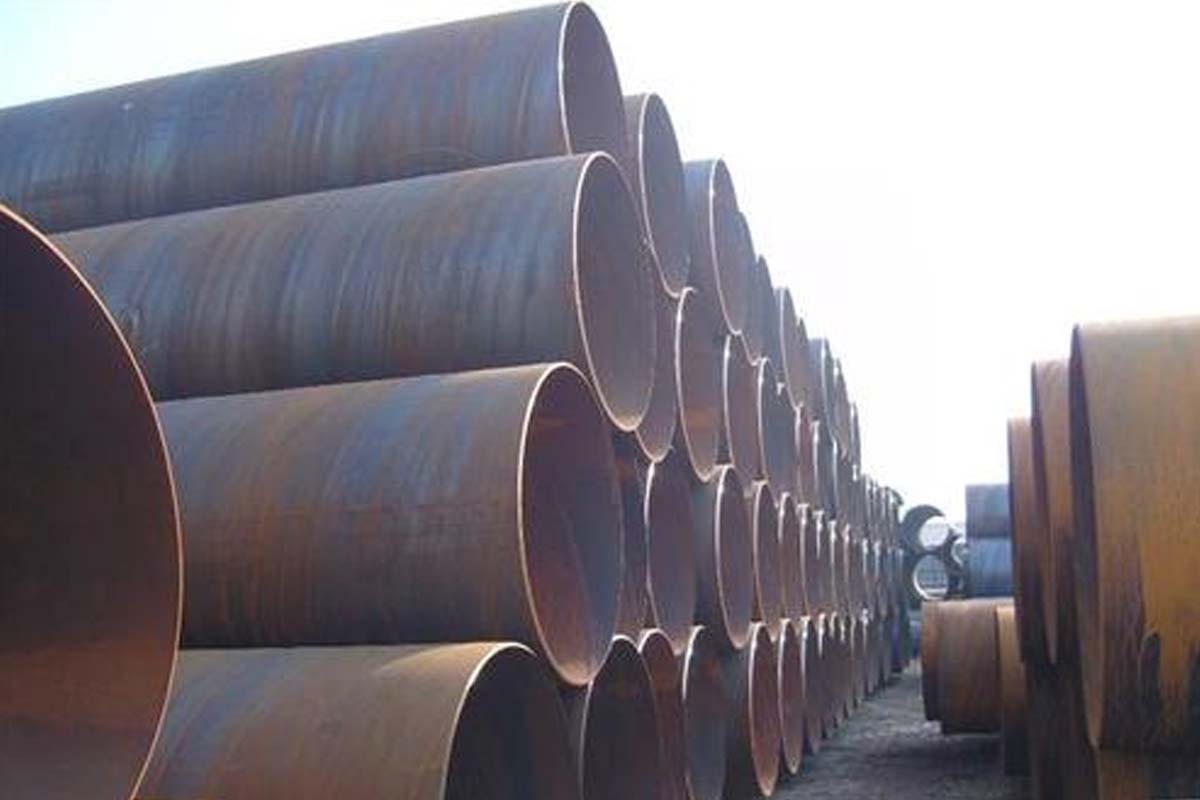
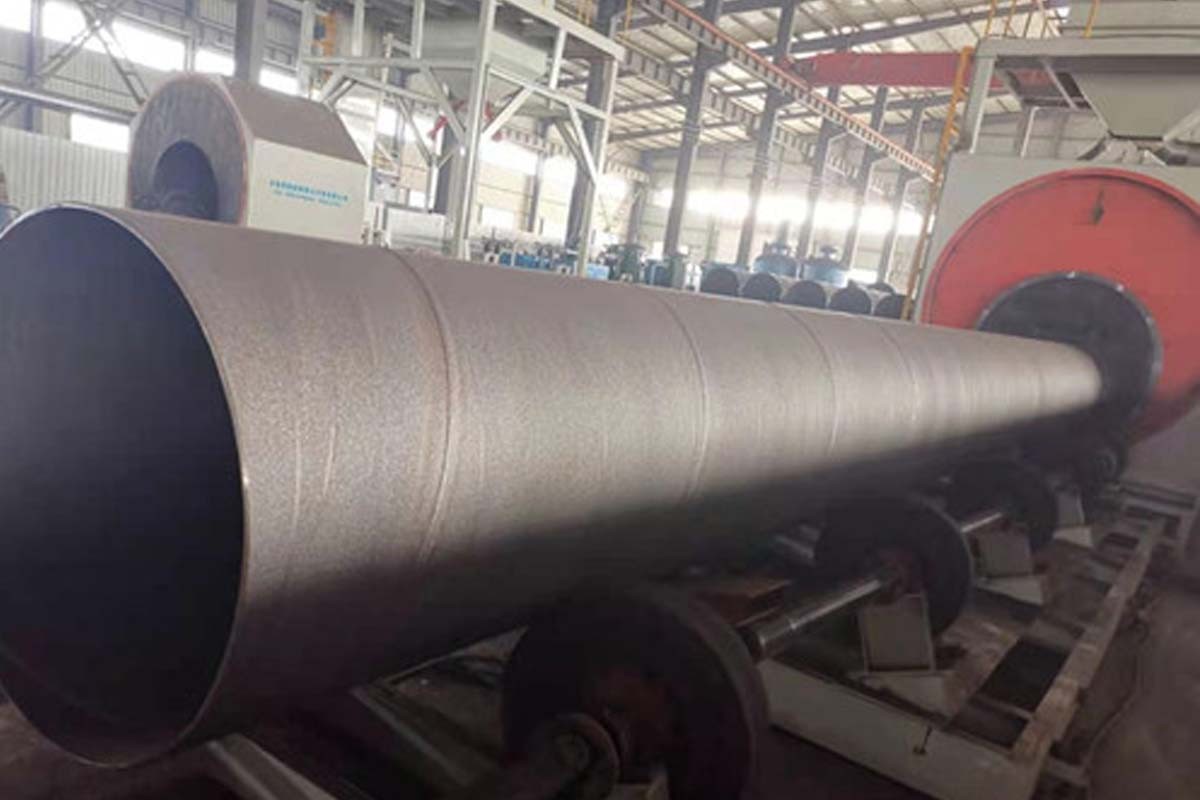
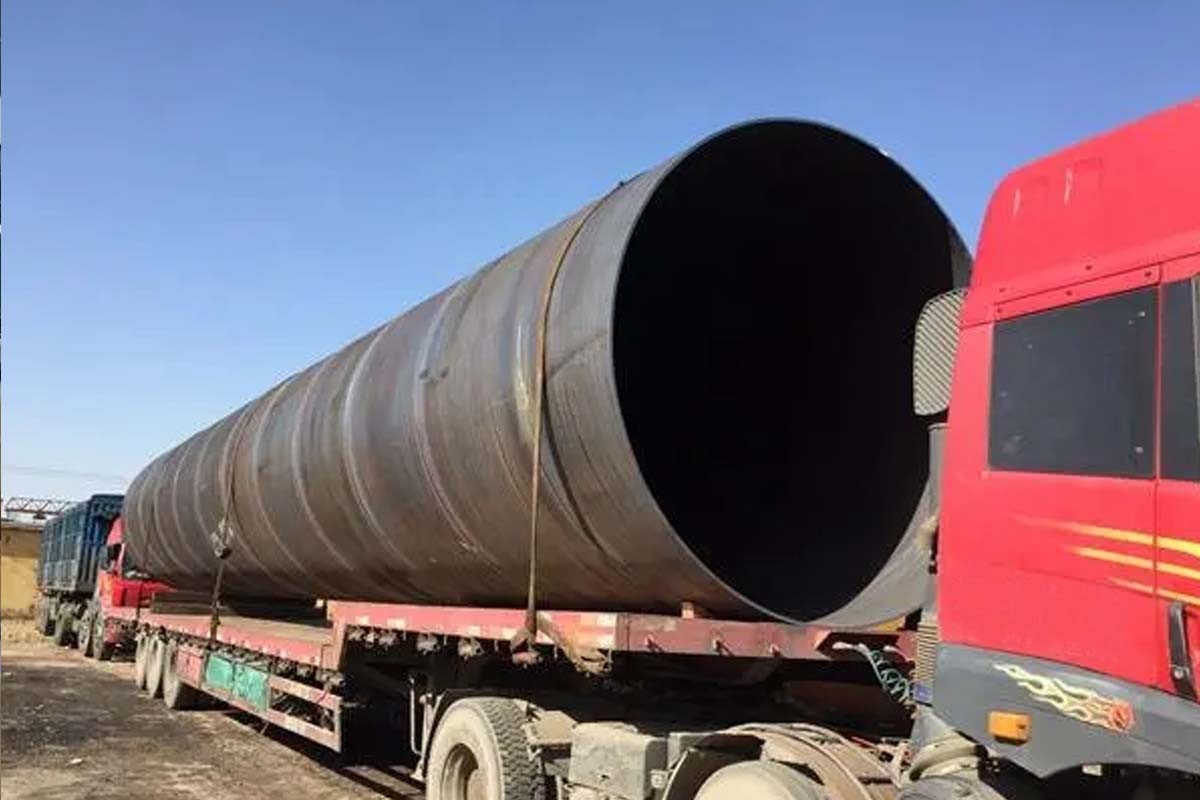
Spiral welded pipe, also known as spiral submerged arc welded steel pipe (SSAW or HSAW in English), refers to steel pipe made by rolling hot-rolled steel strip (coil) at a specific helix angle (forming angle) and then automatically welding it with a double-sided submerged arc. Its weld seam is distributed in a spiral shape on the pipe surface, which is the core characteristic distinguishing it from straight seam welded pipe.
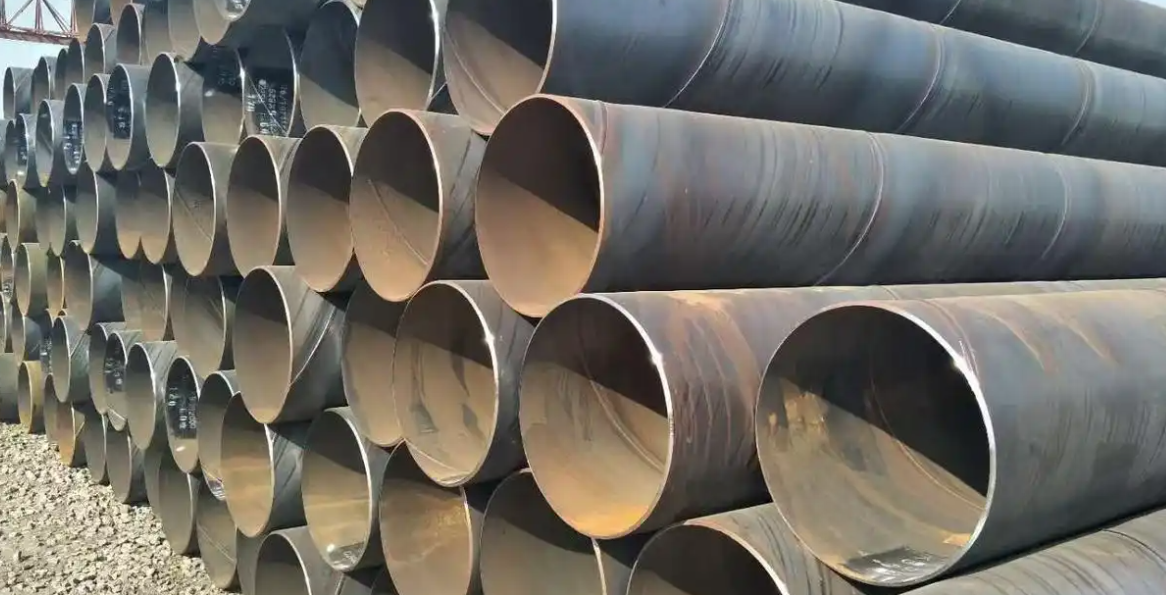
The core advantages of spiral welded pipe are reflected in the following aspects:
Producing large-diameter pipes from narrow steel strips: Steel strips with narrower widths can be used to produce pipes with diameters much larger than the strip width, overcoming the limitations of raw material width.
High efficiency of continuous production: Theoretically, infinitely long steel pipes can be produced with minimal end-cutting losses, increasing metal utilization by 6%–8%.
Superior stress distribution in the weld seam: Under the same pressure conditions, the stress borne by the spiral weld seam is only 75%–90% of that of the straight seam welded pipe, allowing it to withstand greater pressure.
Relatively low equipment investment: The equipment is lightweight, requires less initial investment, and can even be manufactured as a trailer-mounted mobile unit for on-site production.
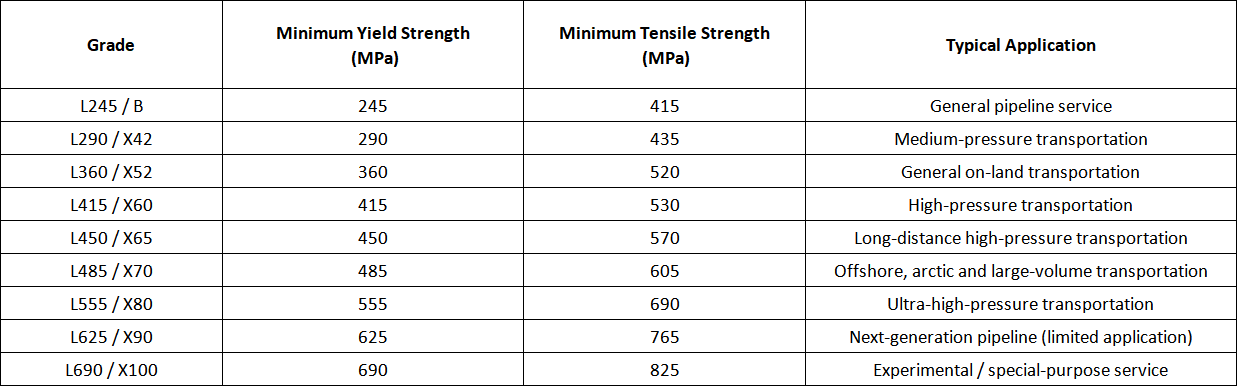
Spiral welded pipes are mainly classified into the following categories according to welding process and application:

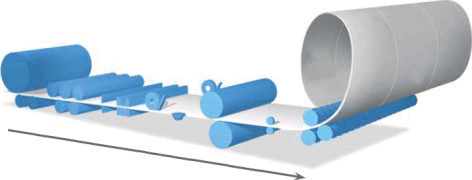
The core production process of spiral welded pipe is spiral forming + double-sided submerged arc welding. The main process is as follows:
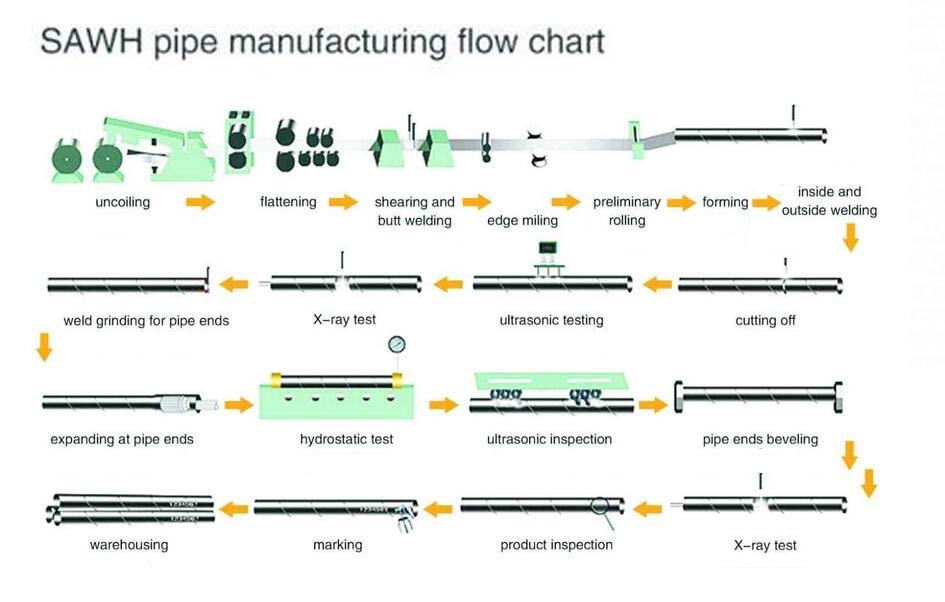
1. Steel strip coil, welding wire, and flux are the raw materials. Before use, they must pass stringent physical and chemical tests.
2. After the steel pipe is rolled, automatic submerged arc welding is used to repair the weld using single-wire or double-wire submerged arc welding. welding.
3.The strip is leveled, cut, planed, surface cleaned, and pre-bent before forming.
4.Control the pressure of the cylinder on both sides of the conveyor with an electric contact pressure gauge to ensure that the strip is conveyed smoothly.
5.Roll molding is controlled externally or internally.
6.The amount of misalignment and the weld gap are rigorously regulated using the weld gap control device to ensure that the weld gap fulfills the welding standards and the spiral welded pipe diameter.
7.Single-wire or double-wire submerged arc welding using Lincoln welding equipment from the United States is used for internal and external welding.
8.In non-destructive testing, the final welds were evaluated by an online continuous ultrasonic automatic defect detector, ensuring 100 percent coverage of the spiral welds. If there are any problems, an automatic alarm will sound, and a spray mark will appear, allowing the production worker to alter the process parameters at any time to eliminate the errors as quickly as possible.
9.An air plasma cutting machine sliced the spiral welded pipes into individual pieces.
10 The spiral welded pipe was tested for mechanical properties, chemical composition, and bonding conditions.
11.After manual ultrasonic and X-ray inspection, the part of the weld with continuous acoustic fault detection marks, if the spiral welded pipe has a flaw, must be subjected to nondestructive examination following repair until the defect is proven to remove.
12. X-ray television or film is used to inspect the spiral welded pipe where the butt weld of strip steel and the t-joint intersecting the spiral weld are located.
13. A hydrostatic pressure test is performed on each spiral welded pipe, and the pressure is radically sealed.
Core Performance Characteristics
1. Excellent Pressure Bearing Capacity
Under the same pressure conditions, the stress borne by the spiral weld is only 75%–90% of that of the straight seam welded pipe, thus it can withstand greater pressure. Compared with the straight seam welded pipe of the same outer diameter, the wall thickness can be reduced by 10%–25% under the same pressure.
2. High Dimensional Accuracy
Diameter tolerance generally does not exceed 0.12%; deflection is less than 1/2000; ovality is less than 1%; sizing and straightening processes can generally be omitted.
3. Good Weld Quality
Using double-sided submerged arc automatic welding, the weld achieves full penetration, resulting in stable and reliable quality. High welding speed and small heat-affected zone.
4. Flexible Production Adaptability: Steel strips of the same width can be used to produce steel pipes of different diameters; narrow steel strips can be used to produce large-diameter steel pipes, allowing for convenient and flexible product variety changes.
5. Main Limitations:
Longer weld length: Compared to straight seam welded pipes of the same length, the weld length increases by 30% to 100%.
Higher residual stress: The residual stress generated during spiral forming is greater than that of straight seam welded pipes.
Difficulty in Welding Quality Control: The steel strip has crescent-shaped bends, making torch alignment difficult and requiring complex weld tracking and quality inspection equipment.
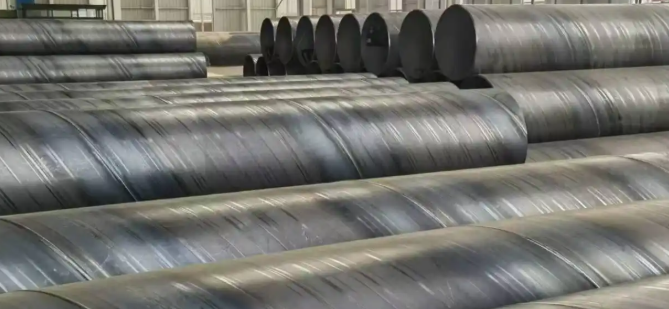
Spiral welded pipes are characterized by producing large-diameter pipes from narrow strip steel, high efficiency of continuous production, excellent stress distribution in welds, and significant cost advantages. They are widely used in long-distance oil and gas pipelines, urban water supply and drainage, pile foundation engineering, structural support and other fields, and are developing towards larger diameter and thicker walls, continuous upgrading of steel grades and intelligent processes.



|

|

|

|

|
| Timely Info | Independent | Platform | Multiple guarantees | Self-operated storage |
China Steel Market
Empowering small and medium-scale steel purchasing

| About us | Channel | Useful tools |
|---|---|---|
| About China Steel Market | Prices | Steel Weight Calculation |
| Contact Us | Answers | Why Choose Us |
| Terms & Conditions | Inventory | |
| Privacy Policy | Help |
Hot search words:
China Rebar prices China Wire Rod Prices Welded Steel Pipe Prices