
Seamless stainless steel pipe is manufactured from stainless steel containing at least 10.5% chromium. Through the addition of alloying elements such as chromium, nickel, and molybdenum, a surface oxide film (passivation layer) is formed to resist corrosion from mild media (such as air, steam, and water) and chemically aggressive media (such as acids, alkalis, and salts); consequently, it is also known as stainless and acid-resistant steel pipe. It is a hollow, long metal tube formed as a single piece through plastic deformation processes—such as piercing and rolling—applied to a solid steel billet, resulting in a product with no weld seams. These pipes are categorized by rolling process (hot-rolled, cold-drawn, or extruded) and by microstructure (e.g., austenitic, martensitic).
Compared to welded steel pipes, seamless pipes offer superior mechanical strength and pressure-bearing capacity due to the absence of weld seams, providing significant advantages in high-pressure and high-strength applications.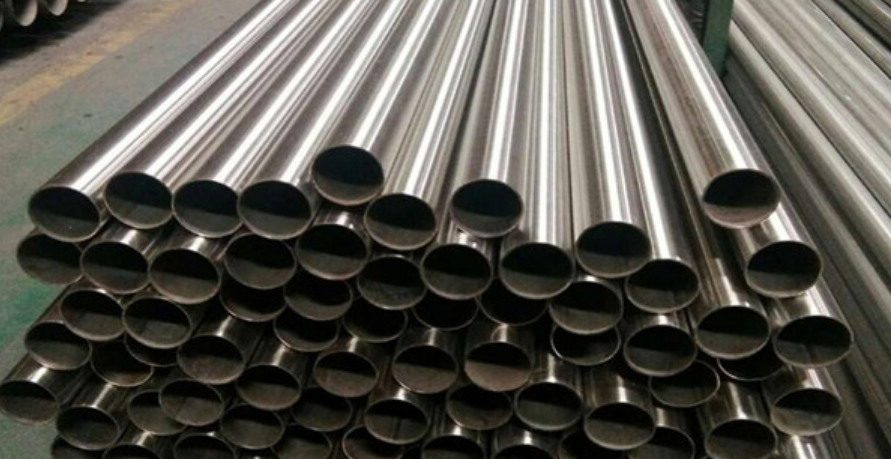
Main Classifications of Seamless Stainless Steel Pipes
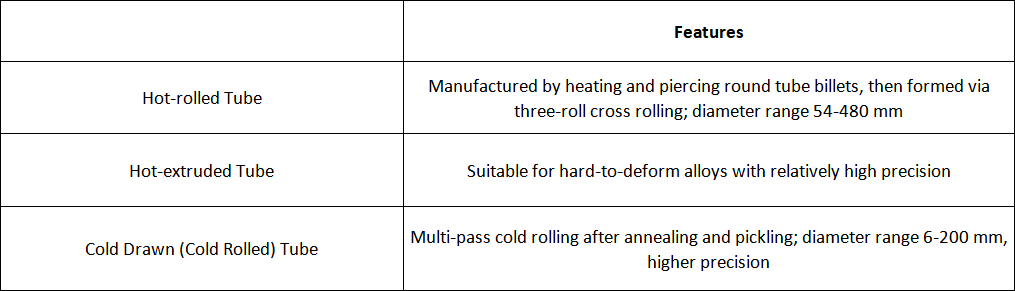
1. By rolling method
2. By microstructure
Austenitic stainless steel seamless pipes (e.g., 304, 316L): Non-magnetic, excellent corrosion resistance, most widely used
Ferritic stainless steel seamless pipes (e.g., 430): Magnetic, lower cost
Martensitic stainless steel seamless pipes (e.g., 410, 420): Magnetic, hardenable
Austenitic-ferritic (duplex) stainless steel seamless pipes (e.g., 2205): Combines high strength and corrosion resistance
Semi-ferritic/semi-martensitic stainless steel seamless pipes
Manufacturing Methods for Stainless Steel Seamless Pipes:
Based on the production method, they can be classified as hot-rolled, cold-rolled, cold-drawn, or extruded pipes.
1. Hot-rolled stainless steel seamless pipes are generally produced on automatic pipe rolling units. Solid pipe billets undergo inspection and surface defect removal, are cut to the required length, and are centered at the piercing end. They are then heated in a furnace and pierced by a piercing machine. During piercing, the billet rotates and advances continuously; under the action of the rolls and the piercing plug, a cavity gradually forms inside the billet, creating what is known as a "shell" (or hollow bloom). It is then transferred to an automatic pipe rolling mill for further rolling. Finally, the wall thickness is equalized by a sizing mill (or elongator/reeler) and the diameter is set by a sizing mill to meet specifications. Producing hot-rolled seamless steel pipes using a continuous pipe rolling mill unit is considered an advanced method.
2. To obtain seamless pipes with smaller dimensions and superior quality, cold rolling, cold drawing, or a combination of both methods must be employed. Cold rolling is typically performed on a two-roll mill, where the steel pipe is rolled within an annular pass formed by variable-section circular grooves and a stationary conical mandrel. Cold drawing is usually carried out on single-chain or double-chain cold drawing machines with capacities ranging from 0.5 to 100 tons.
3. The extrusion method involves placing a heated pipe billet into a sealed extrusion cylinder; a piercing mandrel moves in conjunction with the extrusion ram to force the material out through a smaller die opening. This method is suitable for producing steel pipes with smaller diameters.
Such steel pipes fall into two main categories: seamless stainless steel pipes and welded stainless steel pipes. Based on manufacturing processes, they are classified into basic types such as hot-rolled, extruded, cold-drawn, and cold-rolled. They can also be categorized by cross-sectional shape into round pipes and shaped (non-circular) pipes; while round steel pipes are the most widely used, shaped stainless steel pipes—such as square, rectangular, semi-circular, hexagonal, equilateral triangular, and octagonal profiles—are also produced.
Steel pipes intended to withstand fluid pressure must undergo hydrostatic testing to verify their pressure resistance and quality; pipes are deemed acceptable if they show no leakage, wetting, or expansion under the specified pressure. Depending on standards or customer requirements, some pipes may also undergo flanging, flaring, or flattening tests.
Seamless stainless steel pipes are manufactured by piercing steel ingots or solid billets to create a hollow shell, which is subsequently processed via hot rolling, cold rolling, or cold drawing. Seamless steel pipe specifications are expressed as "Outer Diameter × Wall Thickness" (in millimeters).
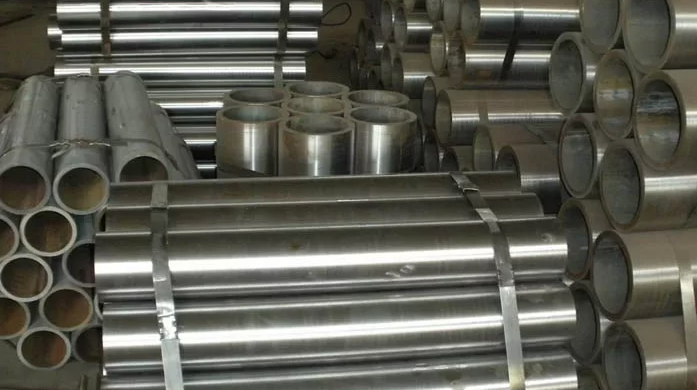
Characteristics of Stainless Steel Seamless Pipes
Core Advantages
1. High Corrosion Resistance: Chromium content ≥10.5%; a dense passivation film forms on the surface, resisting various corrosive media.
2. High Strength and Pressure Bearing: Seamless structure ensures stable mechanical properties and superior pressure-bearing capacity compared to welded pipes.
3. Hygienic Properties: Smooth,Clean surfaces meet cleanliness requirements in the food and pharmaceutical industries.
4. High-Temperature and High-Pressure Resistance: Capable of withstanding extreme operating conditions, such as 320°C and 15.5 MPa.
Limitations
1. Lower Dimensional Precision: Wall thickness may be uneven; surface finish (brightness) is inferior to that of cold-rolled precision pipes.
2. High Cost for Fixed-Length Cutting: Costs are higher for specific cut-to-length requirements.
3. Offline Inspection: Testing must be performed offline, limiting production efficiency.
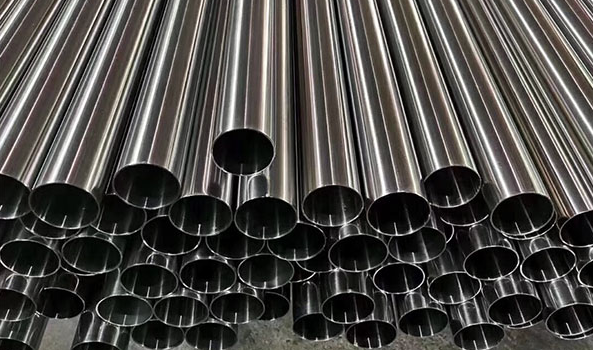
Applications of Stainless Steel Seamless Pipes
1. Petroleum and Chemical Industries: Widely used in oil and natural gas sectors. Due to their high-temperature and corrosion resistance, they are suitable for manufacturing high-pressure oil and gas pipelines, chemical processing lines, and petroleum transport pipes.
2. Pharmaceutical Industry: Crucial in pharmaceutical manufacturing. High-purity piping materials are required; stainless steel seamless pipes offer excellent chemical stability and contamination-free properties, making them ideal for pharmaceutical production equipment, IV sets, artificial lenses, and more.
3. Food Industry: Important in food manufacturing. Their antimicrobial properties make them suitable for food storage tanks, dairy processing equipment, beverage production machinery, etc.
4. Machinery Manufacturing: Widely used in machinery production. Beyond the sectors mentioned above, they are used for automotive exhaust pipes, industrial water piping, aircraft engine components, and more.
5. Construction Industry: Used in the manufacture of construction equipment, such as cranes and elevators.
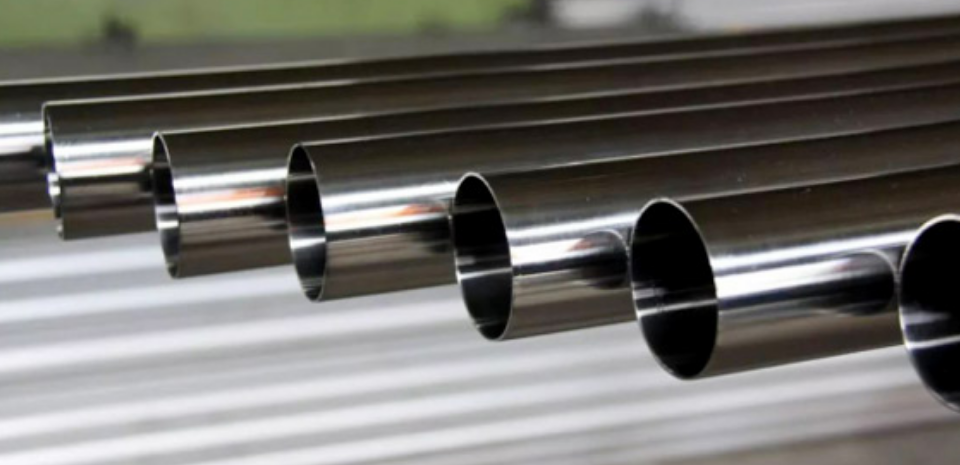
Stainless steel seamless pipes are ubiquitous in modern industry; their high strength and resistance to corrosion, high temperatures, and high pressures make them essential across the petroleum, chemical, pharmaceutical, food, and machinery manufacturing sectors. With continuous technological advancements, the application areas for seamless stainless steel pipes will continue to expand.

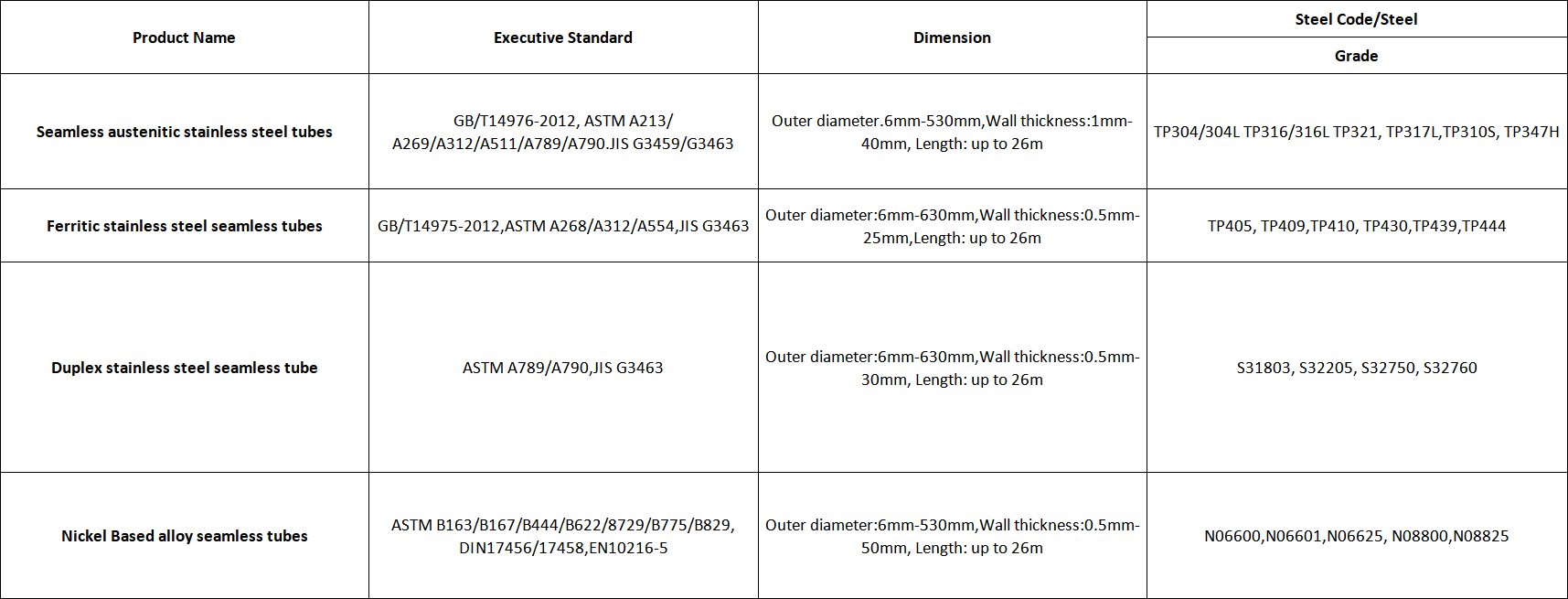
The standard specification of seamless stainless steel pipe is an important factor to ensure the quality of seamless stainless steel pipe products. The following are common seamless stainless steel pipe standards
Chinese standard:
Seamless stainless steel pipe product standards mainly include GB/T14976, GB/T13296, GB/T12771 and so on. GB/T14976 is a standard specification for seamless stainless steel pipe implemented in my country, which is suitable for the production of seamless stainless steel pipe for various corrosion-resistant, high-temperature-resistant, and high-pressure equipment.
American standard:
The common ones are ASTM A312, ASTM A213, ASTM A269 and other standards. ASTM A312 is a common seamless stainless steel pipe standard for welded and seamless stainless steel tubing for general purposes. ASTM A213 is a standard specification for stainless steel and alloy seamless tubing for use in piping and heat exchange equipment at high temperatures and pressures.
Japanese standard:
JIS G3456-88 Stainless Steel Tubes for Machine Structures, JIS G3448-88 Stainless Steel Tubes for Ordinary Pipes, JIS G3459-88 Stainless Steel Tubes for Pipelines, JIS G3463-88 Stainless Steel Tubes for Boilers and Heat Exchangers
Seamless stainless steel pipe need to understand the corresponding standard specifications to ensure product quality and use safety. At the same time, it is necessary to pay attention to the scope of application of different standards and the quality requirements of raw materials.
Copyright Notice © 2022 - 2023 ChinaSteelMarket.com All rights reserved.