
Prepainted steel coil, also known as pre-coated steel coil or color-coated steel coil, is a type of steel sheet produced by coating one or more layers of liquid coating onto hot-rolled, galvanized, aluminized zinc, cold-rolled, tin-plated, or stainless steel substrates using a roller coating method after surface pretreatment (degreasing and chemical treatment). The coated steel sheet is then baked and cooled. It is primarily used in building roofs, walls, steel structure factories, appliance panels, and cleanrooms.
The core value of prepainted steel coil lies in its combination of the mechanical strength of steel with the decorative and corrosion-resistant properties of an organic coating. It uses galvanized steel as the substrate to provide a basic anti-corrosion barrier, and then uses an organic coating to provide color decoration and enhanced protection, achieving the dual function of "substrate corrosion protection + coating decoration and protection."
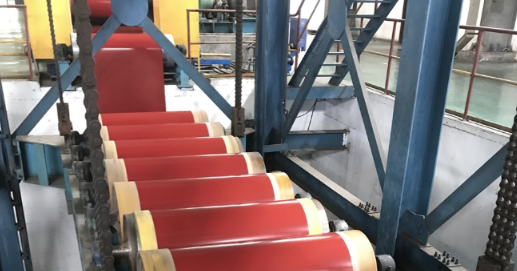
The structure of prepainted steel coil is not a single material but a "multi-layer composite" structure. Each layer performs its specific function, working together to achieve decoration, corrosion protection, and support. From the inside out, it mainly consists of four layers, with the core structure as follows:
1. Substrate (Core Support Layer)
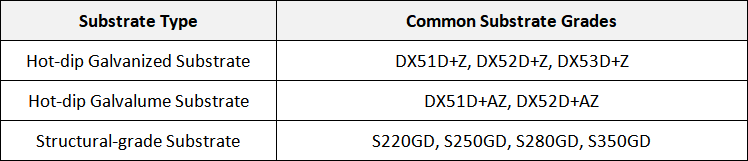
The substrate is the "skeleton" of the color-coated coil, determining the product's strength, toughness, and basic corrosion resistance. There are four common types, suitable for different application scenarios:
Cold-rolled substrate: Lower cost, smooth surface, suitable for indoor applications (e.g., appliance casings, interior decoration), but weaker corrosion resistance, unsuitable for outdoor use.
Hot-dip galvanized substrate: A layer of zinc is plated onto the surface of the cold-rolled sheet, effectively improving corrosion resistance, suitable for general outdoor applications (e.g., ordinary factory walls).
Aluminized zinc substrate: An alloy coating of zinc and aluminum, offering superior corrosion resistance compared to hot-dip galvanized substrate, especially suitable for harsh environments such as acidic, high-humidity, and heavily polluted conditions (e.g., roofs in Hunan and Jiangxi provinces), but should be used with caution in alkaline environments.
Zinc-aluminum-magnesium substrate: Offers the strongest corrosion resistance, suitable for highly corrosive environments (e.g., chemical plants, near coastlines), and is the preferred substrate for high-end applications.
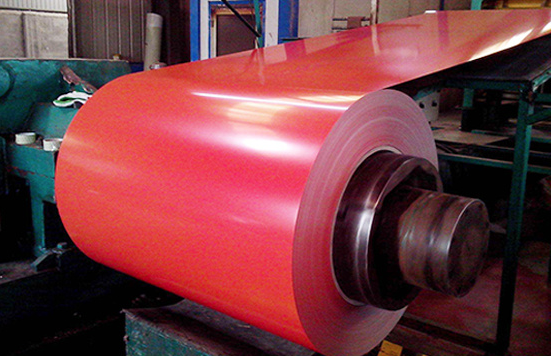
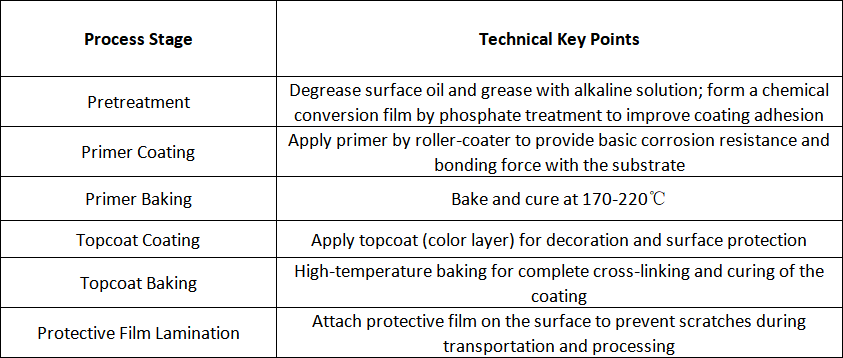
2. Pretreatment Layer (Connecting Layer) The pretreatment layer acts as a "bridge" between the substrate and the coating. Its core function is to remove oil and rust from the substrate surface. Through chemical treatments such as phosphating and passivation, a dense non-metallic conversion film is formed. This film enhances the adhesion between the coating and the substrate, preventing coating peeling, and further improves overall corrosion resistance—a crucial step for the service life of color-coated coils. Inadequate pretreatment can easily lead to problems such as blistering, peeling, and rusting in the subsequent coating process.
3. Coating (Core Functional Layer)
The coating is the "aesthetics and protection" component of color-coated coils, consisting of two layers: primer and topcoat. Some high-end products also include an intermediate coating layer to further enhance performance:
Primer: Adheres directly to the pretreatment layer, its main functions are corrosion and rust prevention, and enhancing adhesion to the topcoat. Epoxy primers are commonly used, adaptable to different substrate characteristics.
Topcoat: Determines the color, gloss, and weather resistance of the color-coated coil. Different types of topcoats have significantly different performance characteristics, ranked by durability as follows: Polyvinylidene fluoride (PVDF) > High-durability polyester (HDP) > Silicon-modified polyester (SMP) > Ordinary polyester (PE). Among them, PVDF topcoat has the strongest weather resistance and corrosion resistance, suitable for high-end buildings (such as office building curtain walls); ordinary polyester topcoat has a lower cost and is suitable for indoor or light outdoor applications.
Special Coatings: Some products have a protective film added to the topcoat surface, or use functional coatings such as antibacterial, self-cleaning, and heat-resistant coatings, suitable for special needs such as home appliances and agricultural greenhouses.
4. Back Coating (Auxiliary Protective Layer) Most color-coated coils have a thin coating on the back, primarily to prevent rust on the substrate. If the back is exposed to industrial atmospheres or environments prone to condensation, a thicker coating is required. For foaming or bonding applications, epoxy-based back coatings are recommended to avoid affecting subsequent processing.
Production Process:
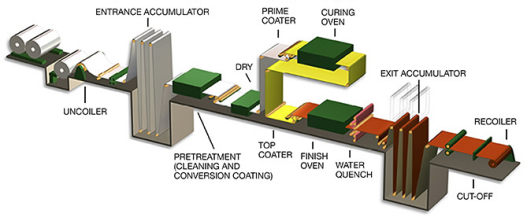
The common two-coat, two-bake continuous color coating unit process mainly involves the following steps: Uncoiling machine → Sewing machine → Pressure roller → Tensioner → Uncoiling looper → Alkali washing and degreasing → Cleaning → Drying → Passivation → Drying → Initial coating → Initial coating drying → Topcoat finishing → Topcoat drying → Air cooling → Rewinding looper → Rewinding machine → (Uncoiled, packaged, and stored).
Key process links
Key Performance Characteristics
1. Excellent Corrosion Resistance: The corrosion resistance of color-coated steel coils comes from the dual protection of the substrate coating and the organic coating. Salt spray resistance exceeds 2000 hours without rust, far superior to ordinary galvanized steel sheets.
2. Good Weather Resistance and Decorative Properties: The organic coating provides color-coated steel coils with a rich selection of colors and surface textures. Different coating types have significantly different weather resistance: polyester (PE) is suitable for general environments, while fluorocarbon (PVDF) coatings have excellent resistance to ultraviolet rays, high temperatures, and acids and alkalis.
3. High Strength and Lightweight: Color-coated steel coils are mainly available in thin specifications (0.15–1.5 mm), combining the mechanical strength of steel sheets with lightweight characteristics, making them suitable for large-span building roofing and wall systems.
4. Good Processing Performance: Color-coated steel coils support various processing methods such as forming, bending, and shearing, and can be processed into various building panel types (such as corrugated sheets, sandwich panels, etc.).
5. Diverse Functions: By selecting different coatings, color-coated steel sheets can possess a variety of special functions such as anti-static, self-cleaning, heat insulation, antibacterial, and flame retardant properties.
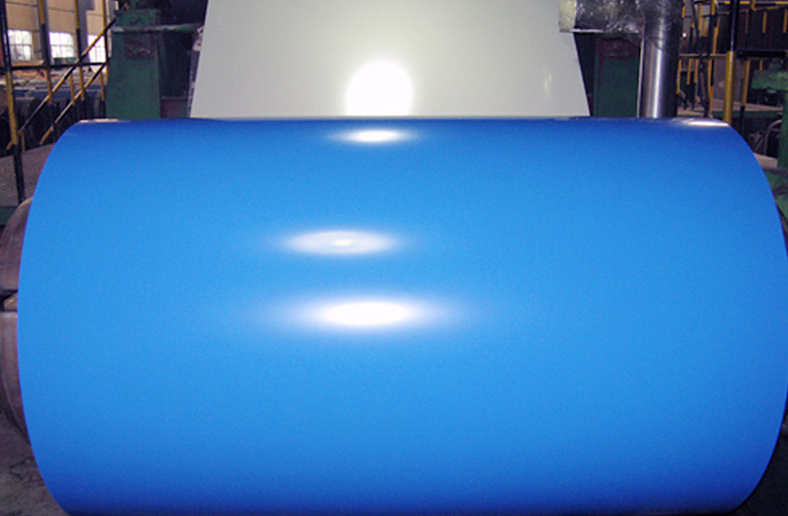
Product Applications:
Color-coated steel sheets using galvanized steel sheets as the substrate, in addition to zinc protection, have an organic coating on the zinc layer that acts as a protective barrier, preventing rust and extending their service life compared to galvanized steel sheets. It is reported that the service life of coated steel sheets is 50% longer than that of galvanized steel sheets. However, in different regions and for different applications, the service life of color-coated sheets using the same zinc coating amount, the same paint, and the same coating thickness can vary significantly. For example, in industrial areas or coastal regions, corrosion is accelerated, and service life is affected by sulfur dioxide or salt in the air. During the rainy season, coatings that are constantly soaked in rainwater or prone to condensation due to large temperature differences between day and night will corrode more quickly, reducing their service life. Buildings or factories made of color-coated steel sheets have a longer service life when frequently washed by rainwater; otherwise, their use is affected by sulfur dioxide, salt, and dust. Therefore, in the design, the greater the slope of the roof, the less likely it is to accumulate dust and other dirt, and the longer its service life; for areas or parts that are not frequently washed by rainwater, they should be washed with water regularly.
Prepainted steel coils combine the mechanical strength of steel sheets with the decorative and corrosion-resistant properties of organic coatings, boasting a salt spray resistance exceeding 2000 hours. They are widely used in building envelopes (accounting for approximately 80%), appliance panels, automotive interiors, and interior decoration. Currently, the color-coated steel coil industry faces the dual pressures of overcapacity and declining consumption, but export growth is robust. Products are developing towards high-end, functional, and environmentally friendly directions, with new energy fields such as building-integrated photovoltaics (BIPV) expected to become new growth engines.
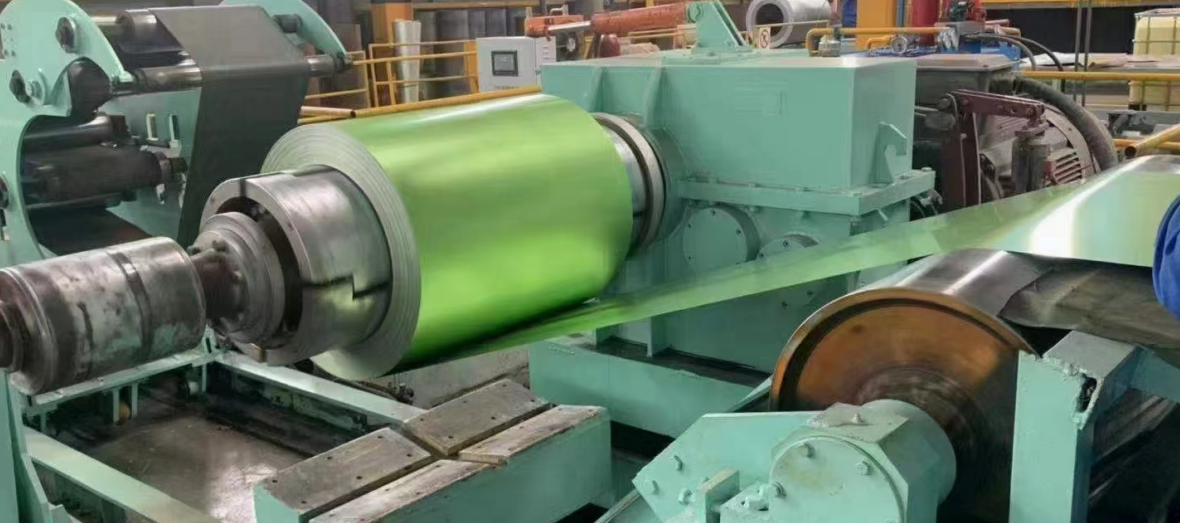
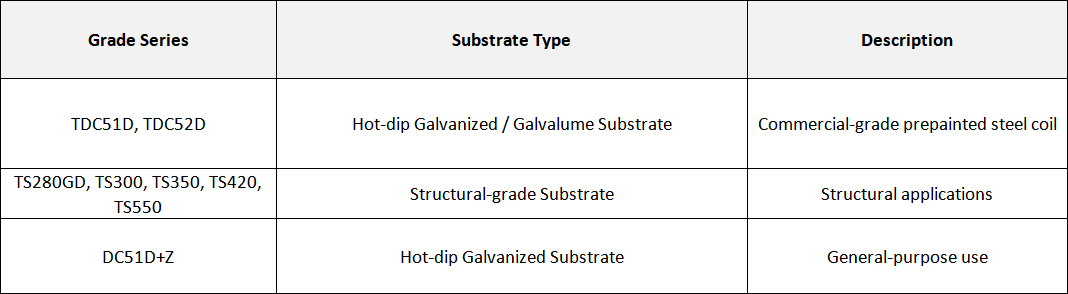
The following are some common national standards for Chinese, British, American and Japanese color-coated coils:
Chinese national standard:
GB/T 12754-2019: Color coated steel sheets and strips
British National Standards:
BS EN 10169: Technical delivery conditions for galvanized and galvanized alloy-coated steel sheet and strip by the continuous hot dip method
American National Standard:
ASTM A755/A755M: Standard Specification for Continuously Coated Metallic Coated Steel Sheet and Strip
Japanese national standard:
JIS G 3312: Prepainted galvanized steel sheets and strips
This standard specifies the terms and definitions of color-coated steel sheets and steel strips, the representation methods, classifications and codes of grades, ordering content, dimensions, shapes, weights, technical requirements, test methods, inspection rules, packaging, signs and quality certificates.
Copyright Notice © 2022 - 2023 ChinaSteelMarket.com All rights reserved.