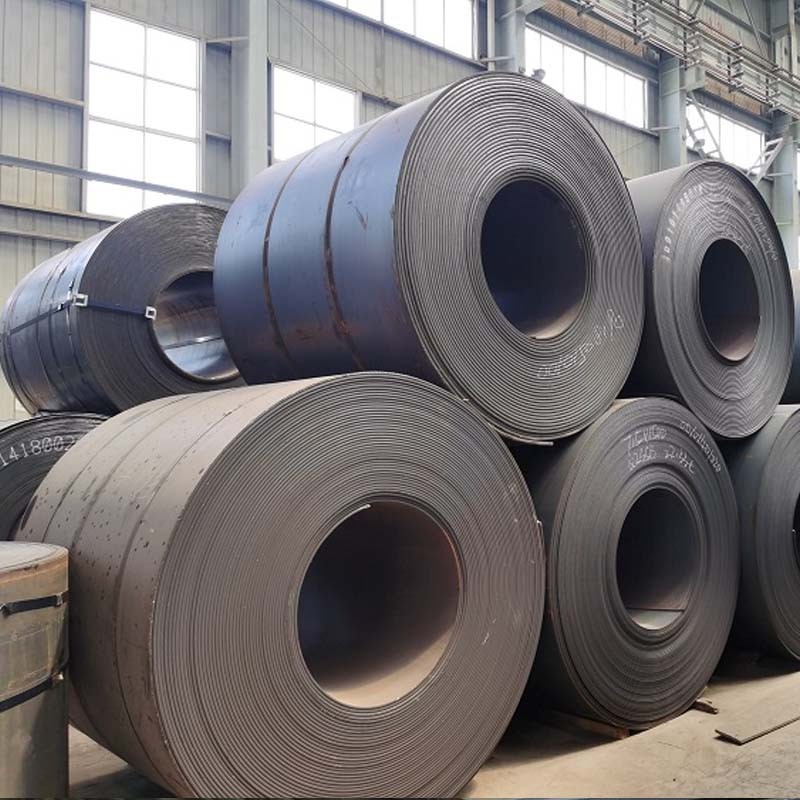
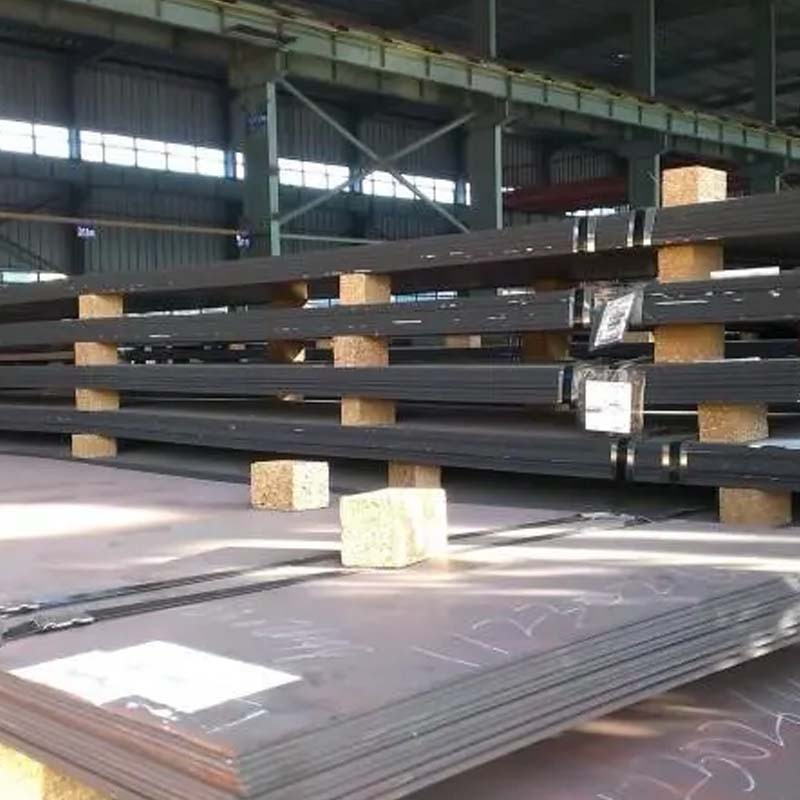
Low-alloy steel coils are among the most widely used basic materials in the modern steel industry. Thanks to their perfect balance of high strength, excellent toughness, and good weldability, they have become indispensable structural steels in sectors such as bridge construction, architecture, machinery, and transportation.
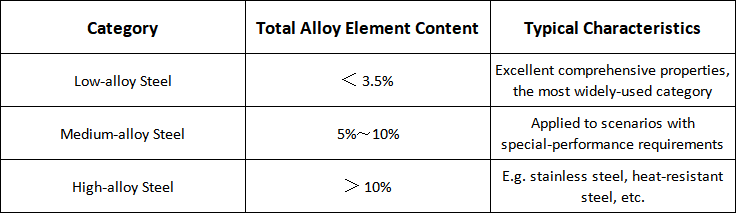
Low-alloy steel coils are hot-rolled products made from low-alloy, high-strength structural steel with a total alloy element content of less than 3.5%.
Alloy steels can be categorized into three types based on their total alloy element content:
The grade designation follows this rule:
"Q" + "Strength Value" + "Quality Grade"
Q: The initial letter of the Pinyin for "Qu" (meaning "yield" in "yield strength").
Number: Indicates the minimum yield strength (unit: MPa).
Suffix letter: Indicates the quality grade, reflecting impact toughness requirements.
Grades:
There are various grades of low alloy steel coil and plate, each with its unique combination of alloying elements and mechanical properties. Some common low alloy steel grades include ASTM A572, ASTM A588, ASTM A656, EN 10025-2 S355, and JIS G3106 SM490, among others.
Key Performance Characteristics
1. High Strength
Yield strength is generally above 300 MPa. Taking Q355 as an example, the yield strength is ≥355 MPa, which is approximately 20%–30% higher than that of ordinary carbon structural steel Q235.
2. High Toughness
Elongation requirements range from 15% to 20%, and room-temperature impact toughness exceeds 600–800 kJ/m². Grades such as Q355D and Q355E maintain good impact resistance at low temperatures, even down to -20°C or -40°C.
3. Excellent Weldability
Low carbon content (≤0.20%) ensures excellent weldability. Low-alloy steel coils are suitable for various arc welding processes, and welded joints exhibit the specified strength and ductility.
4. Good Cold-Forming Properties
They possess excellent cold-stamping and cold-bending properties and are suitable for processes such as cutting and punching. However, note that cold forming typically requires a larger bending radius compared to carbon steel.
5. Good Corrosion Resistance
Through the addition of elements such as copper and phosphorus, atmospheric corrosion resistance is improved by 20%–38% compared to ordinary carbon steel. Some low-alloy, high-strength steel plates can even be used without coating—exposed directly to the elements—provided appropriate measures are taken.
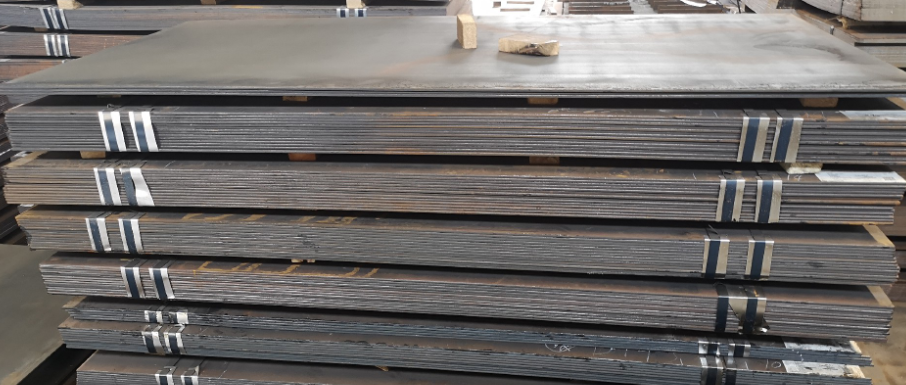
Composition
1. Low carbon content: To meet stringent requirements for toughness, weldability, and cold-forming properties, the carbon content does not exceed 0.20%;
2. Addition of alloying elements, primarily manganese;
3. Addition of auxiliary elements such as niobium, titanium, or vanadium: Small amounts of these elements form fine carbides or carbonitrides within the steel, helping to refine ferrite grains and enhance both strength and toughness;
Additionally, small amounts of copper (≤0.4%) and phosphorus (approximately 0.1%) are added to improve corrosion resistance. Trace amounts of rare-earth elements are also included to facilitate desulfurization and degassing, thereby purifying the steel and improving its toughness and processing characteristics.
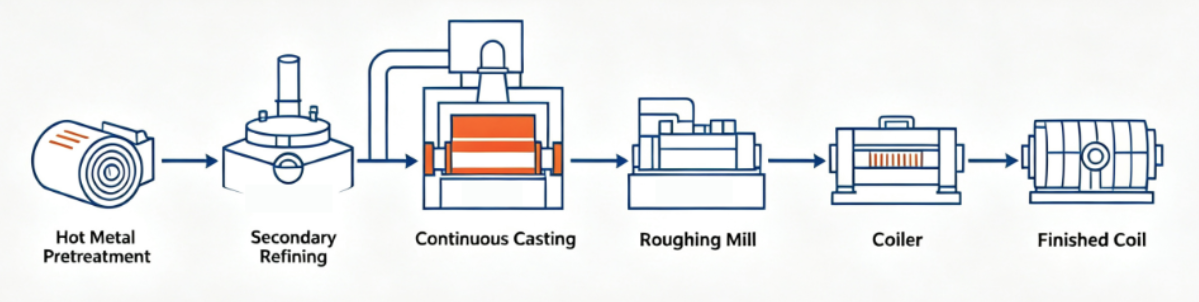
Heat Treatment:
Low alloy steels can be subjected to heat treatment processes like normalizing, quenching, and tempering to further enhance their mechanical properties and performance.
It's important to consider the specific requirements of your application when choosing low alloy steel coil and plate. Different grades and specifications are available to meet various mechanical and environmental demands. For the most suitable low alloy steel for your needs, consult with a reputable steel supplier or manufacturer.
By combining precise micro-alloying design with advanced controlled rolling and controlled cooling processes—building upon a standard carbon steel base—low-alloy coiled plate achieves an optimal balance of high strength, high toughness, excellent weldability, and good corrosion resistance. As a key "structural material" in modern industry, it delivers a significant performance upgrade at a relatively low cost, serving as the fundamental material basis for driving lightweight, large-scale, and high-performance development across sectors such as bridge construction, architecture, machinery, and transportation.
In China, low alloy steel coil and plate are produced and supplied according to standards set by the Chinese National Standards (GB/T - Guo Biao) or industry-specific standards. The Chinese National Standards are developed and maintained by the Standardization Administration of China (SAC) and cover various aspects of low alloy steel products, including composition, mechanical properties, and tolerances.
Some of the key GB/T standards for low alloy steel coil and plate in China include:
GB/T 3274-2017: This standard specifies hot-rolled plates and strips for carbon structural steels and high-strength low-alloy structural steels. It covers a wide range of grades and dimensions used in general structural applications.
GB/T 700-2006: This standard specifies carbon structural steels, including low alloy steel plates, used in general applications.
GB/T 1591-2018: This standard specifies the technical requirements for the classification and delivery conditions of low alloy high-strength structural steels.
GB/T 3273-2015: This standard specifies hot-rolled plates and strips for cold forming.
In the United States, low alloy steel coil and plate are produced and supplied according to various standards set by organizations like the American Society for Testing and Materials (ASTM) and the American Society of Mechanical Engineers (ASME). These standards provide guidelines for the composition, mechanical properties, and other specifications of low alloy steel products to ensure their suitability for specific applications. Some of the commonly used standards for low alloy steel coil and plate in the US include:
ASTM A572/A572M: This standard covers high-strength low-alloy (HSLA) columbium-vanadium structural steel shapes, plates, sheet piling, and bars. It includes several grades with different strength levels.
ASTM A656/A656M: This standard specifies hot-rolled structural steel, high-strength low-alloy plate with improved formability. It is used in truck frames, brackets, crane booms, rail cars, and similar applications.
ASTM A709/A709M: This standard covers carbon and high-strength low-alloy structural steel shapes, plates, and bars used for bridge construction.
ASTM A588/A588M: This standard specifies high-strength low-alloy structural steel shapes, plates, and bars used for welded, riveted, or bolted construction of bridges and buildings, and for general structural purposes.
ASTM A514/A514M: This standard specifies high-yield-strength, quenched, and tempered alloy steel plate suitable for welding.
ASTM A1011/A1011M: This standard specifies hot-rolled, high-strength, low-alloy carbon steel sheet, and strip.
ASME SA-387/SA-387M: This standard covers alloy steel plates intended primarily for welded boilers and pressure vessels designed for elevated temperature service.
In the United Kingdom, low alloy steel coil and plate are produced and supplied according to various standards, with the most common being the European Norm (EN) standards. These standards are developed and maintained by the European Committee for Standardization (CEN) and are adopted by member countries of the European Union, including the UK.
Some of the key EN standards for low alloy steel coil and plate in the UK include:
EN 10025-2: This standard specifies technical delivery conditions for non-alloy structural steels, including hot-rolled low alloy steel plates. It covers a wide range of grades and thicknesses used in general structural applications.
EN 10025-6: This standard specifies technical delivery conditions for flat products of high yield strength structural steels in the quenched and tempered condition. It includes several grades with enhanced mechanical properties suitable for various structural applications.
EN 10028-2: This standard specifies requirements for flat products made of pressure vessel steels. It includes low alloy steel plates used in the fabrication of pressure vessels for elevated-temperature applications.
EN 10113-2: This standard specifies hot-rolled products in weldable fine grain structural steels. It includes several grades of low alloy steel plates with improved formability and weldability.
EN 10149-2: This standard specifies hot-rolled flat products made of high yield strength steels for cold forming. It includes several grades suitable for cold forming processes.
EN 10210-1: This standard specifies technical delivery conditions for hot-finished hollow sections of non-alloy and fine grain structural steels.
In Japan, low alloy steel coil and plate are manufactured and supplied according to the standards set by the Japanese Industrial Standards (JIS). JIS is a national standardization body in Japan responsible for developing and maintaining standards across various industries, including the steel industry.
Some of the key JIS standards for low alloy steel coil and plate in Japan include:
JIS G3106: This standard specifies hot-rolled steels for welded structure. It includes several grades of low alloy steel plates suitable for structural applications, such as SM400, SM490, and SM520.
JIS G3101: This standard specifies hot-rolled general structural steel plates, shapes, and sections. It includes several grades with different mechanical properties for general structural purposes.
JIS G3128: This standard specifies high-strength steel plates for pressure vessels for intermediate and moderate-temperature service.
JIS G3131: This standard specifies hot-rolled mild steel plates, sheets, and strips. It covers low-carbon steel grades suitable for general applications.
JIS G3132: This standard specifies the requirements for hot-rolled carbon steel strip for pipes and tubes.
JIS G3134: This standard specifies hot-rolled high-strength steel plates with improved formability for automobile structural uses.
Allowable deviation
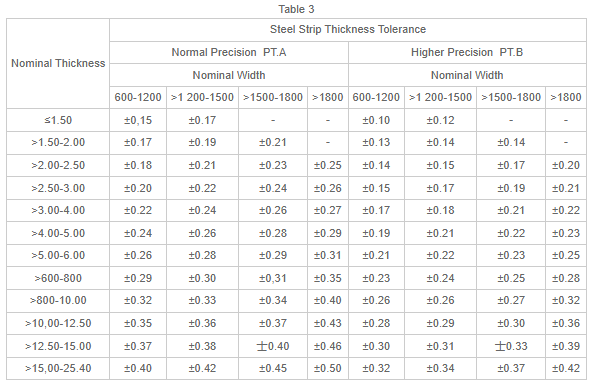
Specify the minimum yield strength R. The thickness deviation of the steel strip (including continuous rolling steel plate) less than 360 MPa shall comply with the provisions in Table 3. If the buyer requires higher thickness accuracy (PT.B) to supply, it should be specified in the contract, and if not specified, it should be supplied according to ordinary thickness accuracy (PT.A). According to the requirements of the buyer, the upper and lower deviations of the steel strip can be adjusted within the tolerance range specified in Table 3.
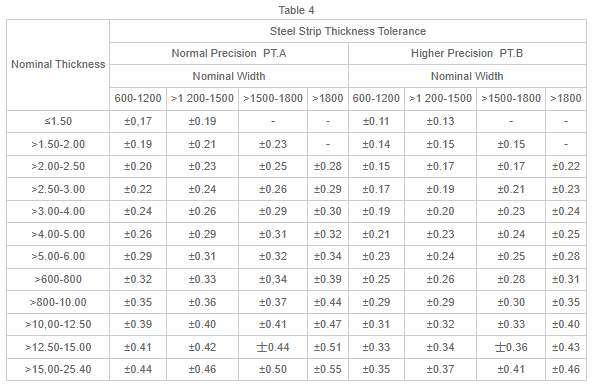
Specify the minimum yield strength R. The thickness deviation of the steel strip not less than 360 MPa (including the continuous rolling steel plate) shall comply with the provisions in Table 4. If the buyer requires higher thickness accuracy (PT.B) to supply, it should be specified in the contract, and if not specified, it should be supplied according to ordinary thickness accuracy (PT.A). According to the requirements of the buyer, the upper and lower deviations of the steel strip can be adjusted within the tolerance range specified in Table 4.
When the yield strength and the thickness tolerance are not specified in the product standard, the thickness tolerance of the steel strip (including continuous rolling steel plate) shall be negotiated by the supplier and the buyer, and shall be specified in the contract.