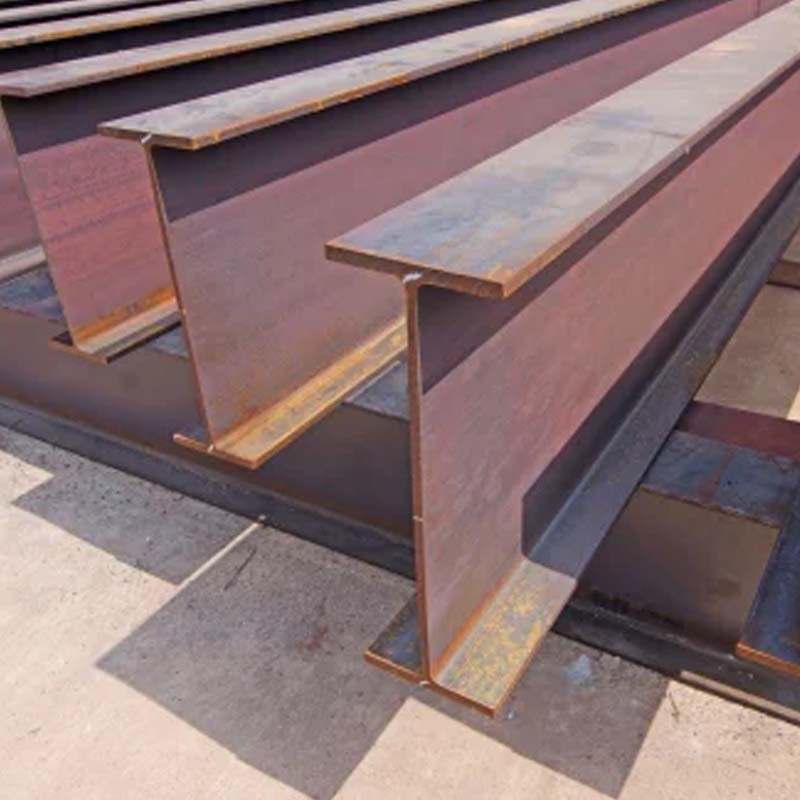
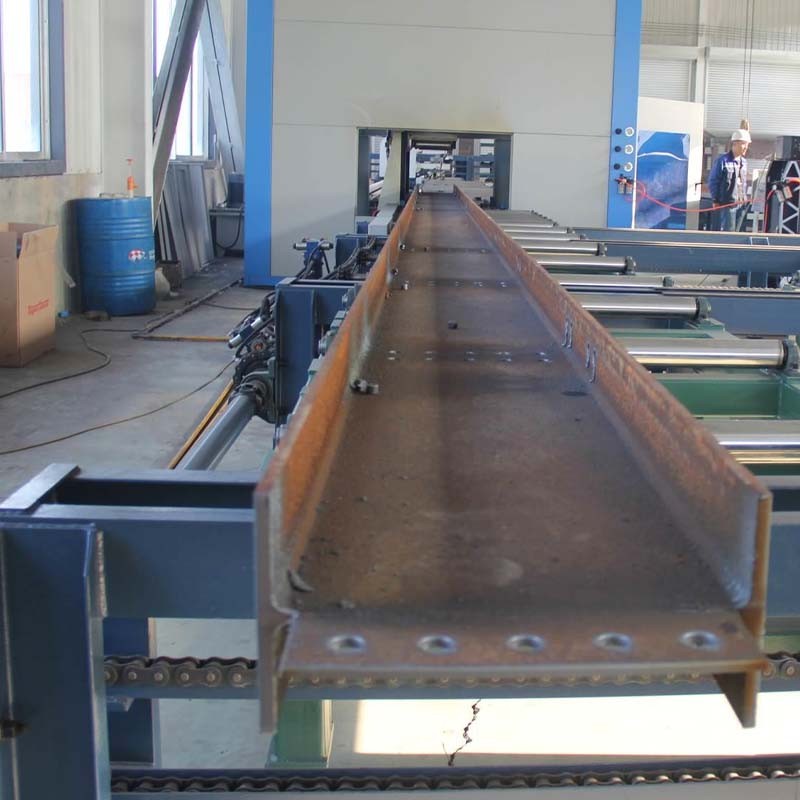
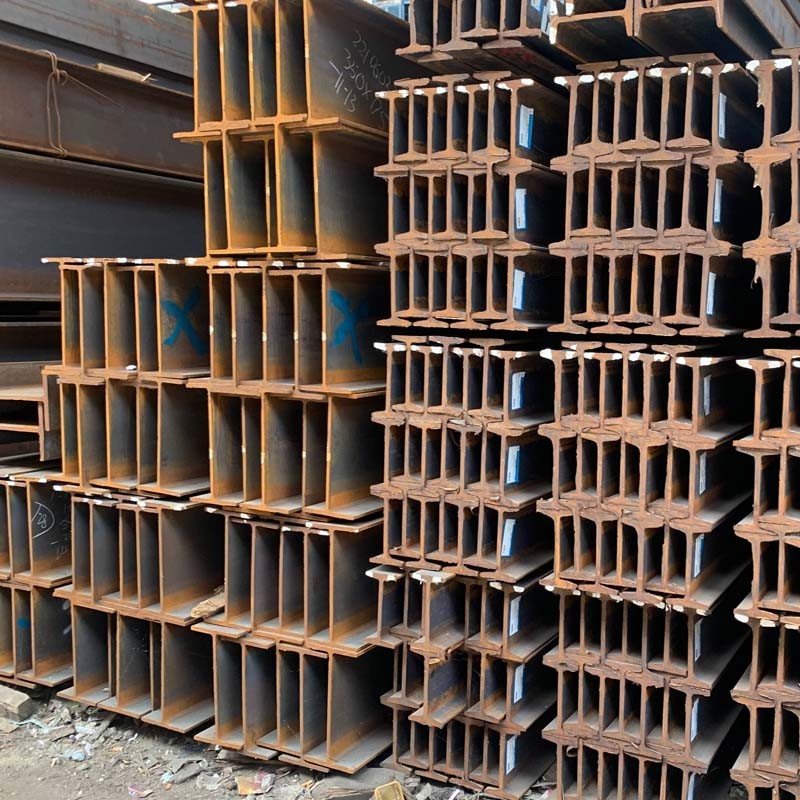
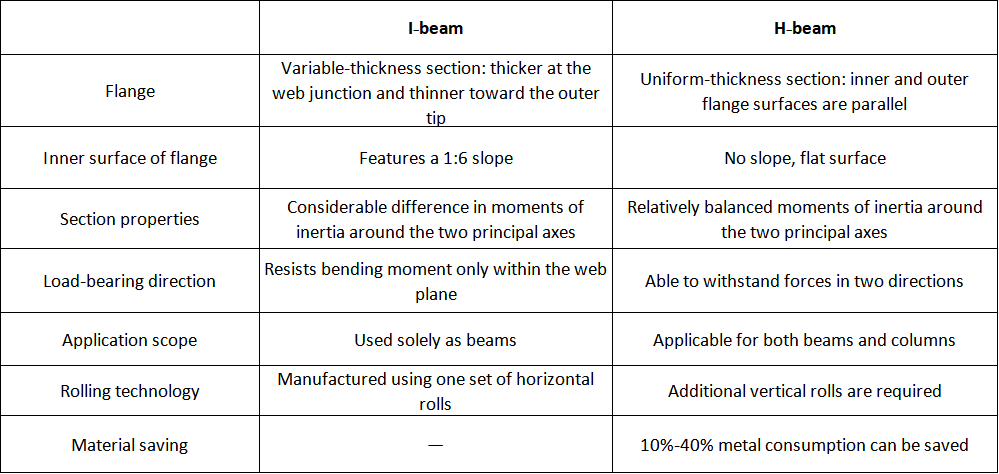
An I-beam is a long strip of steel with an I-shaped cross-section. Its cross-section consists of two parts: a web (waist) and flanges (legs). The most distinctive feature of an I-beam is its variable cross-section flange design—the flange is thicker near the web and thinner on the outside, with a 1:6 inclination on the inner surface.
The core characteristics of I-beams are as follows:
• Mature production process: Only one set of horizontal rolls is needed for rolling, making the process relatively simple and cost-effective.
• Strong unidirectional load-bearing capacity: Excellent bending resistance in the web plane.
• Poor torsional performance: Due to the significant difference in moments of inertia between the two principal axes, it is not suitable for bearing torque or loads perpendicular to the web direction.
• Limited application range: Generally, it can only be used for beams and cannot be used as load-bearing columns.
I-beam classification
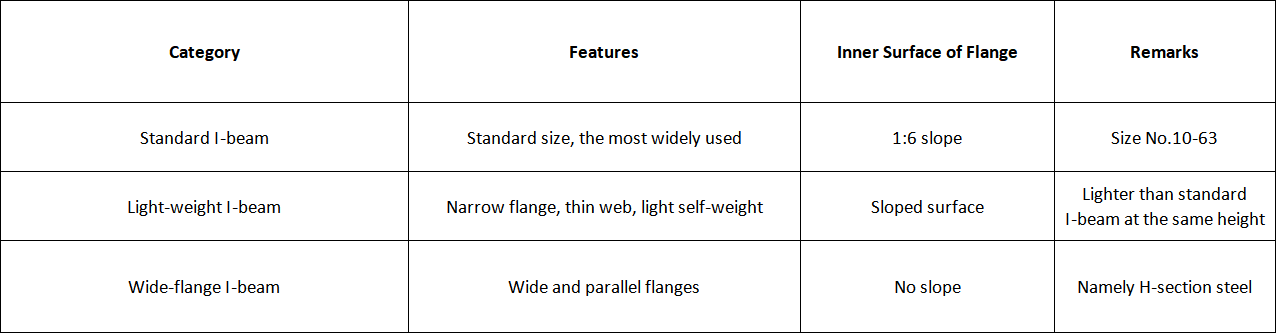
Wide-flange I-beams (H-beams) differ fundamentally from ordinary I-beams in cross-sectional properties and applications. I-beams and H-beams are similar in appearance, but their performance and applications differ significantly. Key differences between I-beams and H-beams:
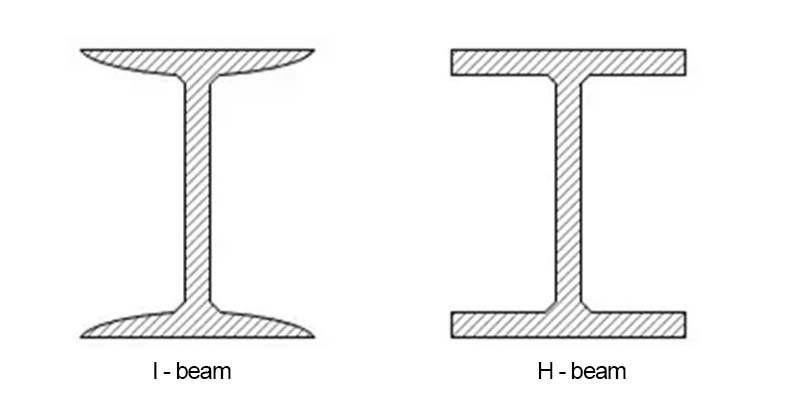
How to choose between H-beams and I-beams
Core performance characteristics
1. Strong unidirectional load-bearing capacity
I-beams have excellent bending resistance in the web plane, making them ideal beam materials.
2. Poor Torsional Resistance
Due to its narrow flanges and variable cross-section design, I-beams exhibit significantly different cross-sectional properties in their two principal planes, making them unable to withstand torque and unsuitable for load-bearing columns.
3. Mature Manufacturing Process and Lower Cost
I-beams can be rolled using only one set of horizontal rolls, resulting in a relatively simple process and lower production costs compared to H-beams.
4. Limited Application Range
Because of their relatively high and narrow cross-section, I-beams have significantly different moments of inertia about their two principal axes, limiting their application to members subjected to bending within the plane of their web.
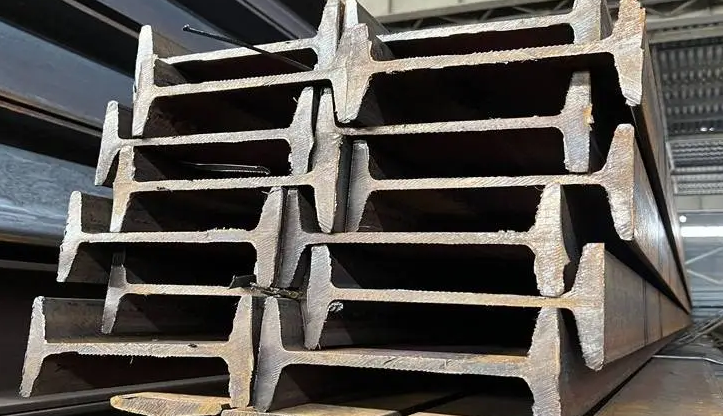
I-beams have a wide range of applications, but are mainly used in bending members:
Building structures: horizontal beams and secondary floor beams in factory frames
Bridge engineering: longitudinal and transverse beams of bridges
Machinery: equipment supports and crane beams
Vehicle manufacturing: vehicle chassis and frames
Others: various metal structures and supports
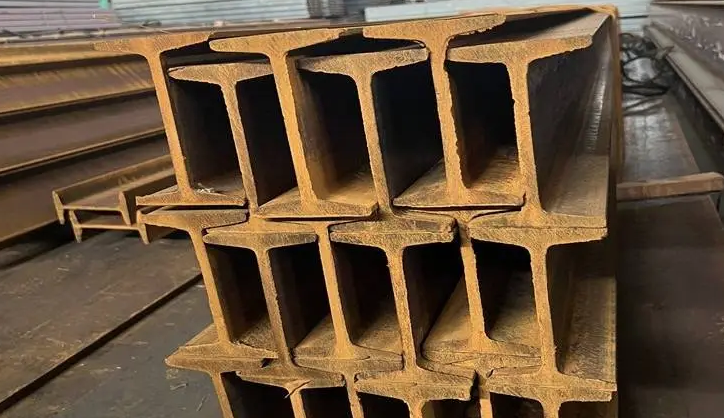
The core characteristic of I-beams is their strong in-plane bending resistance, but poor torsional resistance and a large difference in the moments of inertia between their two principal axes. Therefore, they can only be used for bending members such as beams and cannot be used as load-bearing columns. Compared with H-beams, I-beams have variable cross-sections and sloped flanges, and their production process is relatively simple and cost-effective, but their cross-sectional properties and application range are not as good as H-beams. Currently, I-beams are continuously developing towards updated standards and upgraded materials, forming a clear division of labor with H-beams: "I-beams for beams, H-beams for columns."The core characteristic of I-beams is their strong in-plane bending resistance, but poor torsional resistance and a large difference in the moments of inertia between their two principal axes. Therefore, they can only be used for bending members such as beams and cannot be used as load-bearing columns. Compared with H-beams, I-beams have variable cross-sections and sloped flanges, and their production process is relatively simple and cost-effective, but their cross-sectional properties and application range are not as good as H-beams. Currently, I-beams are continuously developing towards updated standards and upgraded materials, forming a clear division of labor with H-beam.
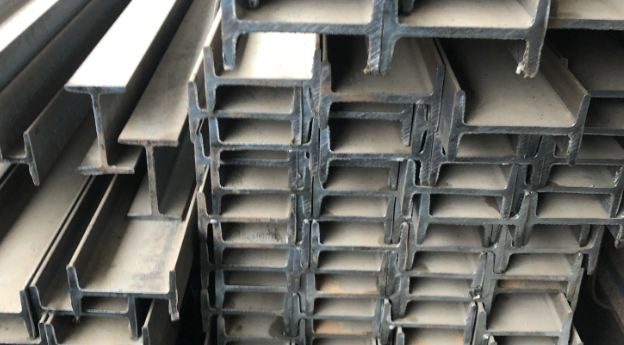
In China, the standards for I-beams and other structural steel sections are established by the Chinese National Standards (GB) or the Chinese National Building Codes (GB/T). The most commonly used I-beam in China is known as the "I-shaped cross-section hot-rolled steel" or simply "I-beam."
The specifications and designations for I-beams in China are covered under various GB standards, depending on the specific requirements and applications. The primary standard that outlines the dimensions, technical requirements, and tolerances for I-beams is GB/T 706-2016.
The designation of I-beams in China follows a standard format that includes the height (web height), flange width, flange thickness, and web thickness. For example, an I-beam with the designation "I 200 x 100 x 5.6 x 8" would have a height of 200 mm, a flange width of 100 mm, a flange thickness of 5.6 mm, and a web thickness of 8 mm.
In addition to GB/T 706-2016, there are other GB standards that cover various aspects of steel sections, including GB/T 1591 for high-strength low-alloy structural steels and GB/T 11263 for hot-rolled H and I sections.
In the United States, the standards for I-beams are governed by the American Society for Testing and Materials (ASTM) and the American Institute of Steel Construction (AISC). These organizations establish specifications and guidelines for the design, manufacturing, and use of structural steel, including I-beams.
The most common type of I-beam used in the US is known as the Wide Flange (WF) or W-beam. The specifications for W-beams are outlined in ASTM A992/A992M, which covers structural shapes produced from steel with a minimum yield strength of 50 ksi (kips per square inch) or 345 MPa (megapascals). ASTM A992/A992M replaced the older ASTM A36 standard, which was a common material for W-beams but has been largely phased out due to the higher strength and more economical A992 steel.
The designations of W-beams follow a standard naming convention based on their dimensions. For example, a W10x22 beam would have a depth of 10 inches and weigh 22 pounds per foot. The first number (in this case, 10) represents the nominal depth, while the second number (22) indicates the weight per linear foot.
Apart from W-beams, there are also S-beams (American Standard Beams or S-shapes) and M-beams (American Standard Junior Beams or M-shapes) that are used less frequently in modern construction. The specifications for these beams can be found in ASTM A6/A6M.
In the United Kingdom, the standards for I-beams, and other structural steel sections, are set by the British Standards Institution (BSI). The commonly used I-beam in the UK is referred to as an "Universal Beam" (UB) or "Rolled Steel Joist" (RSJ). The specifications and designations for these beams are outlined in the British Standard BS EN 10365.
BS EN 10365 covers a wide range of hot-rolled steel sections used in various construction and engineering applications. This standard specifies the dimensions, technical requirements, and tolerances for UBs, which are I-shaped structural steel beams with parallel flanges.
The designation of Universal Beams follows a standard format that includes the beam's depth (in millimeters) and its mass per meter (in kilograms). For example, a UB 305 x 165 x 46 would have a depth of 305 mm, a flange width of 165 mm, and a mass of 46 kg per meter.
In addition to Universal Beams, there are also "Universal Columns" (UC), which are H-shaped sections, and "Parallel Flange Channels" (PFC) that are also covered under BS EN 10365.
BS EN 10365 was introduced to replace the previous British Standard for structural steel sections, BS 4. It aligns with European standards (Eurocodes) and facilitates harmonization across different European countries.
In Japan, the standards for I-beams, as well as other structural steel sections, are established by the Japanese Industrial Standards (JIS). The commonly used I-beam in Japan is known as the "Wide Flange Shape" or "H-Beam."
The specifications and designations for H-beams are outlined in the JIS G 3192 standard, which covers the dimensions, sectional properties, and technical requirements for hot-rolled steel sections used in general structures.
H-beams in Japan are identified by their dimensions, including the height (web height), width (flange width), and flange thickness. The designation format includes four numbers: the first two numbers represent the height in millimeters, the third number indicates the width in millimeters, and the fourth number signifies the flange thickness in millimeters. For example, an H-beam with the designation "H 250 x 125 x 6 x 9" would have a height of 250 mm, a width of 125 mm, a flange thickness of 6 mm, and a web thickness of 9 mm.
I-beams are one of the oldest and most widely used steel sections in steel structure engineering. They are named for their "I"-shaped cross-section and are also known as steel beams (Universal Beam). Primarily used as bending members, they play a vital role in construction, bridges, machinery, and other fields.
The materials of I-beams are basically the same as those of H-beams, covering two main categories: carbon structural steel and low alloy steel.

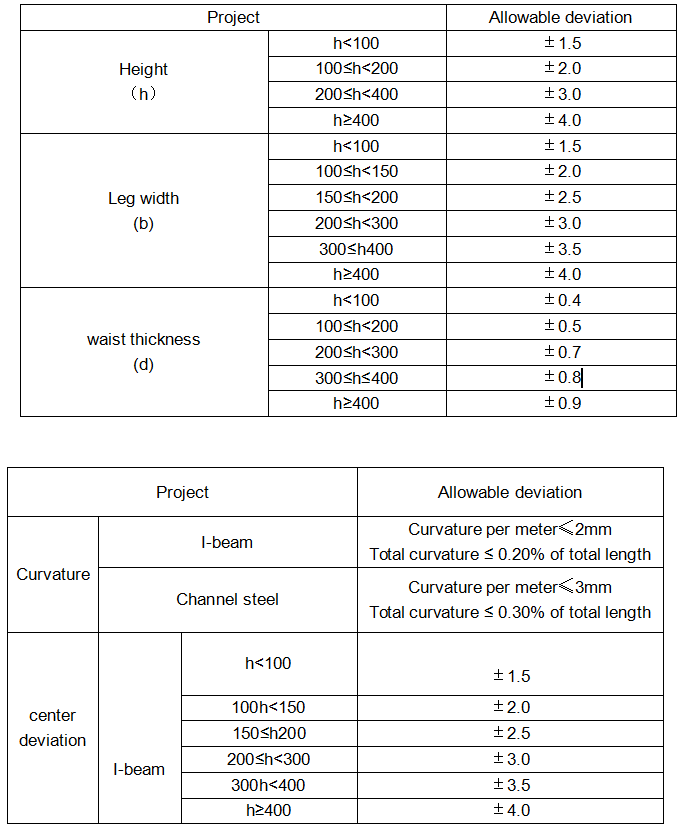
The allowable deviation of the average leg thickness of I-beam is ±0.06t.
The bending deflection of the I-beam should not exceed 0.15d.
The outer edge slope of the I-beam legs shall not be greater than 1.5%b for one leg and 2.5% for both legs.
The passivation of I-beam leg ends and shoulders shall not allow round bars with a diameter equal to 0.18t to pass through.
Shape:
1. Curvature. The bending degree of I-beam is not more than 2mm per meter. The total bending degree is not more than 0.2% of the total length.
2. Twist. The I-beam shall not have obvious torsion.