
A hot-rolled steel coil refers to a coil of steel heated above its recrystallization temperature and then passed through a series of rollers to reduce its thickness. It's important to note that hot-rolled steel coils are often further processed after rolling, such as cutting, leveling, or forming into specific shapes or sizes. The final application and requirements will determine the necessary additional processing steps. When selecting a hot-rolled steel coil, it is crucial to consider the desired mechanical properties, surface finish requirements, and specific industry standards to ensure it meets the intended application's specifications.
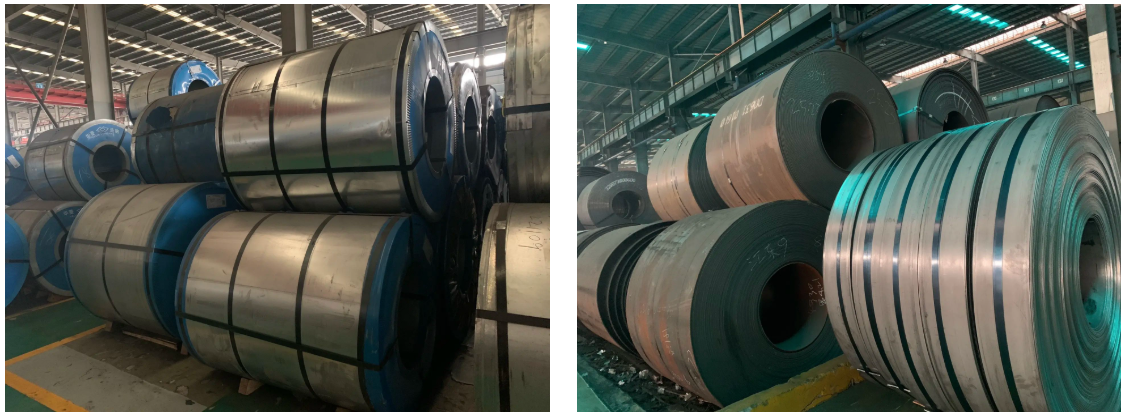
Hot-rolled steel coils come in various forms and can be classified in the following ways:
By Thickness:
1. Medium-thick wide steel strip: Thickness ≥ 3mm and < 20mm, width ≥ 600mm. This is the most representative variety, accounting for approximately two-thirds of the total production of hot-rolled coils.
2. Hot-rolled thin wide steel strip: Thickness < 3mm, width ≥ 600mm.
3. Hot-rolled thin plate: Single sheet steel plate with a thickness < 3mm.
Classification by Form:
1. Straight Coil: Raw steel coils that have not undergone further processing after winding. The beginning and end precision is relatively poor, and some shape defects may exist.
2. Finished Coil: Steel coils that have undergone finishing processes such as leveling, straightening, and slitting. The dimensional accuracy and shape are better.
3. Common Specifications: Thickness is typically between 1.2-25.4mm, with 2.0-13.5mm being the most common. A representative specification is 5.5mm.
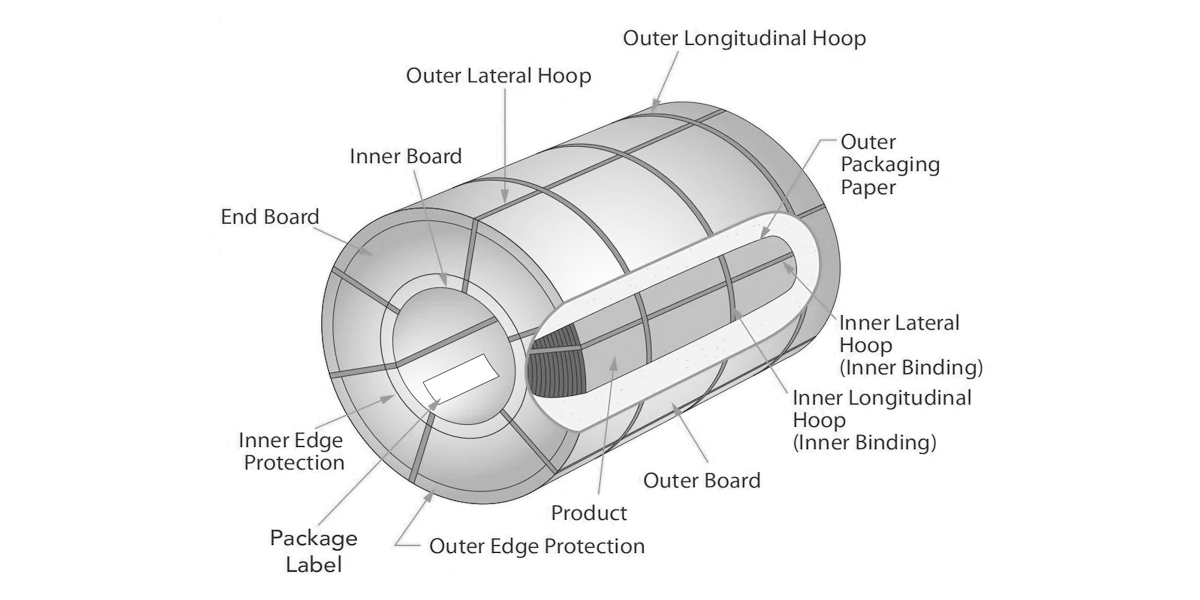
Production Process of Hot-Rolled Coil (HRC)
1. Slab Preparation and Heating: Production begins by feeding thick or thin slabs (typically from continuous casting) into a heating furnace. The slab is heated above its recrystallization temperature—typically around 1700°F (927°C)—to ensure sufficient plasticity for rolling.
2. Descaling: After heating, the slab surface is covered with iron oxide scale (iron oxide). High-pressure water jets are used to remove the scale, ensuring the surface quality required for rolling.
3. Rough Rolling: The T-slab passes through a roughing mill (typically a multi-stand mill) to reduce its thickness and length while disrupting the casting structure. Some mills use reversible mills, where the slab is passed back and forth in a single stand to achieve thickness reduction.
4. Finish Rolling: The strip is then processed through five to seven finishing stands to achieve precise thickness reduction. Additional descaling may be performed at this stage. Finish rolling plays a A crucial role in the final shape, thickness uniformity, and internal mechanical properties. 5. Controlled Cooling: The rolled strip is rapidly cooled by a water spray system on the output roller conveyor, thereby controlling the grain structure and improving mechanical properties.
6. Winding and Packaging: After cooling, the strip is wound into coils using a coiler. The finished coils are then bundled, labeled, and packaged, ready for storage or shipment.
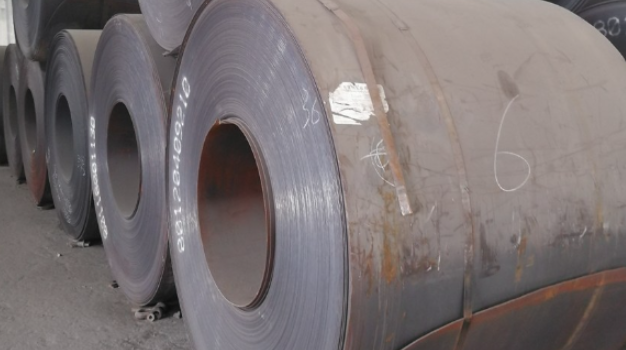
Material Classification: Hot-rolled steel coils can be classified by material into ordinary carbon structural steel, low-alloy steel, and alloy steel, etc. Common grades include Q195, Q235, Q345, and SPHC (Japanese Standard Hot-Rolled Steel Coil Grades).
Core Properties: Hot-rolled steel coils possess excellent properties such as high strength, good toughness, ease of processing and forming, and good weldability. Taking the commonly used Q235 as an example, its typical mechanical property requirements are: yield strength ≥ 235 MPa, tensile strength 370-500 MPa, and elongation after fracture ≥ 23%.
Features:
Mechanical Properties: Hot rolled steel coils generally have improved mechanical properties compared to cold rolled steel. They exhibit higher tensile strength, yield structural strength, and ductility, making them suitable for various applications that require strength.
Surface Finish: The surface finish of hot rolled steel coils is typically rougher compared to cold rolled steel. It may have a scale or oxide layer on the surface due to the high-temperature rolling process. This surface condition may require additional processing, such as pickling or further surface treatment, depending on the intended application.
Applications:
Hot rolled steel coils find application in a wide range of industries, including construction, automotive, machinery, and appliances. They are commonly used to manufacture structural components, pipelines, automotive frames, railroad tracks, and general machinery parts.
Hot-rolled steel coils, with their excellent comprehensive performance, mature production technology, and extremely high cost-effectiveness, have become an indispensable basic material in the modern industrial system. They play a key role in many fields such as construction, transportation, energy, and manufacturing, serving as the "steel backbone" supporting national economic development.
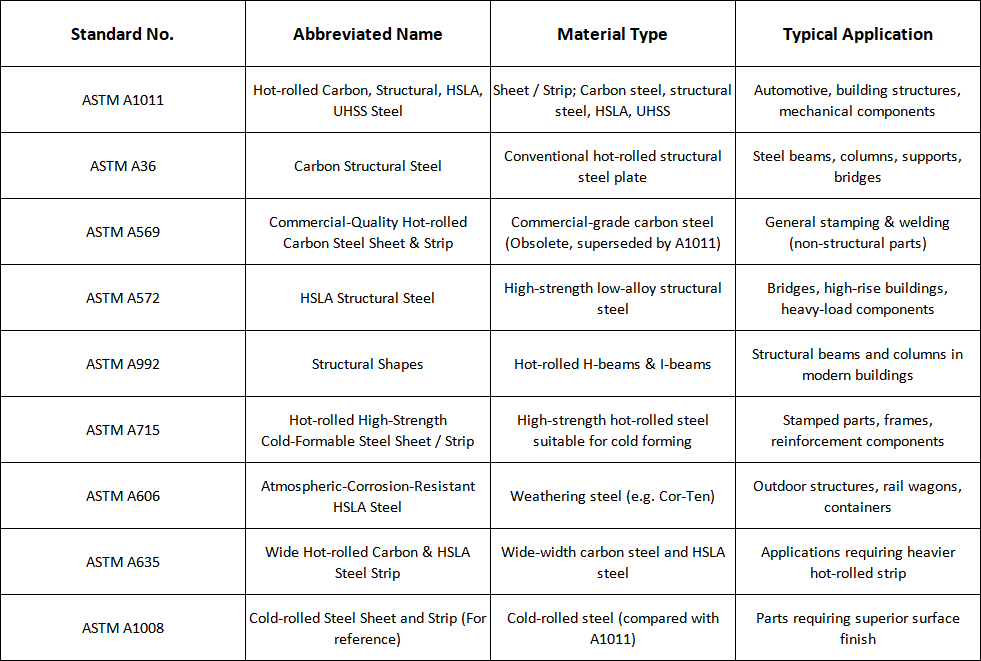
In the United States, the most commonly used standards for hot rolled steel coils are issued by the American Society for Testing and Materials (ASTM) and the American Iron and Steel Institute (AISI). These standards ensure the quality and specifications of hot rolled steel coils used in various applications. Some of the key ASTM and AISI standards for hot rolled steel coils in the US include:
ASTM A1011/A1011M: This specification covers hot-rolled, carbon, structural, high-strength low-alloy, high-strength low-alloy with improved formability, and ultra-high strength steel sheet and strip in coils. It is a widely used standard for a variety of applications.
ASTM A36/A36M: This specification covers carbon structural steel shapes, plates, and bars. ASTM A36 is a common grade used in various structural applications.
ASTM A568/A568M: This specification covers steel, sheet, carbon, structural, and high-strength, low-alloy, hot-rolled and cold-rolled, general requirements for. This standard covers a wide range of hot rolled steel coil products.
AISI 1006/AISI 1008: The AISI standards specify the chemical composition and mechanical properties of hot rolled low-carbon steel coils, such as AISI 1006 and AISI 1008, which are commonly used in applications requiring good formability.
AISI 1010/AISI 1015: These standards cover hot rolled low-carbon steel coils with slightly higher carbon content than AISI 1006/1008, suitable for applications where higher strength is required.
AISI 1020/AISI 1045: These standards cover hot rolled medium-carbon steel coils, commonly used in machinery and structural applications where higher strength and hardness are needed.
AISI 4130/AISI 4140: These standards cover hot rolled alloy steel coils, suitable for applications requiring higher tensile and yield strength and resistance to wear and impact.
In Japan, the standards for hot rolled steel coils are set and regulated by the Japanese Industrial Standards (JIS). JIS standards cover a wide range of industrial products, including hot rolled steel coils used in various applications. Some of the key JIS standards for hot rolled steel coils in Japan include:
JIS G3101: This standard specifies the hot rolled steels for general structures. One of the most commonly used grades in this standard is SS400, which is equivalent to ASTM A36 in the United States.
JIS G3131: This standard specifies hot rolled mild steel plates, sheets, and strips for general forming and welding structures. It is often used for automotive parts, pipes, and other general applications.
JIS G3132: This standard specifies the requirements for hot rolled carbon and carbon-manganese steel sheets and coils for pipes and tubes used in pressure vessels and general applications.
JIS G3113: This standard specifies the hot rolled steel sheets, plates, and strips for automobile structural uses. Grades like SAPH310, SAPH370, SAPH400, and SAPH440 fall under this standard.
JIS G3116: This standard specifies the hot-rolled steel plates, sheets, and strips used for gas cylinders.
JIS G3115: This standard specifies the hot rolled steel plates for pressure vessels for intermediate and high-temperature service.
JIS G3125: This standard specifies the hot rolled steel sheets with improved atmospheric corrosion resistance for general structures.
JIS G3134: This standard specifies hot rolled high-strength steel plates with improved formability for automobile structural uses.
JIS G4051: This standard specifies carbon steel for machine structural use, including hot rolled steel sheets, strips, and plates.
JIS G4053: This standard specifies low-alloyed steels for machine structural use, including hot rolled steel plates, sheets, and strips.
In the United Kingdom, the standards for hot rolled steel coils are typically governed by the British Standards Institution (BSI). BSI issues various British Standards (BS) that cover different aspects of steel production, including hot rolled steel coils. Some of the key British Standards related to hot rolled steel coils in the UK include:
BS EN 10025: This standard specifies the technical delivery conditions for hot rolled products of structural steels. It covers a range of steel grades with different strengths, such as S235, S275, S355, and others.
BS EN 10111: This standard specifies the requirements for continuously hot-rolled low carbon steel sheet and strip for cold forming.
BS EN 10149: This standard specifies hot-rolled flat products made of high yield strength steels for cold forming. It includes grades like S315MC, S355MC, S420MC, S460MC, and others.
BS EN 10113: This standard specifies the requirements for hot-rolled products in weldable fine grain structural steels.
BS EN 10149-2: This standard specifies hot-rolled flat products made of high yield strength steels for cold forming. It includes grades like S355MC, S420MC, S460MC, S500MC, S550MC, and S700MC.
BS EN 10120: This standard specifies the requirements for hot-rolled sheet and strip for welded gas cylinders.
BS EN 10155: This standard specifies the requirements for structural steels with improved atmospheric corrosion resistance.
BS EN 10208: This standard specifies the technical delivery conditions for steel pipes for pipelines used in the transportation of gas and oil.
In China, the standards for hot rolled steel coils are established and regulated by the Chinese National Standards (GB/T) and the Ministry of Industry and Information Technology (MIIT). China has its own set of standards to ensure the quality and specifications of hot rolled steel coils used in various industries. Some of the key Chinese standards for hot rolled steel coils include:
GB/T 3274-2017: This standard specifies hot-rolled plates, sheets, and strips of carbon structural steels and high-strength low-alloy structural steels.
GB/T 700-2006: This is the updated version of GB/T 700 and includes the requirements for carbon structural steels.
In addition to specific country-specific standards like those mentioned earlier (e.g., ASTM in the United States, JIS in Japan, BSI in the United Kingdom, and GB/T in China), there are also international standards and specifications that apply to hot rolled steel coils. Some of the prominent international standards for hot rolled steel coils include:
ISO 3573: This International Organization for Standardization (ISO) standard specifies the technical requirements for hot-rolled carbon steel sheet, steel strip, and steel plate.
ISO 6316: This ISO standard specifies the requirements for steel strip, in coils and cut lengths, for the construction of welded steel tubes for pressure purposes.
ASTM standards for hot-rolled steel sheets, strips, and structural products
Copyright Notice © 2022 - 2023 ChinaSteelMarket.com All rights reserved.