
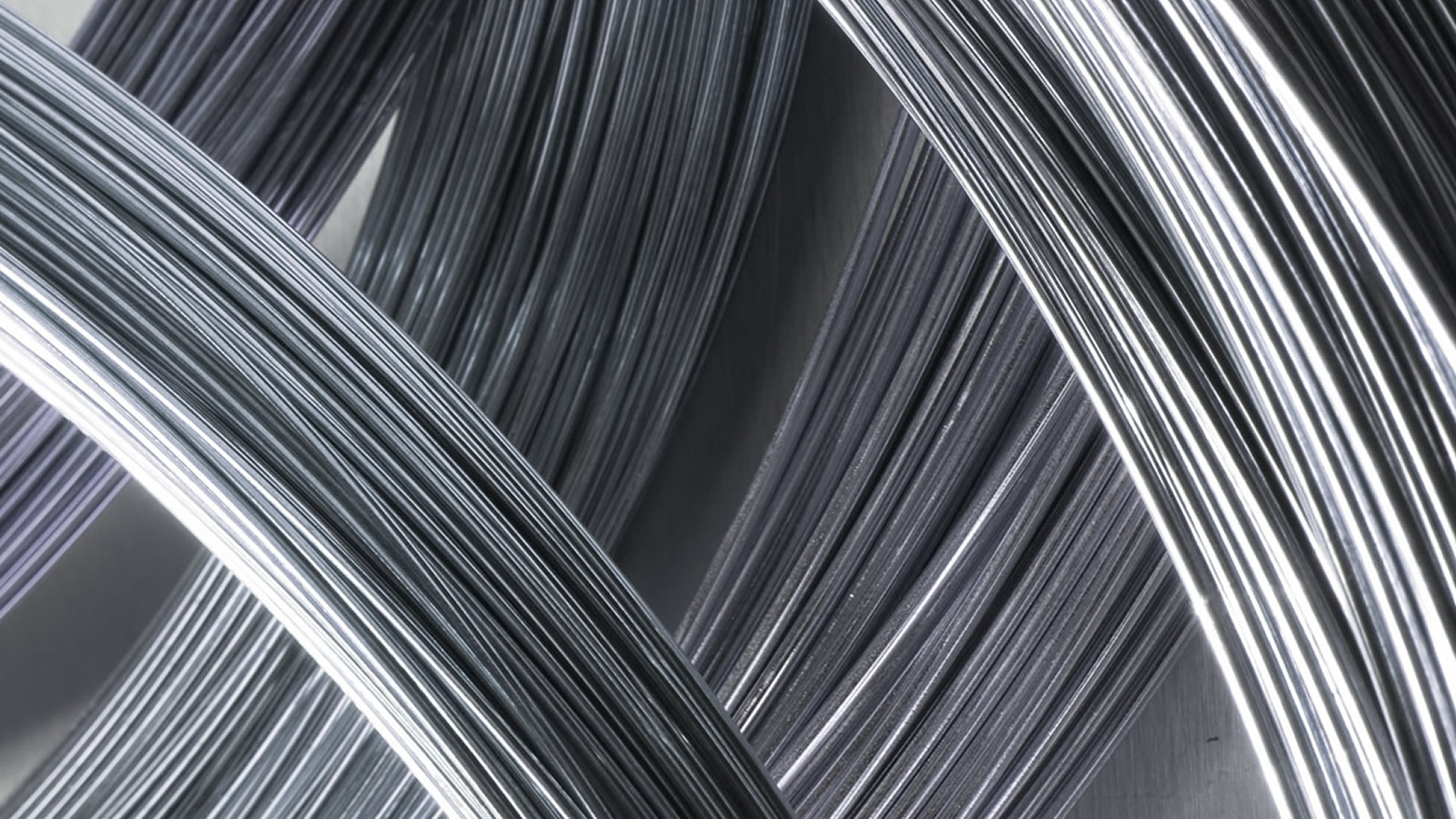
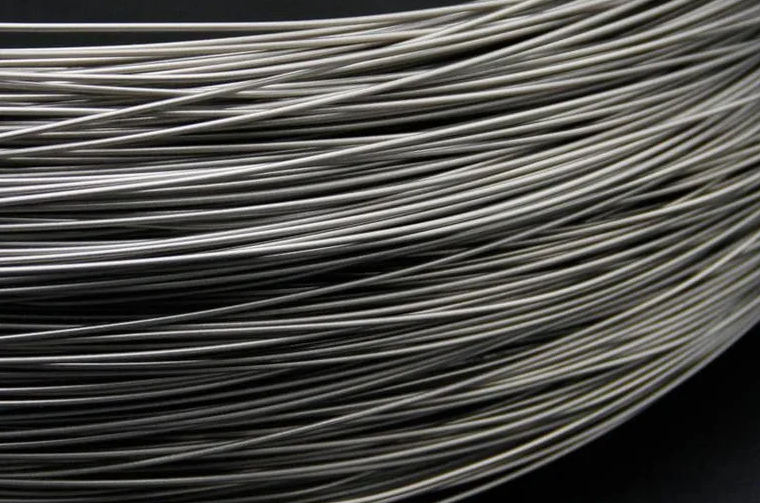
Hard steel wire, also known as hard-drawn wire or hard-drawn steel wire, refers to steel wire with ultra-high strength and high hardness produced by cold drawing and heat treatment of high-quality carbon steel wire rod with a high carbon content. The defining characteristic of hard steel wire lies in its carbon content. Wire rod rolled from high-quality carbon structural steel with a carbon content of 0.45% or higher is generally referred to as hard wire, while wire rod with a carbon content of 0.6% or higher is more strictly defined as hard wire. Based on carbon content, steel with 0.50% to 0.80% carbon is classified as hard steel, while steel with 0.81% to 1.30% carbon is classified as extra-hard steel. Hard steel wire offers high strength, good toughness, and excellent drawing properties, making it the base material for high-end metal products such as steel wire ropes, springs, prestressed steel, and tire bead wire.
Classification
Hard wire rod is classified into two major categories based on its application: general-purpose hard wire and high-grade hard wire. General-purpose hard wire is primarily used to produce steel wire, steel wire ropes, and spring steel wire for general applications; high-grade hard wire is used to produce steel wire and steel strands for prestressed concrete, bead wire for rubber products, tire cord, steel wire for rubber belts, and specialized steel wire ropes for elevators and the petroleum industry.
According to the grade system, hard wire materials range from 45# to 70# carbon steel to alloy steel series such as SWRH and XGLB. Typical grades include SWRH72A, SWRH72B, 82B, and 87Mn. Among these, 82B (carbon content 0.78%–0.85%) is the most commonly used grade for manufacturing high-strength, low-relaxation prestressing steel strands, while 87Mn is used to manufacture high-strength wire for rope making with a tensile strength of up to 2060 MPa.
It is important to distinguish between hard wire and piano wire. Although both are cold-drawn high-carbon steel products and appear similar, music wire has stricter tolerance limits for non-metallic inclusions such as sulfur and phosphorus. It also involves additional standardized management and inspection of impurities, surface defect depth, and decarburization layer depth. As a result, its production is more time-consuming and costly, making it primarily used for precision mechanical springs; hard wire, on the other hand, is mostly used for springs with few cycles and no impact loads, as well as general merchandise products.

Chemical Composition and Mechanical Properties
The typical carbon content of hard steel wire ranges from 0.7% to 0.9%. During production, the slag alkalinity (optimally 2.5 to 3.0), non-metallic inclusions, and carbon segregation must be strictly controlled to optimize steel purity and drawing performance. The microstructure must contain at least 80% sorbite or pearlite to ensure mechanical properties; high-quality hard wire typically requires a sorbite content of 80% to 90% or higher. The surface decarburization layer is controlled within 1% to 1.5%D, and the total non-metallic inclusions must be ≤ Grade 2.5.
Conventional hard wire products have a tensile strength of 1,120–1,250 MPa, with an elongation after fracture of ≥10% and a reduction of area of ≥30%. High-end products, such as steel for bridge cables, can achieve strengths exceeding 2,000 MPa and are trending toward 2,100 MPa. Taking a smooth-surfaced steel wire with a diameter of 2.50 mm and a tensile strength of 2,060 MPa as an example, 87Mn raw material must be selected, and the sorbite formation rate after heat treatment must exceed 90%. As a high-end category among hard steel wires,Piano Wire can achieve a tensile strength of up to 3,000 MPa.
Production Process
The typical production process for high-strength steel wire is as follows:
High-carbon steel wire rod → Inspection → Pickling and phosphating (or boron coating) → Heat treatment (lead quenching/sorbitic treatment) → Multi-pass cold drawing → Final inspection → Packaging → Storage.
Heat treatment forms the foundation of the manufacturing process for high-strength hard steel wire. Prior to drawing, the wire typically undergoes lead quenching to achieve a sorbite microstructure. Once the heat treatment curve for lead quenching is established, the key considerations are ensuring uniform furnace and lead temperatures; for high-carbon steel wires such as T9A, decarburization must also be prevented. Regarding acid pickling and lubrication, residual scale on the surface can cause notches or burrs during torsion testing; therefore, acid pickling must ensure a clean surface. Wire lubrication generally involves pre-coating with lime paste or calcium soap drawing powder; a phosphating layer may be applied before final production to ensure at least eight drawing passes. The drawing process requires high-strength steel wire to be drawn without twisting; the partial compression ratio decreases as carbon content increases, and the dry drawing speed is generally controlled between 60 and 150 meters per minute. During the drawing process, temperature rise must be effectively controlled to prevent the lubricating film from carbonizing and to avoid changes in the wire’s microstructure. For high-strength rope-making wire with a diameter of 2.50 mm and a tensile strength of 2060 MPa, additional measures must be taken regarding the precise selection of drawing die profile parameters, control of drawing speed, and control of the exit die temperature.

Main Applications
Steel wire ropes: Used as the base material for rope-making wire in the manufacture of elevator wire ropes, oilfield-specific wire ropes, and wire ropes for lifting and transportation.
Springs: Used to manufacture various types of mechanical springs. Hard steel wire is primarily used for springs subjected to few cycles and no impact loads, such as mattress springs, seat springs, and switch springs. Music wire, on the other hand, is used for high-precision springs, such as automotive valve springs.
Prestressed Steel: Hard wires of grades such as 82B serve as the primary raw material for manufacturing steel wires and steel strands used in prestressed concrete, which are applied in projects such as bridges, high-speed rail box girders, and nuclear power plant containment structures.
Tire Reinforcement Materials: Used to manufacture bead wires and tire cord.
Cement Nails and Fasteners: Used to manufacture construction fasteners such as cement nails and nail guns.
Steel-Core Aluminum Stranded Wire and Cables: Used to manufacture the steel cores for steel-core aluminum stranded wire, as well as aluminum-clad steel wire for OPGW (Optical Fiber Composite Overhead Ground Wire).
Others: Umbrella frames, steel shot for shot blasting, steel wires for adhesive tape, and shafts for machinery.
Different countries and regions may have different standard systems and naming conventions, the following are some examples of possible standards for Hard Steeel Wire:

Copyright Notice © 2022 - 2023 ChinaSteelMarket.com All rights reserved.