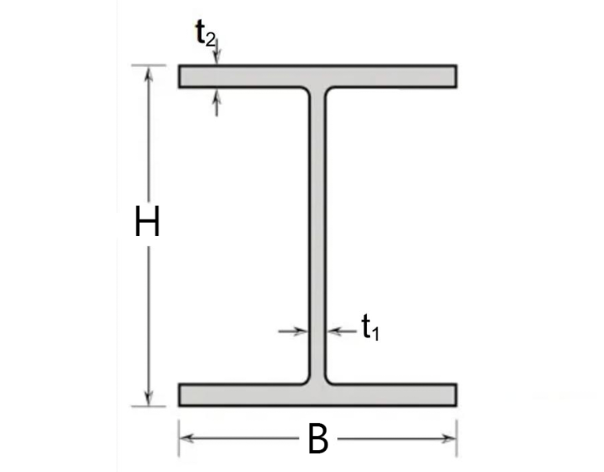

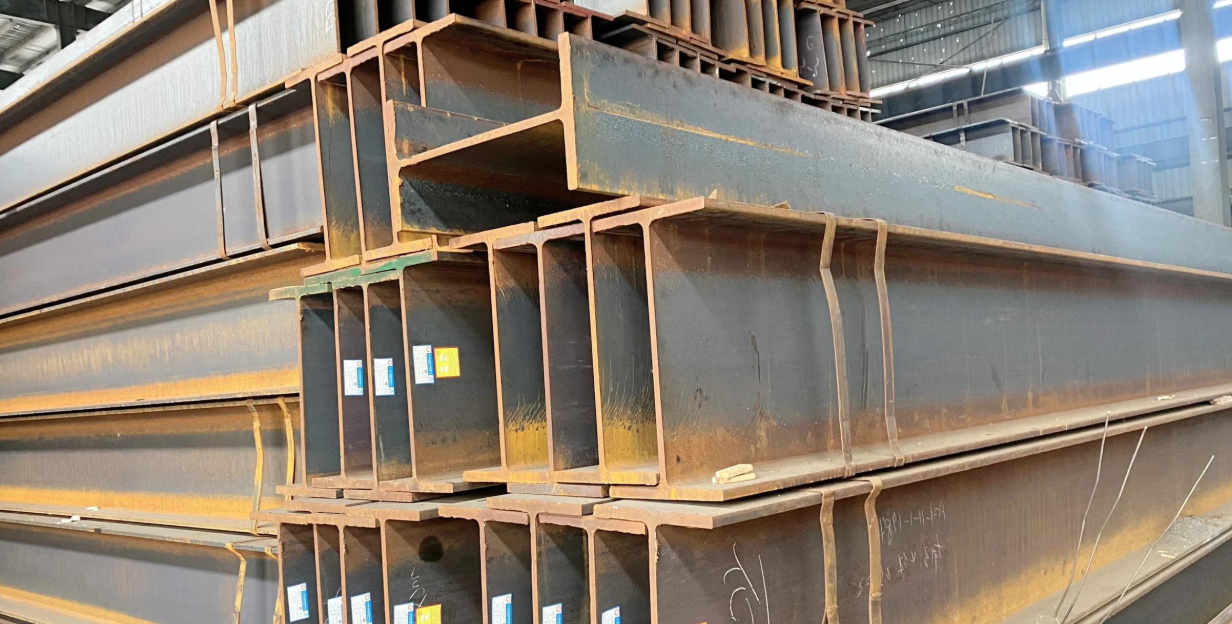
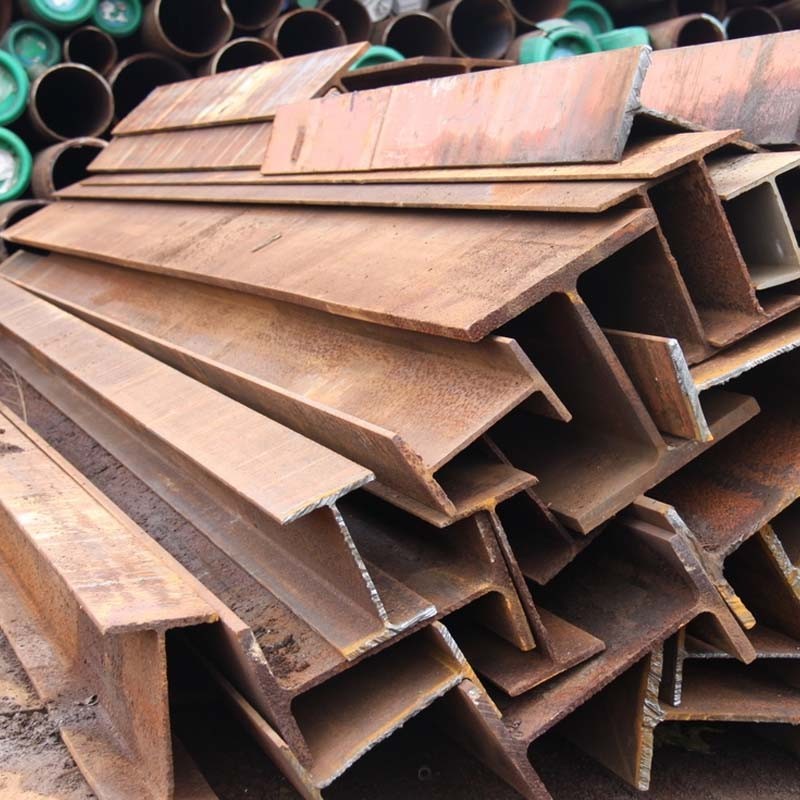
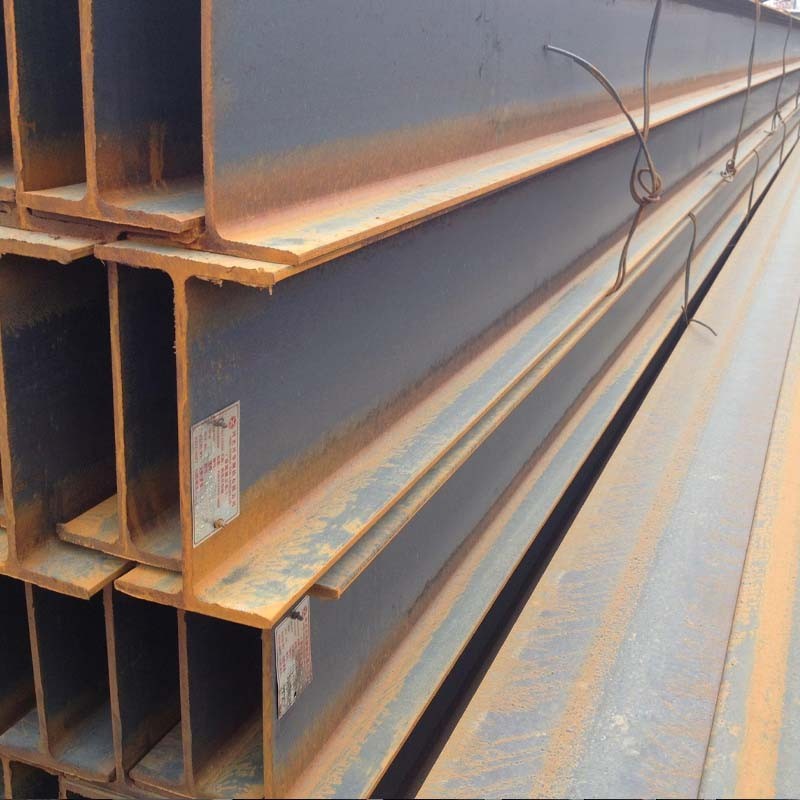
H-beams are economical cross-sectional profiles with an H-shaped cross-section, also known as universal steel beams, wide-flange I-beams, or parallel-flange I-beams. Their cross-section consists of two parts: a web (waist) and flanges (edges).
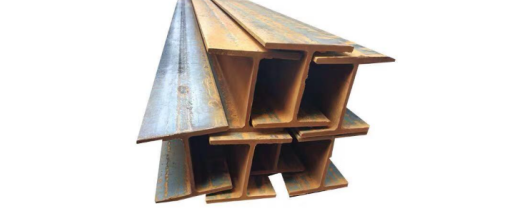
Core Performance Characteristics of H-beams:
1. High Section Modulus and Strong Load-Bearing Capacity: The economical and rational cross-sectional shape of H-beams results in significantly higher section modulus, moment of inertia, and corresponding strength compared to ordinary I-beams of the same weight. Bending resistance is increased by 5%–10% compared to I-beams.
2. Lightweight and Metal-Saving: Compared to ordinary I-beams, H-beams can save 10%–40% of metal, and in various truss structures, they can save 15%–20% of metal.
3. Parallel Flanges and Convenient Processing: The flanges are parallel on both the inner and outer sides, with right angles at the ends, facilitating assembly into various components. This saves approximately 25% of welding and riveting work, significantly accelerating construction speed.
4. High Structural Stability: With good plasticity and flexibility, H-beams offer high structural stability, making them suitable for building structures subjected to high vibration and impact loads. They also possess strong resistance to natural disasters, making them particularly suitable for structures in earthquake-prone areas.
5. Reduced Manufacturing Costs: Compared to welded I-beams, H-beams are lower in cost, higher in precision, and have less residual stress. They eliminate the need for expensive welding materials and weld inspection, saving approximately 30% in steel structure manufacturing costs.
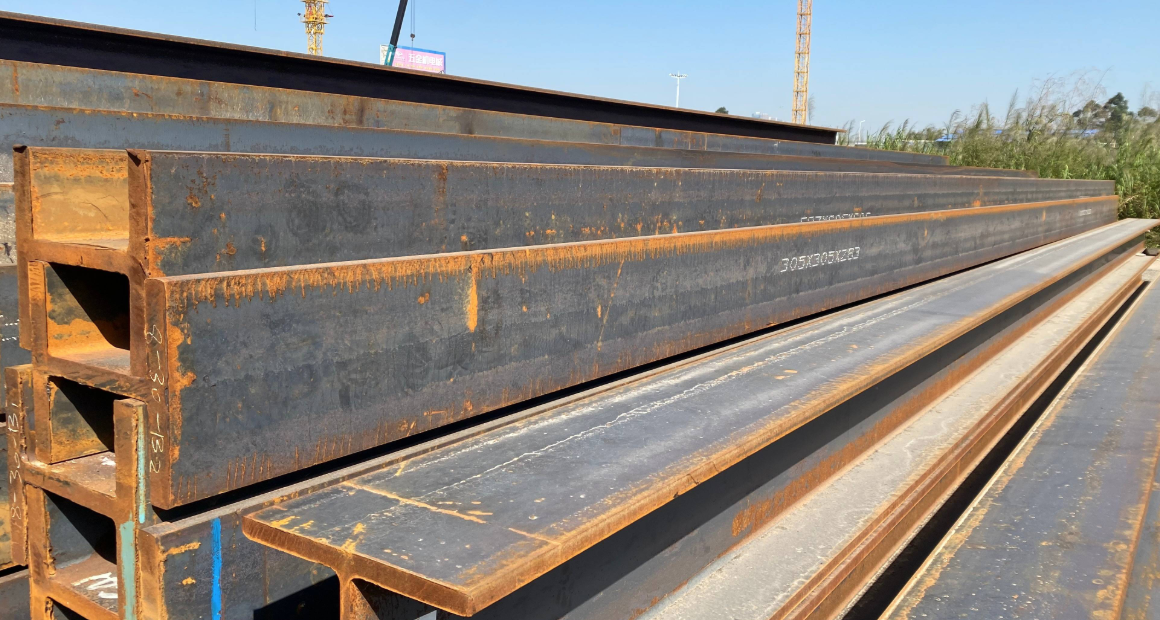
H-Beam Classification
H-beams can be classified in various ways, including by flange width, application, and production method.
1. Classification by Flange Width
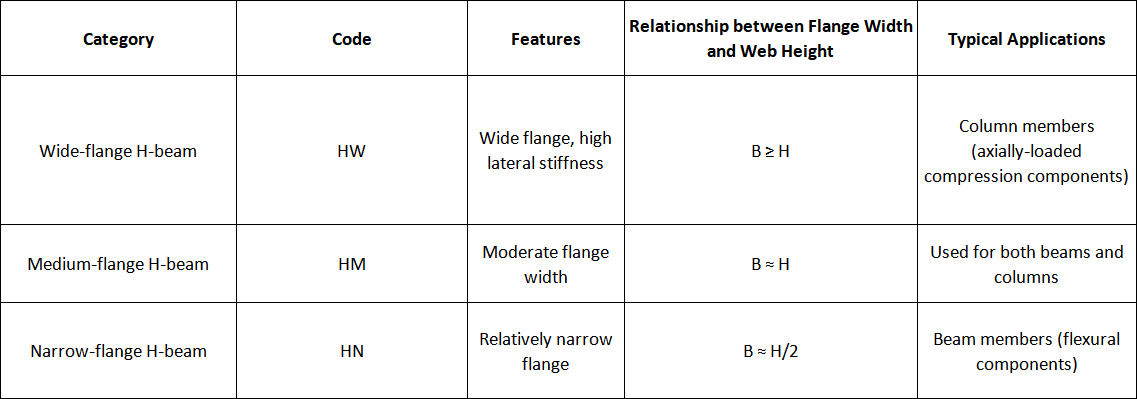
In addition, there are special categories such as thin-walled H-beams (HT) and H-beam piles (HU).
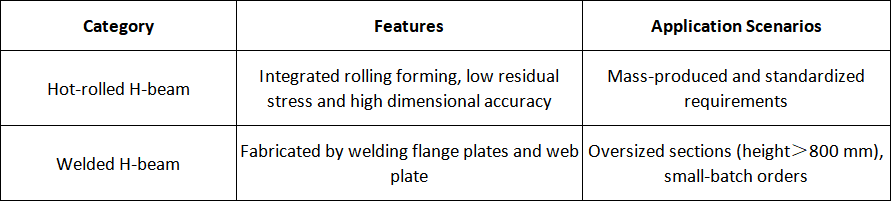
2. Classification by Production Method
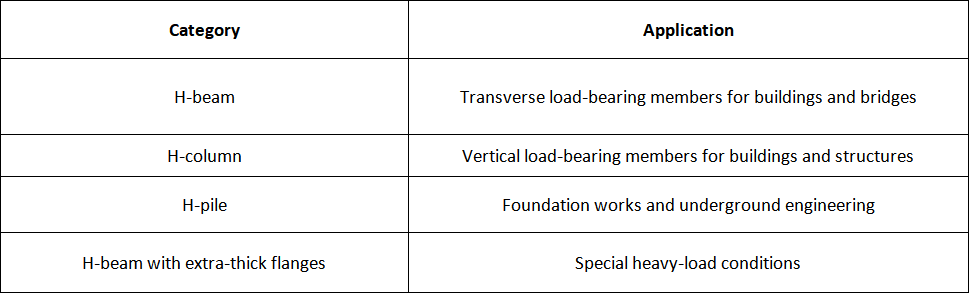
3. Classification by Application
Production Process
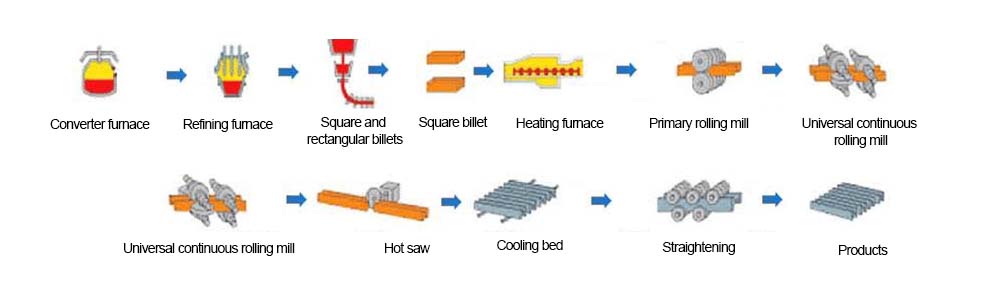
H-beams are mainly produced using two methods: hot rolling and welding.
1. Hot-rolled H-beams
The rolling process of hot-rolled H-beams differs from that of ordinary I-beams. Ordinary I-beams use only one set of horizontal rolls, while H-beams, due to their wider flanges and lack of slope, require an additional set of vertical rolls for simultaneous rolling, making the rolling process and equipment more complex.
Core process flow:
Bill (continuously cast billet) → Heating → Rough rolling (opening) → Finish rolling (universal rolling mill) → Straightening → Cooling → Inspection → Warehousing
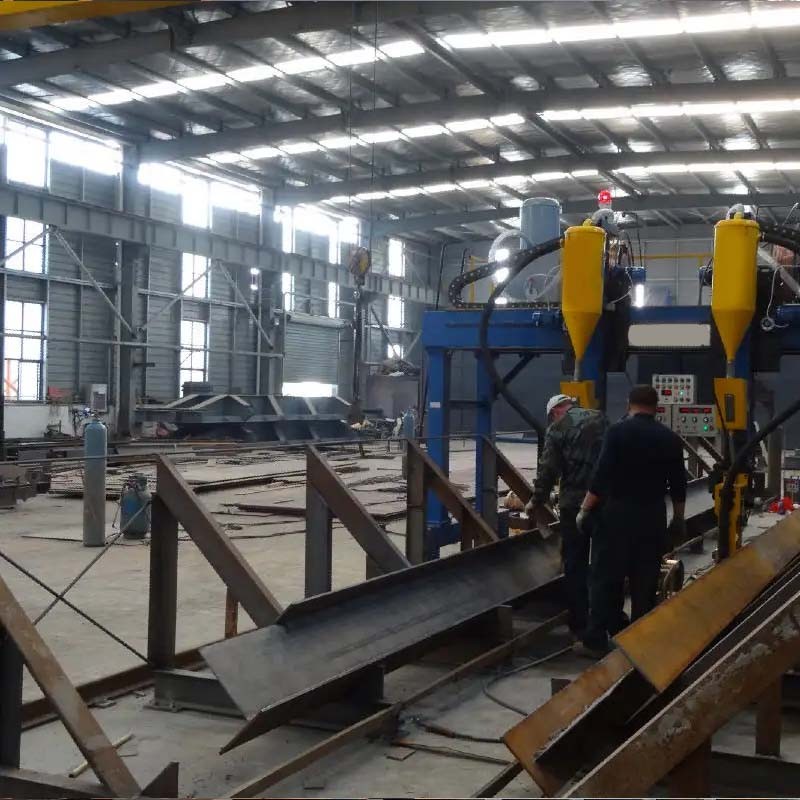
2. Welded H-beams
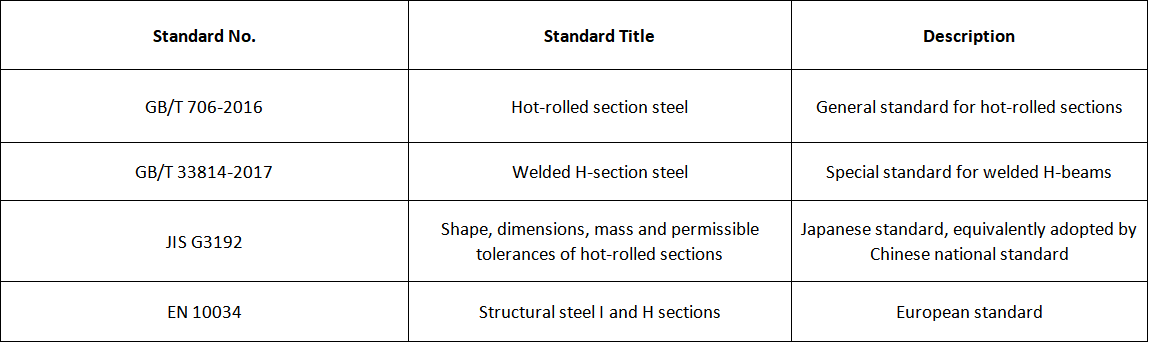
Welded H-beams are made by cutting strip steel of suitable thickness into appropriate widths and welding the flanges and web together on a continuous welding unit. Suitable for extra-large sizes (height > 800mm) or small-batch customization needs.
Applications of H-beams
H-beams are one of the most commonly used and important structural materials in modern construction and industry. With their high load-bearing capacity, excellent durability, and flexible processing performance, H-beams have a wide range of applications in many fields:
Civil and Industrial Buildings
• Precast Steel Structures: H-beams are commonly used for columns and main beams in precast steel structures, ensuring excellent strength and durability of the entire project even in harsh weather conditions.
• High-Rise Building Structures: In multi-story buildings, H-beams serve as the primary framing material, helping to maintain stability under heavy loads and wind pressure.
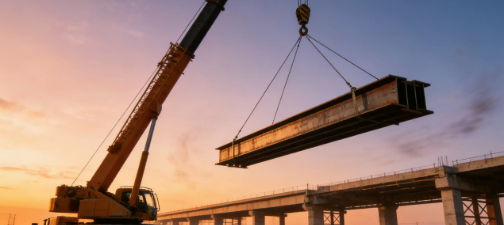
• Bridges and Roads: H-beams are used for bridge main beams, foundations, and railings, enhancing the strength and load-bearing capacity of bridges under dynamic traffic loads.
Factory and Warehouse
• Structural Frames: H-beams are used as the main load-bearing frames in factories and warehouses, helping to maximize space utilization and provide better ventilation.
• Roofs and Trusses: This material is also used in roof systems, trusses, and canopies for warehouses, factories, and parking lots.
Infrastructure and Engineering
• Viaducts and Suspension Bridges: H-beams, due to their high strength and durability, can be used as the main beams and load-bearing components of bridges.
• Underground and foundation engineering: It is used as a support column in tunnels and subway systems to increase load-bearing capacity and prevent settlement.
Shipbuilding and marine engineering
• Hull frame: H-beams enhance structural strength, enabling it to withstand heavy loads and wave pressure at sea.
• Port Construction: Due to their corrosion resistance and durability in marine environments, they are used in docks, piers, and offshore platforms.
Energy Sector
• Wind and Solar Power Plants: H-beams are the primary material for the support structures of wind turbines and solar panels, ensuring stability even in strong winds.
• Power plants and substations: Load-bearing frames, support systems, and piping used in power generation and transmission facilities.
Machinery and Manufacturing Industry
• Industrial Machinery: H-beams are often used to manufacture machine frames and load-bearing supports due to their rigidity and strength.
• Conveying Systems: It is used as a structural frame and support system in production lines.
Safety and Protection Structures
• Fences and Guardrails: H-beams are used to construct safety fences and guardrails in industrial and public areas.
• Flood and Corrosion Protection: Can be used as flood control piles or retaining walls.
Architecture and Interior Design
• Architectural Aesthetics: H-beams are used as decorative frames in modern architectural spaces such as restaurants, cafes, and open-plan offices, adding a bold industrial look.
• Interior Structures: It is also used in furniture design, such as tables and shelves, presenting a minimalist and modern style.
H-beams are widely used in high-rise buildings, industrial plants, large bridges, marine machinery, mine support, and other fields due to their core advantages of large section modulus, light weight, parallel flanges for easy connection, and metal savings of 10%–40%. Compared to I-beams, H-beams have flanges of equal thickness, can be used as column members, and have superior cross-sectional properties. Currently, H-beams are rapidly developing towards higher strength, wider adoption in steel structure buildings, and continuous updates to the standard system.H-beams are widely used in high-rise buildings, industrial plants, large bridges, marine machinery, mine support, and other fields due to their core advantages of large section modulus, light weight, parallel flanges for easy connection, and metal savings of 10%–40%. Compared to I-beams, H-beams have flanges of equal thickness, can be used as column members, and have superior cross-sectional properties. Currently, H-beams are rapidly developing towards higher strength, wider adoption in steel structure buildings, and continuous updates to the standard system.



|

|

|

|

|
| Timely Info | Independent | Platform | Multiple guarantees | Self-operated storage |
China Steel Market
Empowering small and medium-scale steel purchasing

| About us | Channel | Useful tools |
|---|---|---|
| About China Steel Market | Prices | Steel Weight Calculation |
| Contact Us | Answers | Why Choose Us |
| Terms & Conditions | Inventory | |
| Privacy Policy | Help |
Hot search words:
China Rebar prices China Wire Rod Prices Welded Steel Pipe Prices