
Galvanized profiles refer to structural steel profiles made from hot-rolled, cold-formed, or welded steel as the base material, with a zinc or zinc alloy anti-corrosion layer formed on the surface through a galvanizing process. They differ from galvanized sheets and wires, representing an upgraded anti-corrosion product in the structural steel field.
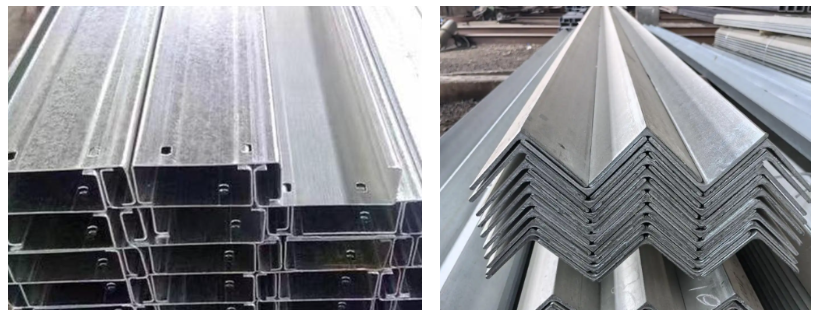
Advantages of Galvanized Profiles:
1. Dual Anti-corrosion Protection: The zinc layer physically isolates corrosive media and acts as a sacrificial anode to protect the base material when the coating is damaged.
2. High Durability: Outdoor service life can reach over 30 years, with low maintenance costs.
3. Strong Coating Adhesion: Hot-dip galvanizing forms a metallurgically bonded zinc-iron alloy layer, resistant to wear and mechanical damage.
4. Full Surface Protection: Uniform protection is provided for both inner and outer surfaces, edges, and grooves.
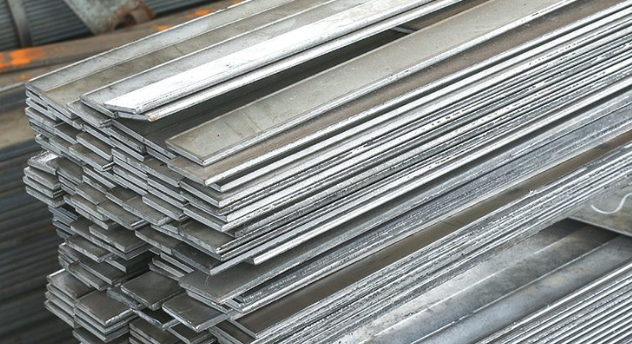
Classification of Galvanized Profiles:
1. Classification by Galvanizing Process:
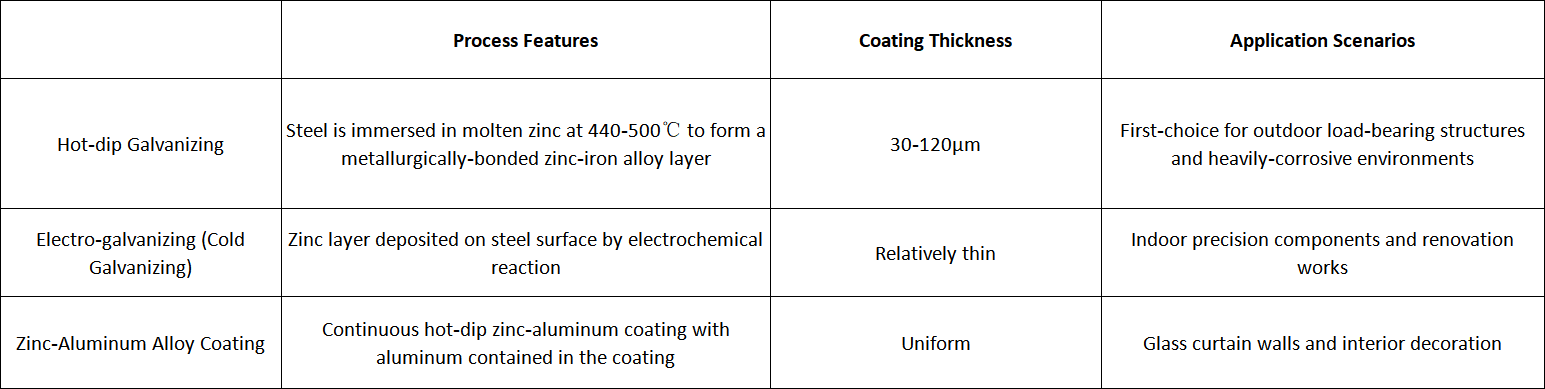
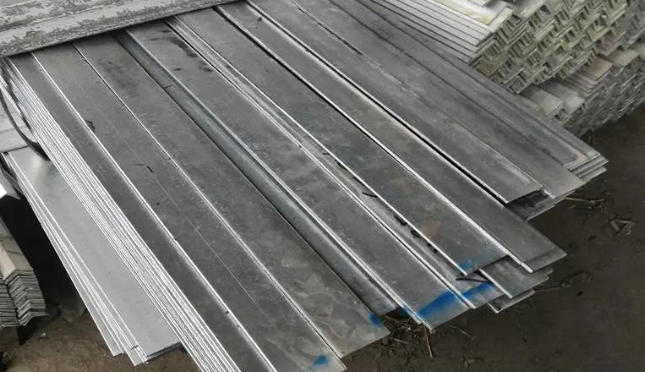
Hot-dip galvanizing is currently the mainstream process in the market, and commonly seen hot-dip galvanized profiles are hot-dip galvanized products. Electro-galvanizing, due to its thinner coating, is difficult to expand into the outdoor heavy-duty market.
2. Classification by Substrate Type
Galvanized profiles can be classified into two main categories based on their substrate:
(1) General-purpose hot-rolled galvanized steel
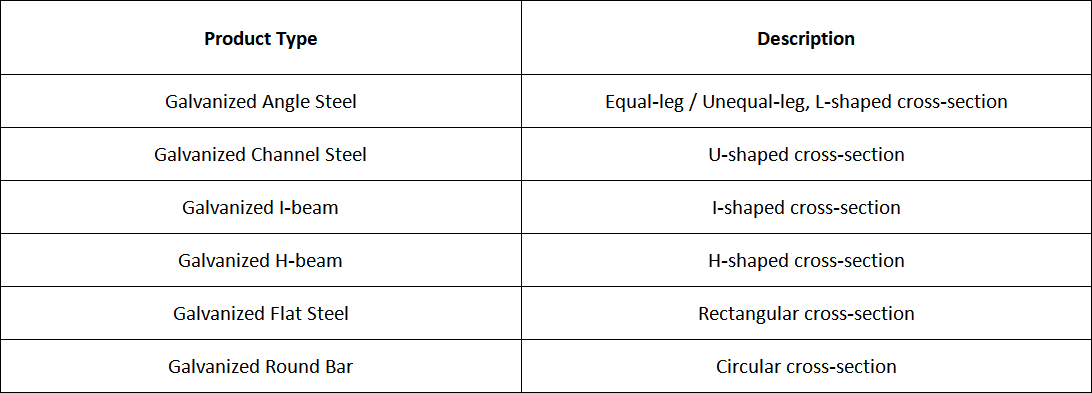
(2) Cold-formed thin-walled galvanized steel
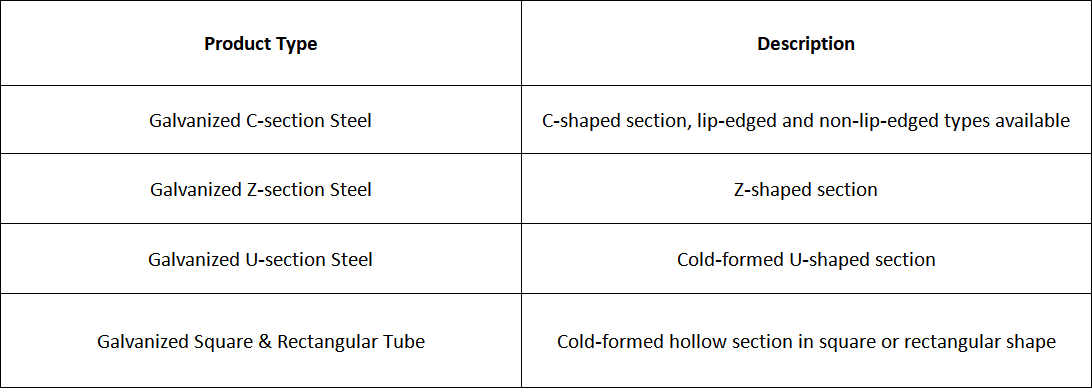
3. Classification by Shape (taking angle steel as an example)
Galvanized angle steel can be classified into galvanized equal-leg angle steel and galvanized unequal-leg angle steel based on their shape. Other profiles also have corresponding shape classification systems.
Performance of Galvanized Profiles
1. Excellent Corrosion Resistance
Hot-dip galvanizing forms a uniform and dense protective layer on the steel surface, with a service life of 20-50 years in urban environments. Hot-dip galvanized profiles possess outdoor durability characteristics of over 30 years.
2. Strong Coating Adhesion
Hot-dip galvanizing forms a metallurgically bonded zinc-iron alloy layer with strong adhesion and wear resistance. The zinc coating of galvanized H-beams is not less than 610g/m², and the average thickness is not less than 86μm.
3. Comprehensive Protection: Every part of the galvanized profile is zinc-plated, providing comprehensive protection even in recesses, sharp corners, and hidden areas.
4. Good Processing Adaptability: Galvanized profiles retain the mechanical properties of the base material, supporting cutting, welding, drilling, and other processing methods, adapting to various steel structure installation needs.
5. Main Limitations: Hot-dip galvanizing is more expensive: the process is complex, resulting in higher costs than ordinary profiles and electro-galvanized products. The coating is easily damaged during welding: welded areas require zinc replenishment. Uneven coating thickness: the coating may be thinner in recessed areas of complex cross-section profiles.
Key Differences from Ordinary Profiles:
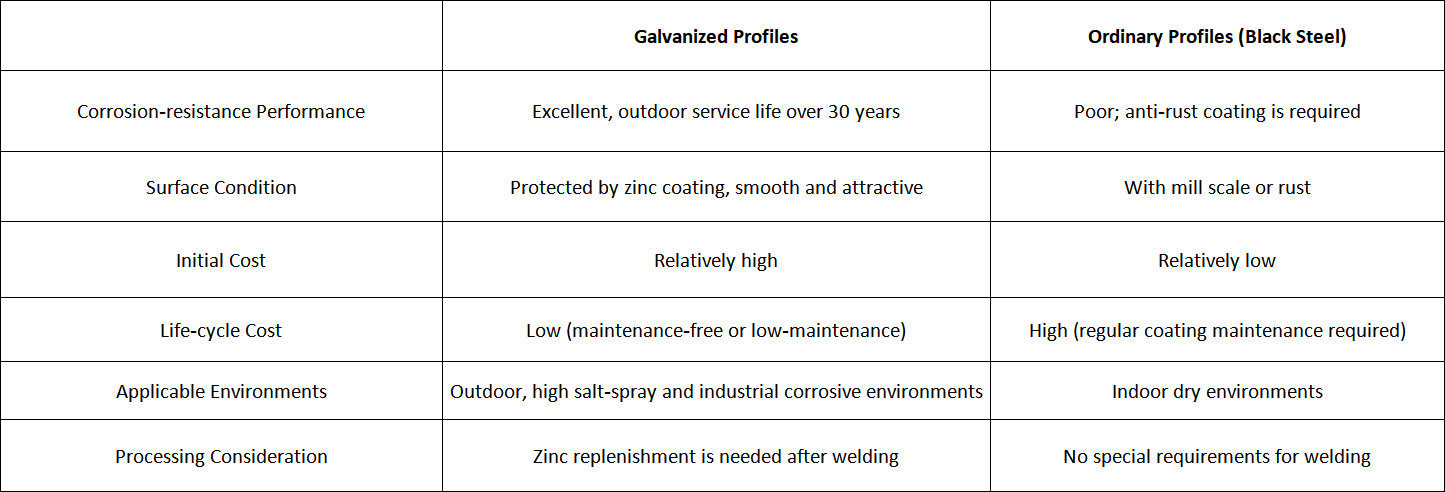
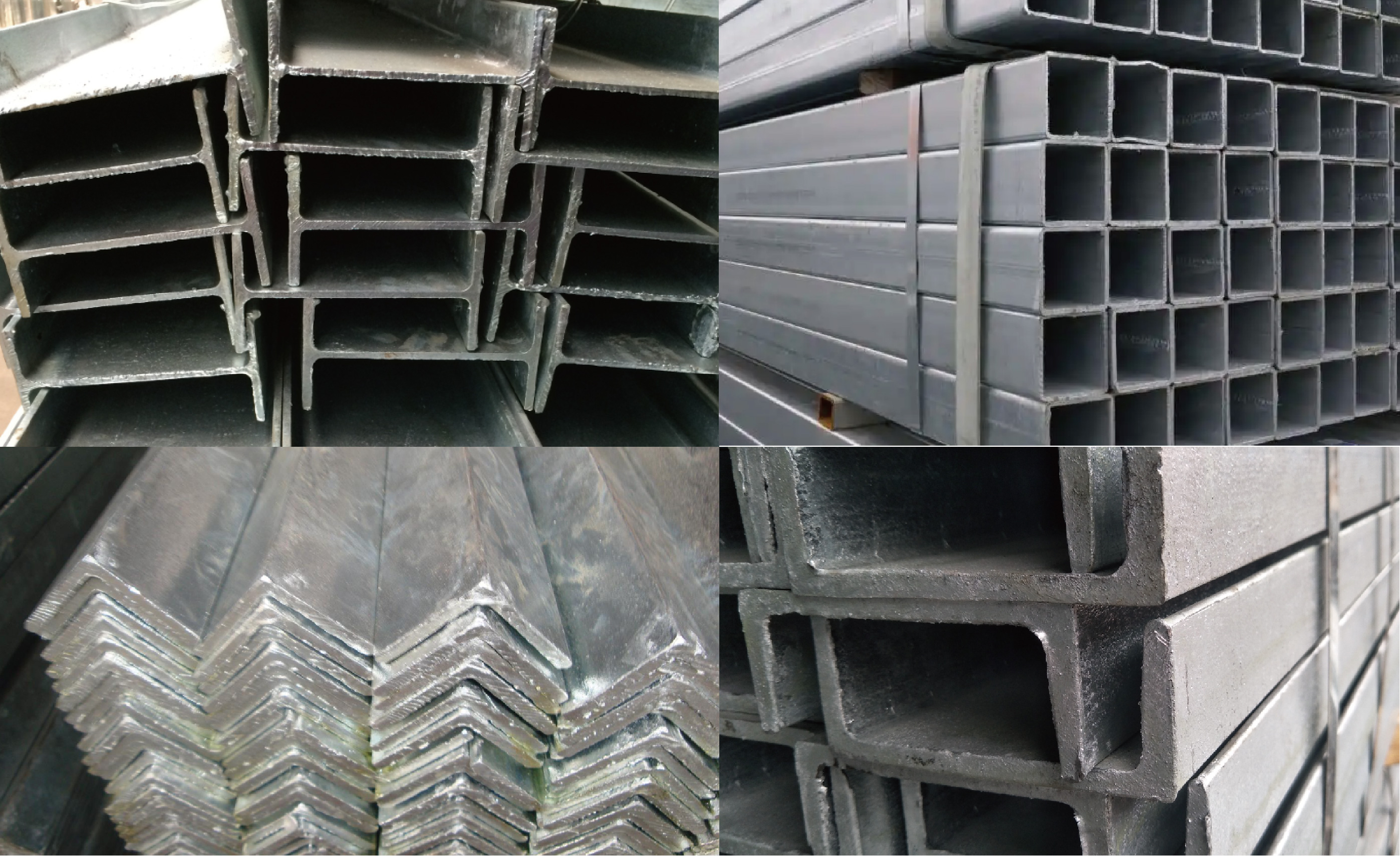
Galvanized profiles are widely used in industrial buildings, photovoltaic supports, power transmission towers, highway guardrails, glass curtain walls, and other fields due to their superior corrosion resistance, service life of over 30 years, and low total cost of ownership. Currently, galvanized profiles are continuously developing towards zinc-aluminum-magnesium alloy coatings, high-strength base materials, and green production methods.
In China, the standards for galvanized profiles are primarily established and maintained by the Chinese National Standards (GB/T) and the Ministry of Housing and Urban-Rural Development (MOHURD). These standards ensure the quality, safety, and performance of galvanized steel profiles used in various construction and engineering applications.
The most relevant Chinese National Standards related to galvanized profiles include:
GB/T 2518-2019: Continuous hot-dip galvanized steel sheets and strips. This standard specifies the requirements for continuous hot-dip galvanized steel sheets and strips, which can be used for manufacturing galvanized profiles.
GB/T 12754-2019: Prepainted galvanized steel coils. Although this standard is primarily for prepainted galvanized steel coils, it covers the general requirements for galvanized coatings and can be relevant to certain galvanized profiles.
GB/T 3091: Welded steel pipes for low-pressure liquid delivery. This standard specifies the technical requirements for welded steel pipes used for low-pressure liquid delivery, which can include certain types of galvanized profiles used in similar applications.
GB 50018: Code for Design of Steel Structures. This code provides guidance on the design of various steel structures, including those involving galvanized profiles.
In the United States, the standards for galvanized profiles are primarily established and maintained by the American Society for Testing and Materials (ASTM) and the American Iron and Steel Institute (AISI). These organizations set the specifications and guidelines for various galvanized steel products, including profiles, to ensure quality, consistency, and safety.
The most relevant ASTM and AISI standards related to galvanized profiles include:
ASTM A123 / A123M: Standard Specification for Zinc (Hot-Dip Galvanized) Coatings on Iron and Steel Products. This specification covers the requirements for hot-dip galvanized coatings on various steel products, including profiles. It outlines the coating thickness, adherence, and other properties of the galvanized layer.
ASTM A653 / A653M: Standard Specification for Steel Sheet, Zinc-Coated (Galvanized) or Zinc-Iron Alloy-Coated (Galvannealed) by the Hot-Dip Process. Although this standard is primarily for galvanized steel sheets, it covers the general requirements for hot-dip galvanizing, which can be relevant to galvanized profiles as well.
AISI S200 Series: North American Standard for Cold-Formed Steel Framing - General Provisions. This series of standards, developed by AISI, provides guidance on the design, fabrication, and installation of cold-formed steel framing, which can include galvanized profiles.
AISI S220: North American Standard for Cold-Formed Steel Framing - Nonstructural Members. This standard specifically addresses the requirements for nonstructural cold-formed steel framing members, including galvanized profiles used in non-load-bearing applications.
In the United Kingdom, the standards for galvanized profiles are primarily governed by the British Standards Institution (BSI). The BSI sets specifications and guidelines for various galvanized steel products, including profiles, to ensure quality, safety, and performance.
The most relevant BSI standards related to galvanized profiles include:
BS EN ISO 1461: Hot-dip galvanized coatings on fabricated iron and steel articles - Specifications and test methods. This standard specifies the requirements for hot-dip galvanized coatings on steel products, including profiles. It covers the minimum coating thickness, adhesion, appearance, and other properties of the galvanized layer.
BS EN 10326: Continuously hot-dip coated strip and sheet of structural steels - Technical delivery conditions. Although not specific to profiles, this standard provides technical delivery conditions for continuously hot-dip coated structural steel products, which can be relevant to galvanized profiles.
BS EN 1090-2: Execution of steel structures and aluminium structures - Part 2: Technical requirements for the execution of steel structures. This standard provides technical requirements for the execution of steel structures, including galvanized profiles, to ensure compliance with safety and quality regulations during construction.
In Japan, the standards for galvanized profiles are primarily established and maintained by the Japanese Industrial Standards (JIS). The JIS sets specifications and guidelines for various industrial products, including galvanized steel profiles, to ensure their quality, safety, and reliability.
The most relevant JIS standards related to galvanized profiles include:
JIS G 3302: Hot-dip zinc-coated steel sheets and coils. This standard specifies the requirements for hot-dip zinc-coated steel sheets and coils, which can be used for manufacturing various galvanized profiles.
JIS G 3303: Tinplate and blackplate. Although this standard is primarily for tinplate and blackplate, it also covers the general requirements for electrolytic zinc-coated steel sheets and coils, which can be relevant to certain types of galvanized profiles.
JIS G 3321: Hot-dip 55% aluminum-zinc alloy-coated steel sheets and coils. This standard specifies the requirements for hot-dip 55% aluminum-zinc alloy-coated steel sheets and coils, which may be used for certain galvanized profiles with an aluminum-zinc coating.
JIS G 3443: Coated steel pipes for water service. Although this standard is primarily for coated steel pipes used in water service, it can be relevant to galvanized profiles used in similar applications.

Copyright Notice © 2022 - 2023 ChinaSteelMarket.com All rights reserved.