
Galvalume steel sheet & coil, also known as continuously hot-dip aluminized zinc-silicon alloy coated steel sheet and strip, or simply galvalume steel sheet & coil, is a steel sheet or strip product made from cold-rolled steel sheet as the base material, through a continuous hot-dip coating process to form an aluminum-zinc-silicon alloy coating on the surface.
The coating composition of galvalume steel sheet & coils is typically: 55% aluminum, 43.4% zinc, and 1.6% silicon. This unique alloy composition solidifies at a high temperature of 600℃, forming a dense quaternary crystalline structure (aluminum-iron-silicon-zinc). The normal service life of galvalume steel sheet & coil can reach 25 years. It has good heat resistance and can be used in high-temperature environments up to 315℃. The coating and paint film have good adhesion and excellent processing performance, and can be punched, sheared and welded. It has excellent surface conductivity.

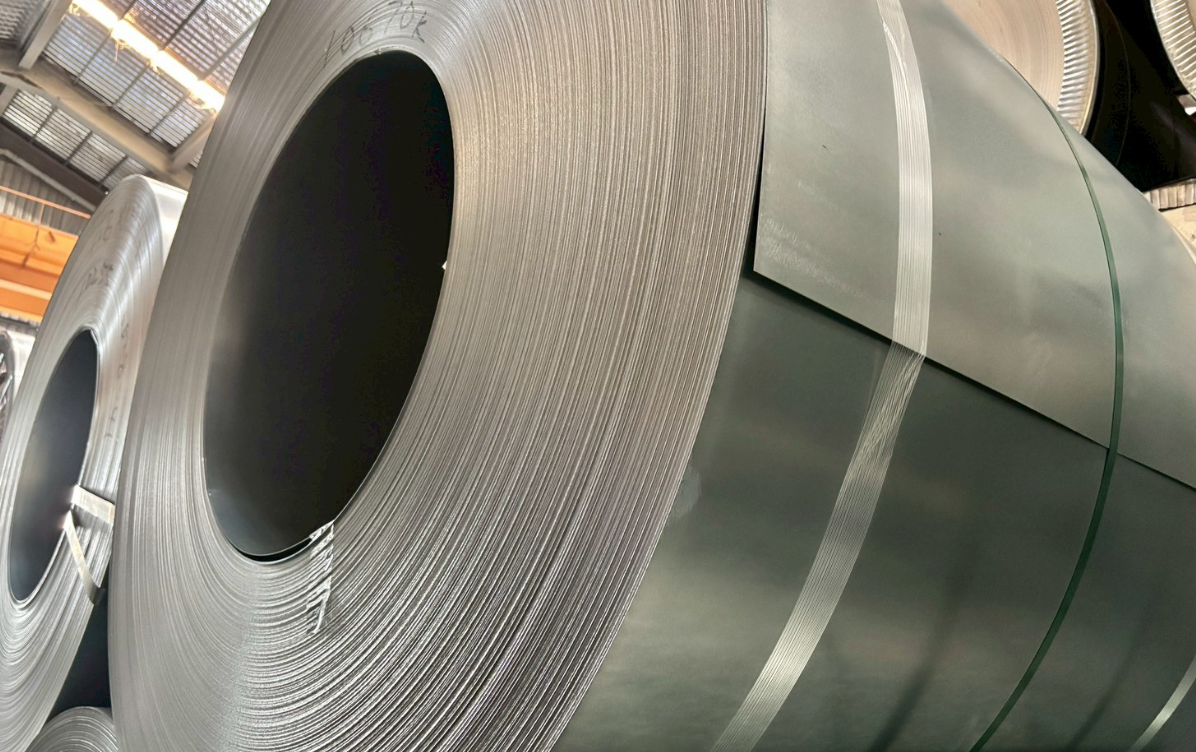
The product comes in two forms: steel plates (supplied in flat form) and steel strips (supplied in coils).
The core value of galvalume steel sheet & coils lies in the synergistic protection of aluminum and zinc: aluminum forms a dense oxide film on the surface, effectively blocking moisture and oxygen; zinc acts as a sacrificial anode, protecting the substrate from corrosion even when the coating is partially damaged. This dual protection mechanism makes its corrosion resistance far superior to that of ordinary galvanized steel sheets. Meanwhile, galvalume steel sheet & coil possess high heat resistance (withstanding temperatures above 300℃) and high heat reflectivity (approximately twice that of galvanized steel sheets).

The production process of galvalume steel sheet & coil is similar to that of galvanized steel sheets and aluminized sheets, employing a continuous melt coating process. galvalume steel sheet & coil with a 55% aluminum-zinc alloy coating exhibit superior corrosion resistance compared to galvanized steel sheets of the same thickness when both sides are exposed to the same environment. galvalume steel sheet & coil with a 55% aluminum-zinc alloy coating not only have good corrosion resistance, but their color-coated products also have excellent adhesion and flexibility.
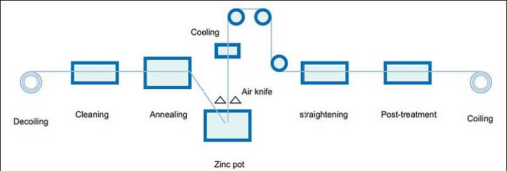
Core Process Flow
Cold-rolled steel coil → Uncoiling → Cleaning (degreasing) → Continuous annealing (reduction) → Hot-dip aluminized zinc coating (immersion in zinc pot) → Air knife control of coating thickness → Post-coating cooling → Leveling → Post-treatment → Coiling → Finished product

Core Performance Characteristics
1. Excellent corrosion resistance
The corrosion resistance of galvalume steel sheet & coils is approximately three times that of ordinary galvanized sheets. Aluminum forms a dense aluminum oxide film on the surface, preventing corrosive media from penetrating; zinc acts as a sacrificial anode, protecting the substrate when the coating is partially damaged. In outdoor environments, the service life of components can be significantly extended.
2. Excellent heat resistance: galvalume steel sheet & coils can withstand temperatures above 300℃, and their oxidation resistance in high-temperature environments is very similar to that of aluminized steel sheets. Commonly used in heat-resistant applications such as chimney pipes, ovens, and lighting fixtures.
3. High heat reflectivity: The heat reflectivity of galvalume steel sheet & coil is up to twice that of galvanized steel sheet, combining heat insulation and high-temperature oxidation resistance, making it suitable for applications requiring heat insulation. 4. Good processing performance: galvalume steel sheet & coils are highly malleable and can be easily processed by shearing, bending, rolling, simple stamping and other processes. It can be adapted to conventional welding processes and does not require special customized welding equipment. However, the speed and die gap need to be controlled during stamping, and the current needs to be controlled during welding to avoid burning of the coating.

5. Excellent coating compatibility: The coating on the surface of the galvalume steel sheet & coil has strong adhesion to paint, film and other coatings, and can be sprayed and coated without complicated pretreatment. It can simulate various textures such as stone and wood.
6. Economic efficiency: 55% Al-Zn has a lower density than pure zinc. Under the same coating weight and thickness, the area of galvalume steel sheet & coil is about 3% larger than that of galvanized steel sheet.
7. Aging Stability: The mechanical properties of galvalume steel sheet & coils are subject to aging degradation. The performance is stable and meets the standards within one month after manufacturing. However, long-term storage will result in increased yield strength and decreased elongation. It is recommended that the processing and use cycle should not be too long.
8. Main Limitations
Deep drawing and complex forming require strict control of process parameters and die rad ius. High salt spray/alkali environments require additional coating or enhanced sealing. During welding, careful control of heat input is necessary to avoid coating burn-off and porosity.
Key differences from galvanized steel coils

The grade system of galvalume steel sheet & coil covers two main categories: cold-forming (DX series) and structural (S series). Common grades include DX51D+AZ (most commonly used), DX53D+AZ (deep-drawing), and S550GD+AZ (highest strength). Its core performance characteristics include: corrosion resistance approximately three times that of galvanized steel, ability to withstand temperatures above 300℃, and heat reflectivity twice that of galvanized steel.
Galvalume steel sheet & coil are widely used in building roofing and wall cladding, appliance housings, automotive parts, electrical cabinets, greenhouses, and other fields. Compared to galvanized steel coils, galvalume steel sheet & coil have significant advantages in corrosion resistance, heat resistance, and heat reflectivity, but are also more expensive. Currently, galvalume steel sheet & coil are continuously developing towards aluminum-zinc-magnesium alloying, high strength, and surface functionalization.
In China, the standards for Galvalume steel sheet and coil are established and regulated by the Chinese National Standards (GB/T) issued by the Standardization Administration of China (SAC). The relevant GB/T standard for Galvalume steel is:
GB/T 2518-2019: Continuous hot-dip zinc-coated steel sheets and coils.
While the specific term "Galvalume" may not be used in the standard's title, GB/T 2518-2019 covers the requirements for continuously hot-dip zinc-coated (galvanized) steel sheets and coils. The Galvalume steel, with its aluminum-zinc alloy coating, can fall under this standard as it is a type of continuous hot-dip coating process like traditional galvanized steel.
Manufacturers in China often produce Galvalume steel following the requirements of GB/T 2518-2019 to ensure that their products meet the necessary quality and safety standards for the market.
In the United States, the standards for Galvalume steel sheet and coil are set and maintained by several organizations. The most commonly referenced standards are those established by the American Society for Testing and Materials (ASTM) and the American Society of Heating, Refrigerating and Air-Conditioning Engineers (ASHRAE). The relevant ASTM standard for Galvalume steel is:
ASTM A792/A792M: Standard Specification for Steel Sheet, 55% Aluminum-Zinc Alloy-Coated by the Hot-Dip Process.
This ASTM standard specifies the requirements for 55% aluminum-zinc alloy-coated steel sheets and coils produced by the hot-dip process. The coating composition is approximately 55% aluminum, 43.5% zinc, and 1.5% silicon by weight.
The standard covers the mechanical properties, chemical composition, coating weight, thickness, and other performance characteristics of Galvalume steel. It is widely used in the construction industry for roofing, siding, and other applications where corrosion resistance and durability are essential.
Manufacturers of Galvalume steel sheet and coil in the US typically follow ASTM A792/A792M to ensure the quality and consistency of their products.
In the United Kingdom, the standards for Galvalume steel sheet and coil are generally aligned with the European standards set by the European Committee for Standardization (CEN). The most relevant European standard for Galvalume steel is:
EN 10346: Continuously hot-dip coated steel flat products for cold forming - Technical delivery conditions.
EN 10346 is the European standard that covers the requirements for continuously hot-dip coated steel flat products with zinc (Z), zinc-iron alloy (ZF), zinc-aluminum alloy (ZA), aluminum-zinc alloy (AZ), or aluminum-silicon alloy (AS) coatings. The Galvalume steel, with its aluminum-zinc alloy coating, falls under the AZ category in this standard.
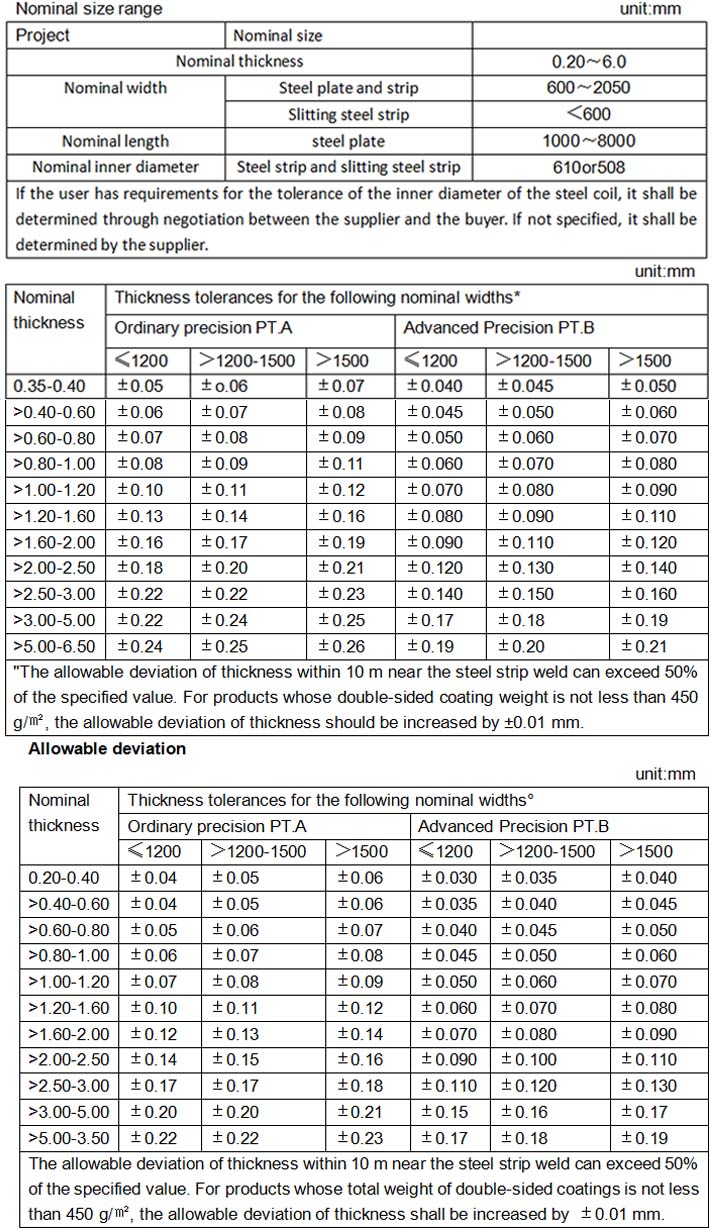
EN 10346 specifies the mechanical properties, chemical composition, coating weight, thickness tolerances, and other performance characteristics of Galvalume steel and other types of coated steel. It is used as the basis for product certification and quality assurance in the European market.
Manufacturers and suppliers of Galvalume steel in the UK would typically follow EN 10346 to ensure their products meet the required quality and safety standards.
Besides EN 10346, other standards from the British Standards Institution (BSI) or other European standards may also be relevant, depending on the specific application or industry. These standards are often harmonized across the European Union to facilitate trade and ensure consistent product quality.
In Japan, the standards for Galvalume steel sheet and coil are established and maintained by the Japanese Industrial Standards (JIS). The relevant JIS standard for Galvalume steel is:
JIS G 3321: Hot-dip 55% aluminum-zinc alloy-coated steel sheets and coils.
JIS G 3321 specifies the requirements for 55% aluminum-zinc alloy-coated steel sheets and coils produced by the hot-dip process. The coating composition is approximately 55% aluminum, 43.5% zinc, and 1.5% silicon by weight, which is commonly known as Galvalume or Zincalume.
This standard covers the mechanical properties, chemical composition, coating weight, thickness, and other performance characteristics of Galvalume steel. It is widely used in various industries in Japan, including construction, automotive, and manufacturing, due to its excellent corrosion resistance and durability.
Manufacturers of Galvalume steel sheet and coil in Japan adhere to JIS G 3321 to ensure the quality and consistency of their products. The standard is regularly updated to reflect advancements in technology and industry best practices.


Copyright Notice © 2022 - 2023 ChinaSteelMarket.com All rights reserved.