
Carbon structural steel plate is a common type of structural steel, which can be divided into two categories: ordinary carbon structural steel and high-quality carbon structural steel.
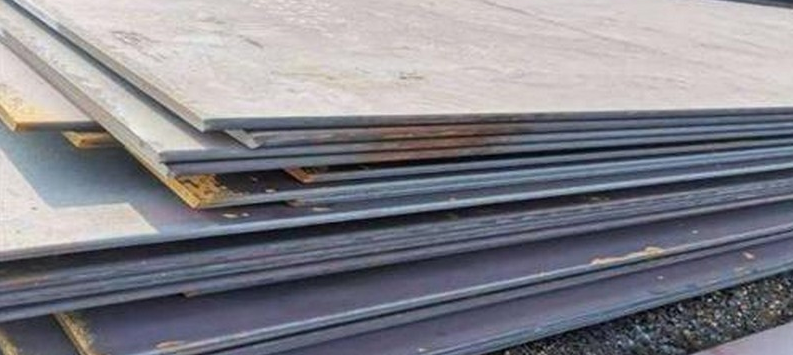
Ordinary carbon structural steel plate:
This is the most commonly used type, usually referring to grades such as Q195, Q215, Q235, and Q275. Its grade naming follows the national standard GB/T 700 and consists of three parts:
"Q": Represents the first letter of the pinyin for "yield strength".
Number: Indicates the minimum yield strength, in megapascals (MPa). For example, Q235 means its minimum yield strength is 235 MPa.
Suffix: Indicates the quality grade (A, B, C, D, with higher numbers indicating higher quality) and deoxidation method (e.g., F for rimmed steel, Z for killed steel, etc.).
Ordinary carbon structural steel has more impurities, is inexpensive, and is used in places where the performance requirements are not high. High-quality carbon structural steel plate: Most of its carbon content is below 0.30%, and its manganese content is no more than 0.80%. It has lower strength but good plasticity, toughness, and cold deformation properties. Except for a few cases, it is generally not heat-treated and used directly. It is mostly made into bar steel, special-shaped steel, steel plates, etc. It is widely used in large quantities, mainly for railroads, bridges, and various types of construction projects. It is used to manufacture all kinds of metal components to withstand static loads and does not require heat treatment, such as non-critical mechanical parts and general weldments.
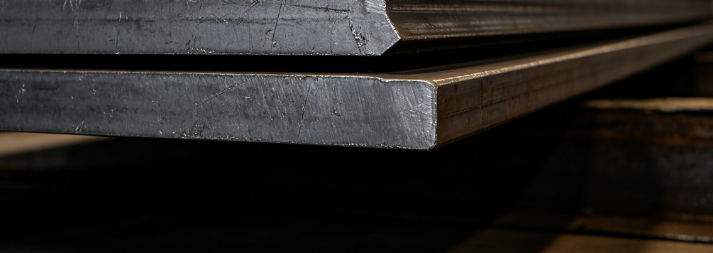
High-quality carbon structural steel plate:
This type of steel plate has stricter control over harmful impurities such as sulfur and phosphorus (usually P and S content are ≤0.035%), thus exhibiting superior performance. It is mainly used to manufacture important mechanical parts. Its grade is directly expressed by the average carbon content in parts per ten thousand (ppm), for example: 45# steel: average carbon content is 0.45%; 20# steel: average carbon content is 0.20%.
High-quality carbon structural steel is pure, with few impurities, good mechanical properties, and can be used after heat treatment. According to the manganese content is divided into ordinary manganese content (less than 0.80%) and higher manganese content (0.80% ~ 1.20%) two groups. Carbon content of 0.25% or less, more direct use without heat treatment, or by carburizing, carbonitriding and other treatments, the manufacture of small and medium-sized gears, shafts, piston pins, etc.; Carbon content of more than 0.60%, such as 65, 70, 85, 65Mn, etc.; 70Mn, etc., more as the use of spring steel. Its main components are carbon and iron, usually containing a small amount of other alloying elements. Carbon structural steel is one of the simplest types of steel with good weldability, workability and relatively low cost.
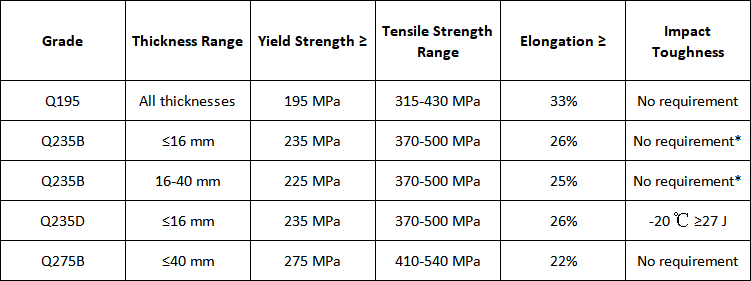
Taking the most typical Q235 steel as an example, its core performance characteristics are as follows:
Good overall performance: It exhibits a good balance of strength, plasticity, and toughness, with excellent weldability and cold bending properties.
Strength varies with thickness: The thicker the steel, the lower its yield strength. For example, Q235 has a yield strength of 235 MPa when the thickness is ≤16 mm, but this drops to 185 MPa when the thickness is 150-200 mm.
Basic physical properties: Density is approximately 7.85 g/cm³, and tensile strength is between 370 and 500 MPa.
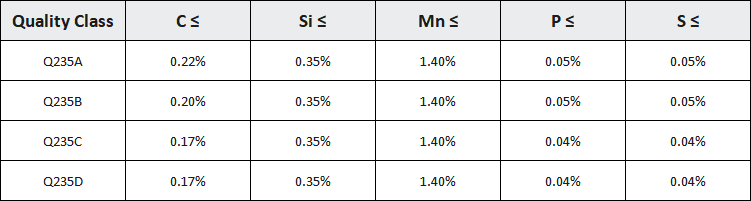
The characteristics of carbon structural steel plates are as follows:
1. Carbon structural steel has low carbon content and high manganese content, which is beneficial to improve the welding performance of steel;
2. Carbon structural steel has strict control over impurities such as sulfur and phosphorus, and the higher the level, the less impurities;
3. The impact toughness of carbon structural steel is higher, which can better meet the needs of professional steel;
4. The performance indicators of carbon structural steel are graded according to the thickness of the steel, which is conducive to expanding the scope of use of steel;
5. The output and consumption of carbon structural steel are large, and it is often used in the manufacture of welded structures and engineering structures.
Carbon structural steel is normally used directly in the state of supply without heat treatment. The properties and applications of commonly used carbon structural steels are mainly:
Q195 Q215
Main characteristics: high plasticity, toughness and weldability, good pressure machinability, but low strength.
Applications: Used in the manufacture of ground bolts, plowshares, smoke pipes, roofing panels, rivets, mild steel wire, thin plate, tie rods, and welded architectures.
Q235(A3)
Main characteristics: good plasticity, toughness, and weldability, cold stamping properties, as well as a certain strength and good elongation, good cold bending properties.
Applications: Widely used for general requirements of parts and welded structures, belonging to the low carbon steel,usually hot rolled into steel plate , steel profiles, steel strength. Usually used in the manufacture of structural building parts, vehicles, unimportant shafts, screws, nuts, stampings, forgings, weldments.
Q255
Main characteristics: good strength, plasticity, toughness, good weldability and cold and hot pressure processing performance.
Application: Used in the manufacture of parts requiring low strength, bolts, keys, shafts, and various profiles for steel structures, steel plates.
Q275
Main characteristics: high strength, good plasticity and cutting performance, certain welding performance. Small parts can be quenched and strengthened.
Application: Used in the manufacture of parts requiring not too high strength, such as gears, shafts, sprockets, keys, bolts, nuts, steel sections for agricultural machinery, conveyor chains and links.
Where Q235 is what we usually call A3, in the equipment generally with sheet metal parts.
In general, carbon structural steel plates, especially ordinary carbon structural steel represented by Q235, have become one of the most widely used steels due to their moderate strength, good processing performance, and excellent economy. High-quality carbon structural steel (such as 45#) plays a key role in fields with higher performance requirements, such as machinery manufacturing, through strict control of impurities.
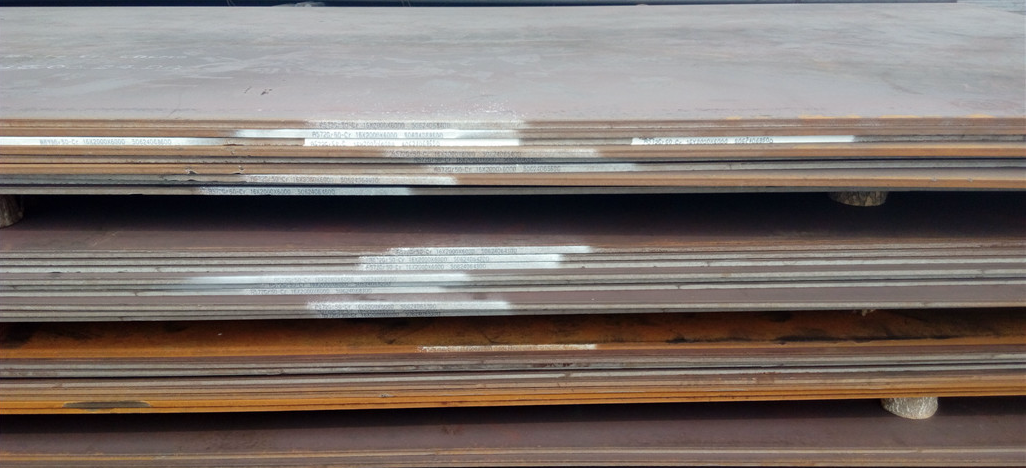
National standards for carbon structural steel plate may vary from country to country. The following are some representative national standards for carbon structural steel plate:
GB Standard:
China's carbon structural steel standard for GB/T 700-2006. this standard specifies the carbon structural steel grade, classification and code, size, shape, weight, technical conditions, inspection and test, packaging marking and quality certification.
ASTM standard:
American Society for Testing and Materials (ASTM) developed a standard for carbon structural steel, the implementation of the standard ASTM A36/A36M-03a, this standard applies to bridges and construction of riveted, bolted and welded structures, as well as general-purpose structural steel qualities of carbon steel profiles, steel plates and bars.
British Standards:
BS EN 10025-2:2004 - Standard for non-alloy structural steels for hot-rolled products.
BS EN 10025-3:2004 - Standard for orthogonally welded structural steels for hot rolled products, including normal strength and high strength steels.
BS EN 10025-4:2004 - Structural steel standard for prescribed welding techniques for hot-rolled products, suitable for both orthogonal and circumferential welding.
BS EN 10025-5:2004 - Standard for weathering steels for structural purposes, for structural steels with good weathering properties.
BS EN 10025-6:2004 - Standard for high strength steels for hot rolled products, suitable for orthogonal and circumferential welding.
Japanese Standards:
JIS G3101 - Standard for hot-rolled coils of general construction.
JIS G3106 - Standard for hot-rolled coils for welded structures.
JIS G3131 - Standard for hot-rolled ordinary steel coils.
JIS G3141 - Standard for Cold Rolled Sheet and Strip.
JIS G4051 - Standard for engineering structures of carbon steel, including carbon steel for various purposes.
Copyright Notice © 2022 - 2023 ChinaSteelMarket.com All rights reserved.