
Boiler and vessel steel plate, also known as pressure vessel steel plate, is a kind of steel plate used for manufacturing boilers, pressure vessels, and storage tanks. These plates are specifically designed to withstand high temperatures and pressure, making them suitable for containing fluids and gases under extreme conditions.
The primary purpose of boiler and vessel steel plates is to ensure the safe operation of equipment exposed to high-pressure environments. These plates are manufactured with specific chemical compositions and mechanical properties to provide excellent resistance to corrosion, cracking, and deformation caused by the internal pressure of the vessel.
Typically, boiler and vessel steel plates are made from carbon steel or low-alloy steel, as they offer good strength and toughness at elevated temperatures. These steels are often alloyed with elements such as manganese, silicon, and nickel to enhance their mechanical properties and improve their corrosion resistance.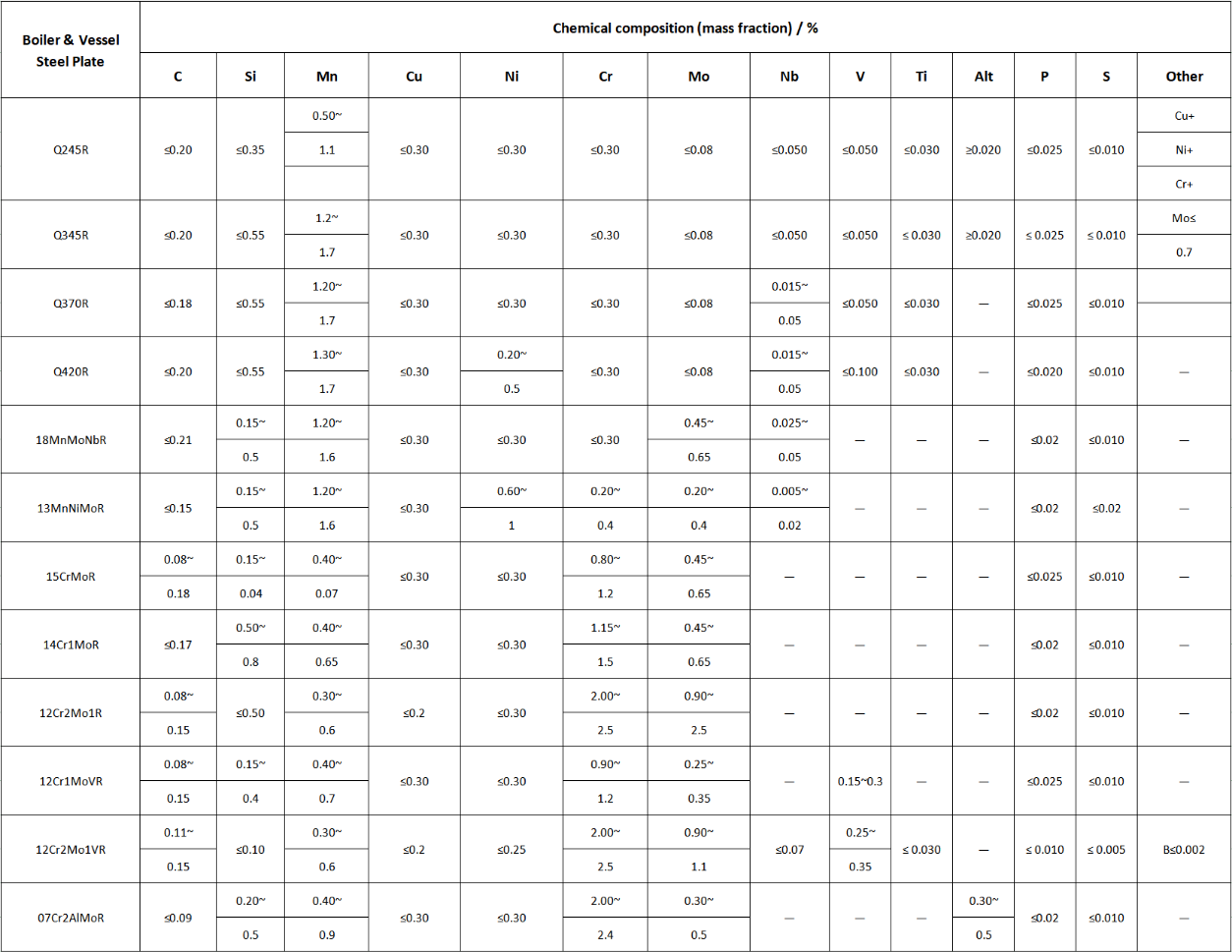
Boiler and Pressure Vessel Steel Plate is a special steel plate specially designed for pressure-bearing equipment such as boilers and pressure vessels. Steel plates can be classified into two main categories based on their composition: carbon steel plates and alloy steel plates; based on their strength, they can be classified into high, medium, and low-pressure steel plates; and based on their application environment, they can be classified into high, medium, and low-temperature steel plates and corrosion-resistant steel plates.
Its core characteristics include:
1. High strength: Tensile strength is typically ≥490 MPa (taking Q245R in GB713 standard as an example), ensuring pressure resistance.
2. High temperature resistance: Long-term operating temperature can reach 350℃~600℃, and some grades (such as SA-387 Gr11) can even withstand temperatures up to 593℃.
3. Corrosion resistance: By adding alloying elements such as chromium and molybdenum (e.g., SA-240 316L contains 16%~18% chromium), it resists corrosion from water vapor and acidic media.
4. Strict process requirements: It requires heat treatment such as normalizing and tempering, and internal defects are detected by ultrasonic testing (UT).
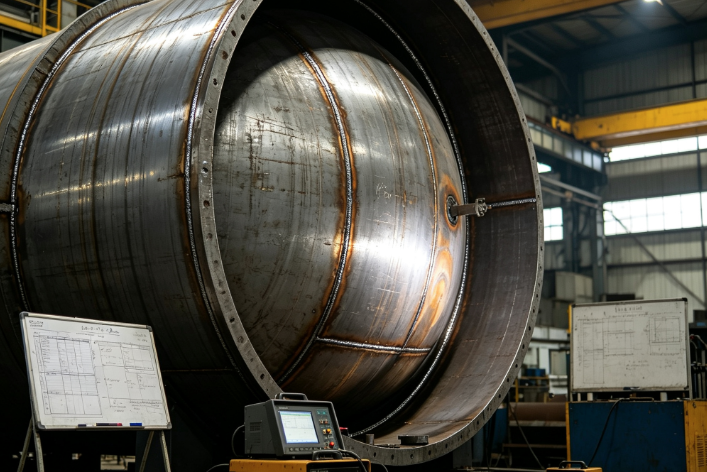
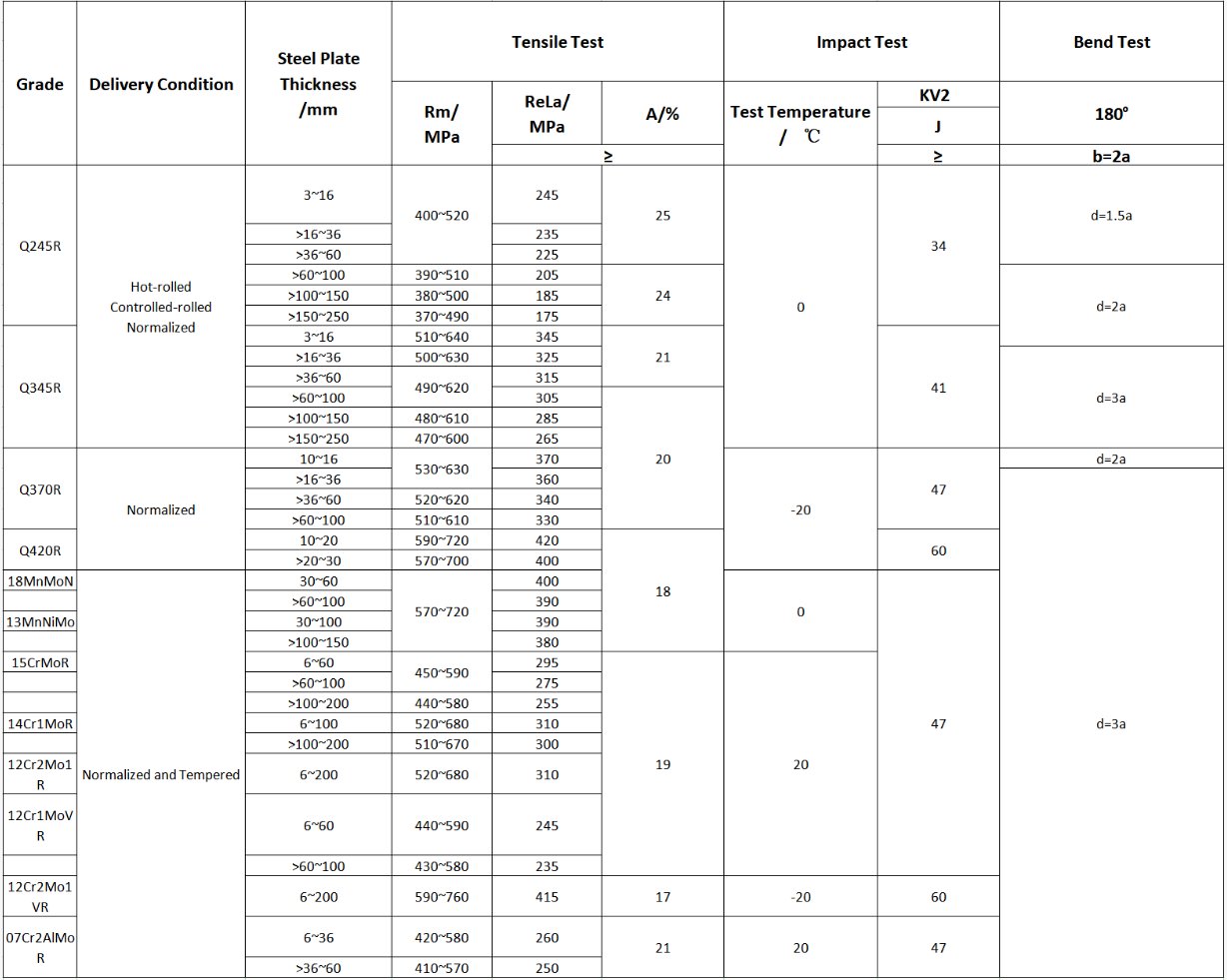
The manufacturing process of boiler and vessel steel plates involves carefully controlled rolling, heat treatment, and quenching procession to achieve the desired material properties. The plates undergo rigorous quality testing, including mechanical testing, ultrasonic examination, and impact testing, to Ensure they meet the required standards and specifications. Various boiler and pressure vessel steel plates generally require tensile, bending, and impact tests. Test methods can be found in the standards provided for testing ordinary carbon steel thin plates. The heat treatment conditions specified in the standards must be considered during testing. Furthermore, for applications with stringent requirements, non-destructive testing clauses should be added when ordering.
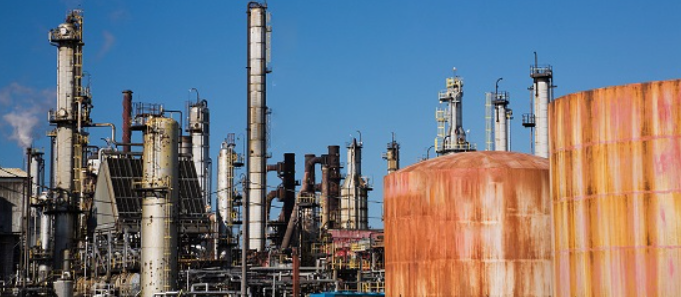
Boiler and vessel steel plates are widely used in various industries, including power generation, oil and gas, chemical processing, and manufacturing. They are used to manufacture the construction of boilers, pressure vessels, heat exchangers, storage tanks, and other equipment that handle high-pressure fluids and gases.
In summary, a boiler and vessel steel plate is a specialized steel plate designed to withstand high temperatures and pressure. Its function is to ensure the safe operation of boilers, pressure vessels, and storage tanks in demanding industrial applications. These plates offer excellent resistance to corrosion, cracking, and deformation, making them crucial components in high-pressure environments.
Based on application and standards, steel plates are mainly classified as follows:
By Application:
Boiler Plates (e.g., Q245R, Q345R): Used in power plant boilers and industrial boilers.
Pressure Vessel Plates (e.g., 16MnDR): Used in petrochemical storage tanks and reaction vessels.
By Standard:
Chinese Standard (GB/T 713): Common grades Q245R and Q345R, thickness range 3~250mm.
American Standard (ASME): Such as SA-516 Gr.70, widely used in export equipment, yield strength ≥260 MPa.
European Standard (EN 10028): Such as P265GH, suitable for the European market.
Comparison of mainstream boiler and pressure vessel plate grades at home and abroad

The following are a few standards commonly used in the boiler plate field in China, the United States, the United Kingdom, and Japan:
China Standard:
GB 713-2014: Steel plates for boilers and pressure vessels
GB 3531-2014: Steel plates for low temperature pressure vessels
American standard:
ASTM A516/A516M: Standard specifies technical requirements for carbon steel plates for medium and low-temperature pressure vessels.
ASTM A387/A387M: Standard specification for alloy steel plates used for high and low-temperature service.
British Standards:
BS 1501-1: Technical specification for flat carbon steel plates for boilers and pressure vessels.
BS EN 10028-2: Technical specification for pressure vessel steel plates for high temperature and high-pressure equipment.
Japanese Standards:
JIS G3115: Standard specification for heat-resistant steel plates used in the manufacture of pressure vessels.
JIS G3103: Standard specification for carbon steel and molybdenum steel plates for boilers and other pressure vessels.
In the steel industry, boiler vessel plate standards vary, and so do the Steel Grades. The following are the common boiler vessel plate standards in each country:
China national standard:
Q245R, Q345R, Q370R, 16MnDR, 15CrMoR, 09MnNiDR, 12MnNiVR, 14Cr1MoR, 12Cr2Mo1R, 12Cr1MoVR, 13MnNiMoR, 18MnMoNbR, 15MnNiDR, 20MnMoR
European Standard:
P265GH, P295GH, P275NH, P355GH, P355NH, P355NL, P460NH
American Standard:
SA515Gr60/65/70, SA516Gr60/65/70, SA285GrC, A537CL, SA662GrC, SA299A/B, SA203E/DSA302GrC/B, SA387Gr11/12/22
Japanese Standard:
SB410, SPV355, SB450
German Standard:
19Mn6, 15Mo3
Copyright Notice © 2022 - 2023 ChinaSteelMarket.com All rights reserved.