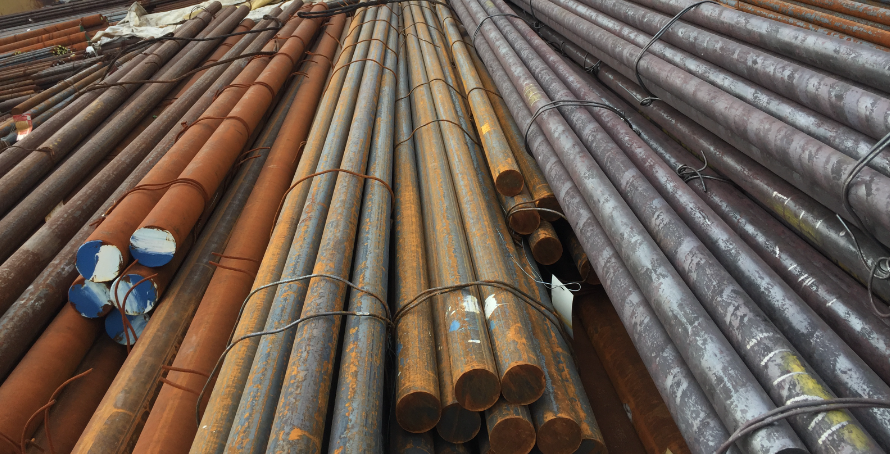
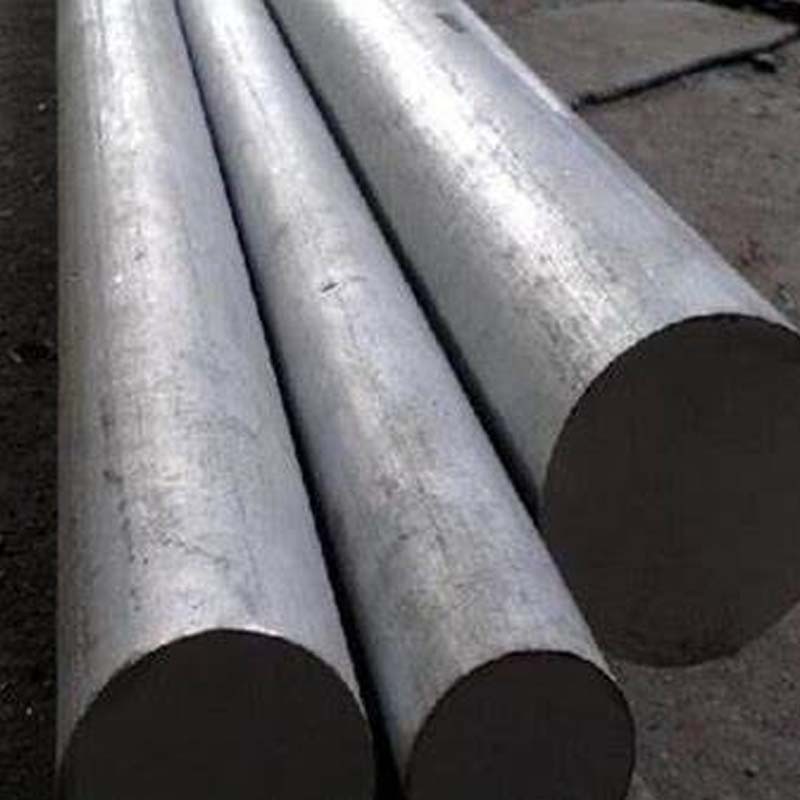
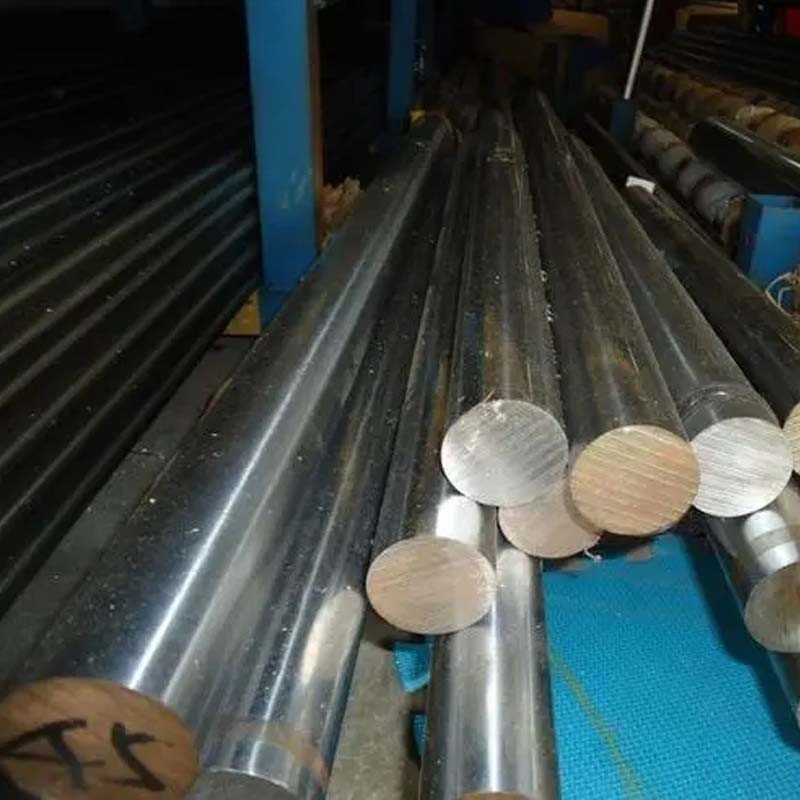
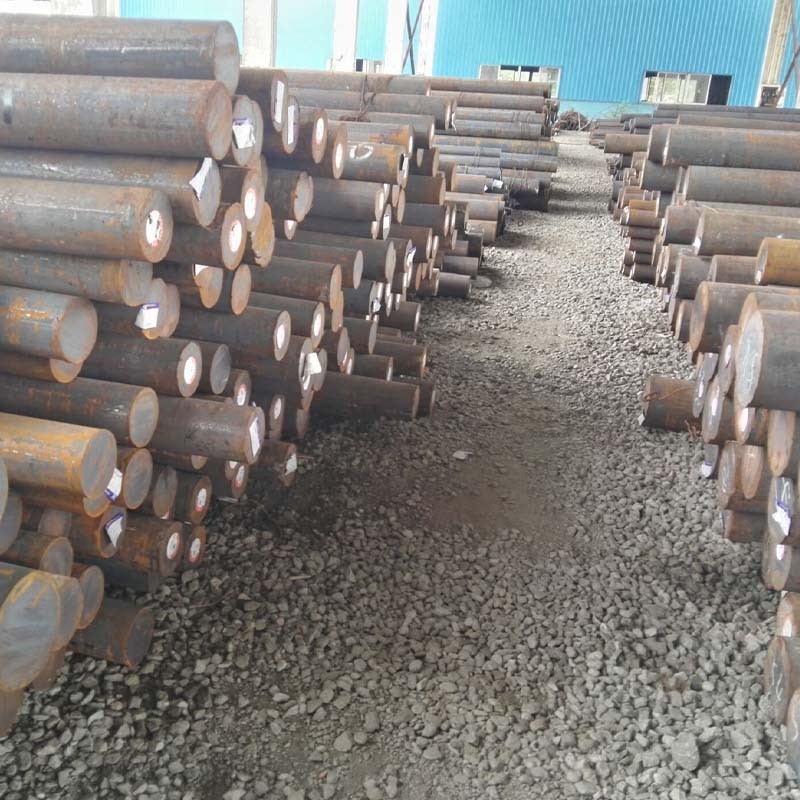
Bearing steel round bar is a specialized, high-quality steel used to manufacture the rolling elements and rings of rolling bearings. It demands extremely high standards regarding purity, uniformity, and contact fatigue strength; its quality directly determines the service life and reliability of the bearings.
According to international standards (ISO), bearing steels are primarily categorized into four types:
1. Through-hardening bearing steel: High-carbon chromium bearing steel (represented by GCr15). This is the most widely used category, accounting for over 80% of global bearing steel production.
2. Surface-hardening bearing steel: Carburizing bearing steel (e.g., G20CrMo), used for bearings subjected to impact loads.
3. Stainless bearing steel: (e.g., 9Cr18), used in corrosive environments.
4. High-temperature bearing steel: (e.g., GCr15SiMo), used in high-temperature operating conditions ranging from 300°C to 550°C.
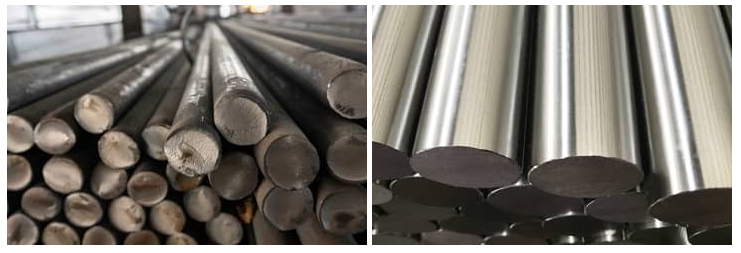
Bearing steel is characterized by high and uniform hardness, excellent wear resistance, a high elastic limit, and long contact fatigue life, as well as good cold and hot workability. It is one of the most demanding steel grades to produce, requiring strict control over chemical composition uniformity, the content and distribution of non-metallic inclusions, and carbide distribution.
Performance Characteristics of Bearing Steel Round Bar
1. High hardness and wear resistance: Achieves a hardness of HRC 61–66 after quenching and tempering, offering excellent wear resistance.
2. High contact fatigue strength: Capable of withstanding extremely high alternating loads, which is crucial for the long service life of bearings.
3. High elastic limit: Ensures the bearing resists plastic deformation under load. Key limitations: Poor weldability, susceptibility to "white spots" (hydrogen-induced cracking), and temper brittleness.
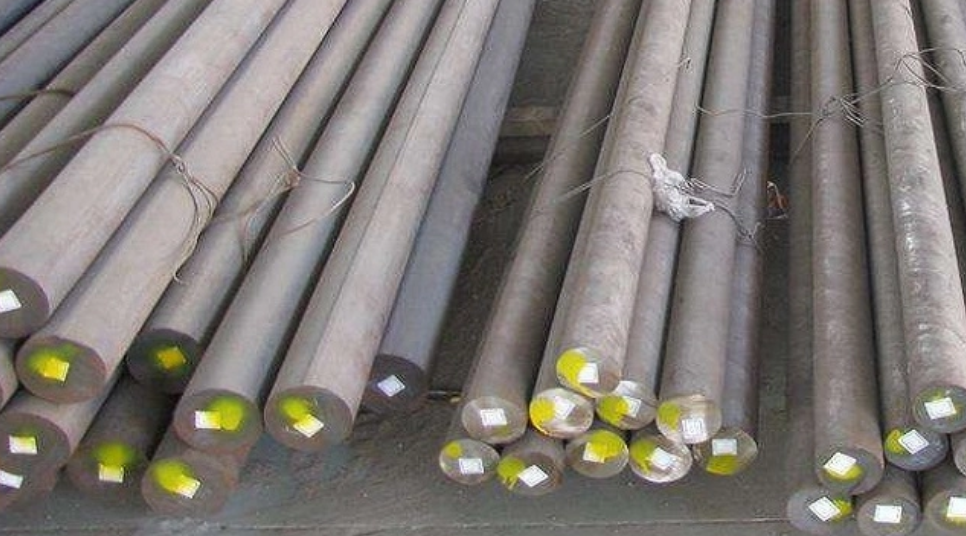
Applications of bearing steel round bars:
Used to manufacture various bearing rings and rolling elements.
Examples include steel balls, rollers, and rings for bearings in internal combustion engines, electric locomotives, automobiles, tractors, machine tools, rolling mills, drilling rigs, mining machinery, and general machinery, as well as in high-speed, high-load mechanical transmission systems. In addition to balls and bearing rings, it is sometimes used to manufacture tools such as stamping dies and measuring instruments.
GCr15 (31) bearing steel is a grade specifically used for manufacturing balls, rollers, and bearing rings.
Bearing steel is characterized by high, uniform hardness and wear resistance, as well as a high elastic limit. Requirements regarding chemical composition uniformity, non-metallic inclusion content and distribution, and carbide distribution are extremely strict; it is one of the most demanding steel grades to produce.
GCr15 (31) bearing steel is also known as high-carbon chromium steel; it contains approximately 1% carbon and 0.5%–1.65% chromium. Bearing steels are categorized into six main types: high-carbon chromium bearing steel, chromium-free bearing steel, carburized bearing steel, stainless bearing steel, medium-to-high-temperature bearing steel, and non-magnetic bearing steel.
Precision machinery: Precision measuring tools, cold stamping dies, machine tool lead screws, precision mating parts for diesel engine oil pumps, etc.
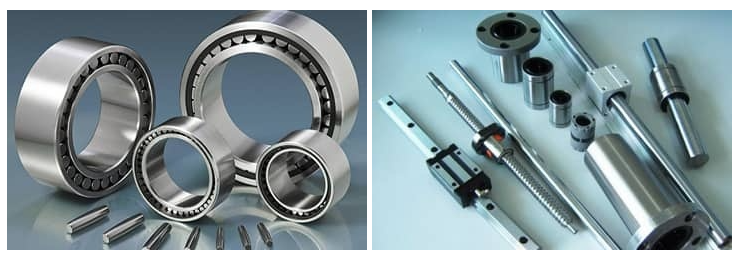
Bearing steel round bars serve as the fundamental material for manufacturing core bearing components, with GCr15 being the dominant grade. The key to its performance lies in achieving high hardness (HRC 61–66) and excellent contact fatigue strength through rigorous chemical composition control, high-purity smelting, and precision heat treatment (spheroidizing annealing, quenching, and low-temperature tempering).
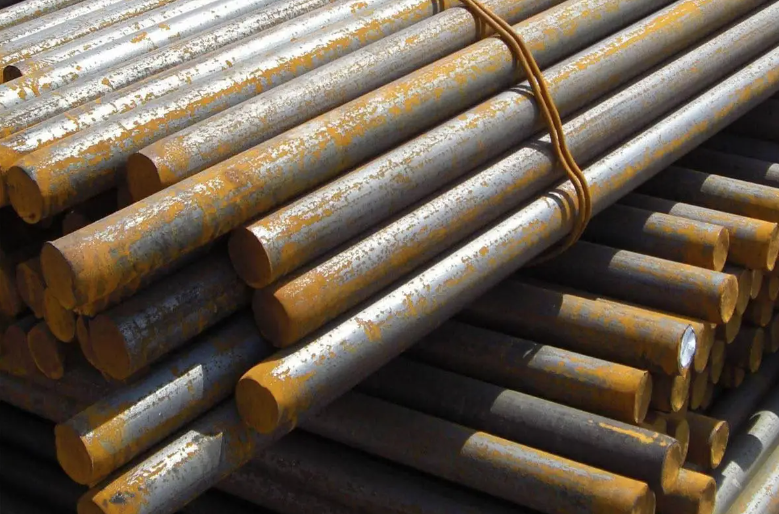
Bearing steel round bar has different standards in each country. The following are common national standards:
Chinese standard:
GB/T 18254 “High-carbon chromium bearing steel” is a specification for bearing steel in China's national standard, which includes the chemical composition, mechanical properties, and dimensional tolerances of different types of bearing steel.
British Standard:
BS ISO 683-17 is a British standard, which is an international standard on bearing steel, which includes the chemical composition, mechanical properties and other requirements of different types of bearing steel.
American standard:
ASTM A295 is a standard issued by the American Society for Testing and Materials (ASTM), which regulates the chemical composition and mechanical properties of high-load bearing steel.
Japanese standard:
JIS G4805 is a specification for high-carbon chromium bearing steel in Japanese Industrial Standards (JIS for short), which includes the chemical composition and mechanical properties of different types of bearing steel.
GCr15 is a widely used, high-carbon chromium bearing steel characterized by low alloy content and excellent performance. After quenching and tempering, it exhibits high and uniform hardness, good wear resistance, and superior contact fatigue strength. While it possesses moderate plasticity for cold working, it has average machinability, poor weldability, and a susceptibility to "white spot" defects and temper brittleness; however, its overall performance is excellent. It offers good machinability after spheroidizing annealing. Following quenching and tempering, it achieves high, uniform hardness along with outstanding wear resistance and contact fatigue strength. It also features good hot-working properties and, due to its low alloy content, is relatively cost-effective.
Physical Properties of GCr15 Bearing Steel Round Bars
The physical properties of bearing steel are primarily assessed through the inspection of microstructure, decarburized layers, non-metallic inclusions, and macrostructure. Products are generally supplied in a hot-rolled and annealed or cold-drawn and annealed condition; the delivery state must be specified in the contract. The steel's macrostructure must be free from shrinkage cavities, subcutaneous blowholes, white spots, and micro-porosity. Central porosity and general porosity must not exceed Grade 1.5, and segregation must not exceed Grade 2. The annealed microstructure of the steel should consist of uniformly distributed fine granular pearlite. The depth of the decarburized layer, non-metallic inclusions, and carbide non-uniformity must comply with the relevant national standards.
Mechanical Properties of GCr15 Bearing Steel Round Bars
1. Influence of quenching temperature. The standard quenching heating temperature for GCr15 steel is 830–860°C, with oil cooling commonly used; the optimal quenching temperature is 840°C, yielding a post-quench hardness of 63–65 HRC. In actual production, the quenching temperature may vary slightly depending on the effective cross-sectional dimensions of the component and the quenching medium used. For larger components or those undergoing salt-bath graded quenching, a higher quenching temperature (840–860°C) is advisable to enhance hardenability and ensure sufficient hardened case depth and high hardness. Conversely, for smaller components or those cooled in oil, a lower quenching temperature (830–850°C) is generally selected. For components of the same specifications, heating in a box-type furnace requires a slightly higher temperature than heating in a salt-bath furnace.
2. Influence of tempering temperature. Hardness decreases as the tempering temperature rises. Tempering temperatures exceeding 200°C place the material within the range of "first-type" temper brittleness. Therefore, the tempering temperature for GCr15 steel is generally 160–180°C.
Chemical Composition of GCr15 Bearing Steel Round Bar
| Element | C | Mn | Si | S | P | Cr | Mo | Ni | Cu | Ni+Cu |
| Content (%) | 0.95‑1.05 | 0.20‑0.40 | 0.15‑0.35 | ≤0.020 | ≤0.027 | 1.30‑1.65 | ≤0.10 | ≤0.30 | ≤0.25 | ≤0.50 |

Mechanical Properties:
Hardness as supplied (HRC): 25.8
Tensile strength (MPa): 861.3
Yield strength (MPa): 518.42
Elongation after fracture (%): 27.95
Flexural strength (MPa): 1821.61
Heat treatment processes for GCr15 bearing steel rounds:
1. Incomplete annealing: Heat to 770–790°C, hold, cool with the furnace to below 550°C, then air-cool; hardness requirement: 187–229 HBS. Process characteristics: Ac1 = 745°C, Accm = 900°C; heating temperature should be between Ac1 and Accm.
2. Isothermal spheroidizing annealing: Heat to 770–790°C, hold isothermally at 680–700°C, cool with the furnace to below 550°C, then air-cool; hardness requirement: 187–229 HBS. Process characteristics: Heating temperature should be between Ac1 and Accm; isothermal temperature should be 20°C below the Ar1 line (700°C) to obtain a granular pearlite microstructure.
3. Stress-relief annealing: Heat to 600–700°C, hold, and furnace-cool; hardness requirement: 187–229 HBS. Process characteristics: Eliminates residual stress and work hardening.
4. Normalizing: Heat to 930–950°C, hold, and air-cool; hardness requirement: 302–388 HBS. Heating temperature is above Accm; eliminates segregation, banded structures, and network structures; refines grains.
5. Lower bainite isothermal quenching: Heat to 855–875°C, hold for 50–70 min, perform isothermal treatment in a nitrate salt bath at 220–240°C for 3–4 hours, followed by a hot water rinse (70–80°C); hardness requirement: 58–62 HRC. For large bearing components, tempering at 260°C for 2.5 hours is also required. The microstructure after isothermal quenching consists of lower bainite, carbides, a small amount of martensite, and a very small amount of retained austenite; quenching deformation is minimal, and the material exhibits high strength and good toughness. 6. Lower bainite austempering: Heat to 830–850°C, hold isothermally in a nitrate salt bath at 240–300°C, then air-cool after removal from the bath. Hardness requirement: 58–62 HRC; Ms = 202°C. The resulting microstructure consists of lower bainite, carbides, a small amount of martensite, and a trace amount of retained austenite; the process yields minimal quenching distortion, high strength, and good toughness.
7. Tempering: Heat to 150–190°C, hold for 2 hours, and furnace-cool. Hardness: 58–62 HRC. Process characteristic: select the lower end of the range to prioritize hardness, or the upper end to prioritize toughness.
8. Quenching and tempering (QT): Quench by heating to 840–860°C followed by oil cooling; temper by heating to 660–680°C, holding, and then furnace-cooling or air-cooling. Hardness requirement: 197–217 HBS. Characteristics: High-temperature quenching eliminates carbide structural defects; high-temperature tempering produces a fine tempered sorbite structure, preparing the microstructure for re-quenching; this improves both toughness and strength. Re-quenching involves heating to 820–840°C followed by oil cooling.
9. Solid-state boronizing: Heat to 920°C, hold for 5 hours, and oil-cool. Boronizing agent: 3% B4C + 5% KBF4 + 5% (NH2)2CO + 87% SiC. Hardness requirement: 1500–1700 HV. A high-hardness boride layer is formed on the surface, while the core retains the quenched microstructure; diffusion layer thickness: 0.145 mm.
10. Liquid-state chromizing: Heat to 950°C, hold for 4 hours, and oil-cool. Chromizing agent: 15% Cr2O3 + 12.5% rare-earth silicon-magnesium alloy + 72.5% borax. Hardness requirement: 1665 HV; diffusion layer thickness: 0.01056 mm. Improves surface hardness, wear resistance, and corrosion resistance. 11. Liquid-phase vanadiumizing: Heat to 950°C and hold for 4 hours; cool to 860°C and hold for 2 hours; reheat to 950°C, hold for 4 hours, and oil-quench. The carburizing/diffusion agent consists of 90% BaCl₂, 7% V₂O₅, 3% Na₂B₄O₇, and Al powder. The process yields a diffusion layer thickness of 0.020 mm and a hardness of 2500 HV0.1, thereby enhancing surface hardness and wear resistance.
The normal length of steel shall meet the following requirements:
The length of hot rolled round bar is 3000mm~8 000mm;
The length of forged round bar is 2000 mm~6 000 mm;
The length of cold-drawn round bar is 3000mm~6000mm.
The steel products shall be delivered in full length within the specified length range, and the length difference between the longest and shortest steel products in each bundle shall not exceed 1000 mm.
Nominal size of cutting surface
(diameter of round steel or variable side length of square steel) | Allowable Deviation |
| Group 1 | Group 2 | Group 3 |
| 5.5~7 | ±0.20 | ±0.30 | ±0.40 |
| >7~20 | ±0.25 | ±0.35 | ±0.40 |
| >20~30 | ±0.30 | ±0.40 | ±0.50 |
| >30~50 | ±0.40 | ±0.50 | ±0.60 |
| >50~80 | ±0.60 | ±0.70 | ±0.80 |
| >80~110 | ±0.90 | ±1.00 | ±1.10 |
| >110~150 | ±1.20 | ±1.30 | ±1.40 |
| >150~200 | ±1.60 | ±1.80 | ±2.00 |
| >200~280 | ±2.00 | ±2.50 | ±3.00 |
| >280~310 | - | - | ±5.00 |