
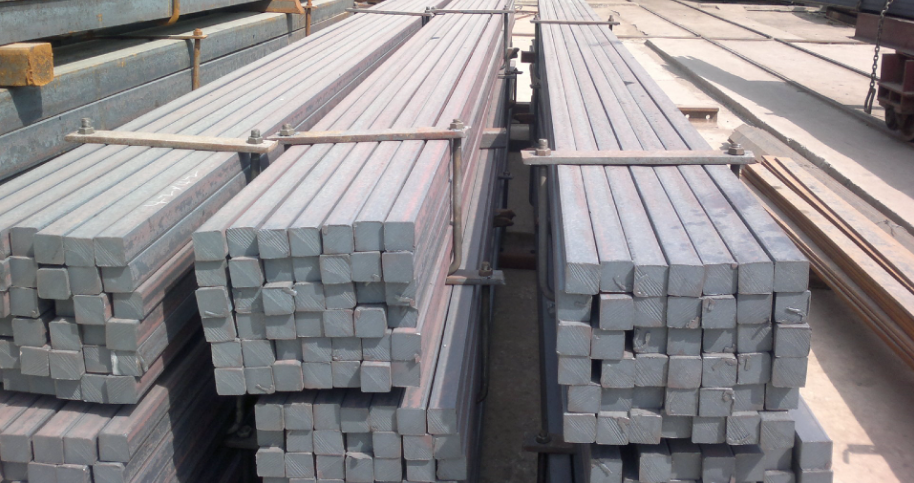
Square steel refers to solid, long strips of steel with a square cross-section. Similar bars include round steel, hexagonal steel, and octagonal steel, with specifications expressed in millimeters (mm) for their side length. It is typically processed from hot-rolled or cold-rolled steel sheets, with a square cross-section. Square steel can be cut and processed according to customer requirements, offering high flexibility in size and specifications. This allows square steel to meet the needs of various projects and is widely used in the construction and manufacturing industries.
Square steel is primarily made of carbon steel, which contains high levels of carbon. It possesses excellent mechanical properties, high strength, good toughness, high plasticity, and good wear and corrosion resistance. These characteristics enable square steel to play a significant role in various engineering fields.
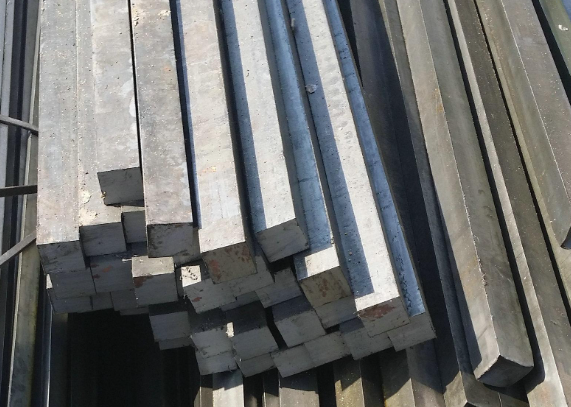
Characteristics of square steel:
1. Regular cross-section: All four sides are of equal length, with a regular shape, facilitating cutting, welding, and drilling.
2. High strength and good load-bearing capacity: Typically made of carbon structural steel or low-alloy high-strength steel, it possesses high strength. When subjected to lateral forces, square steel, due to its square cross-section, provides better bending resistance than round steel.
3. Excellent machinability: Square steel is easy to weld, drill, and machine, making it suitable for manufacturing various structural components and mechanical parts.
4. Convenient installation and positioning: Its flat surface provides more contact area for welding, fixing, and other operations, facilitating positioning.
5. Convenient construction: Square steel is typically right-angled, making it easy to cut and weld into various shapes, facilitating processing and suitable for constructing various complex structures.
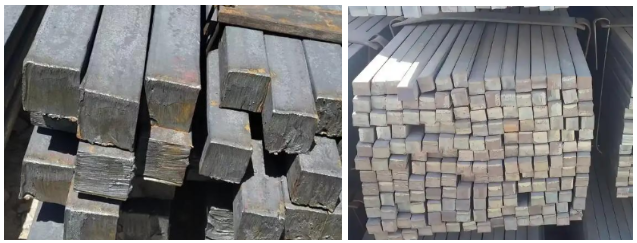
Square steel can be classified in several ways, including by manufacturing process and material.
1. Classification by manufacturing process is the most common method.
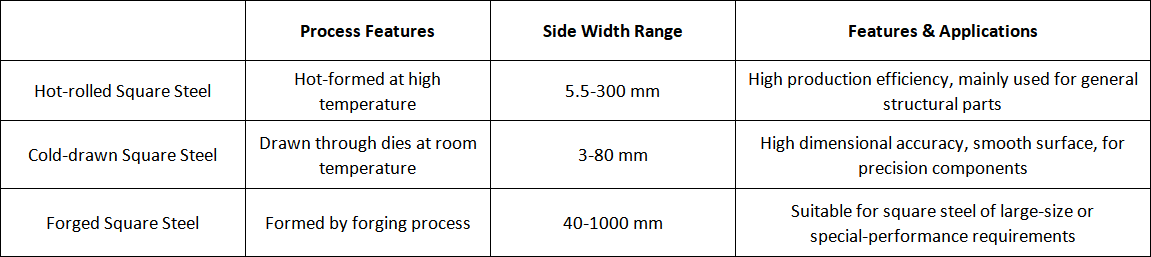
Cold-drawn square steel (also known as cold-stretched steel) is produced by forcibly stretching the steel at room temperature with tensile stress exceeding the yield strength of the reinforcing bar, causing plastic deformation. Its characteristics include high dimensional accuracy (up to ±0.1~0.2 mm), a smooth surface (roughness Ra≤3.2μm), and 10%~20% higher strength than hot-rolled steel.
2. Classification by material: Square steel can be classified by material into carbon structural steel, low-alloy steel, alloy steel, etc.
Performances of Square Steel
1. Regular cross-section, easy connection: The square cross-section of square steel makes it easier to position when welding or fixing to other components, and the flat surface provides a larger contact area.
2. Excellent bending resistance: When subjected to lateral forces, square steel, due to the presence of its four corners, provides better bending resistance than round steel, making it suitable for structural supports and frame construction.
3. Good machinability: Square steel is easy to cut, weld, and drill, and can be manufactured into various structural components and mechanical parts as needed.
4. High Dimensional Accuracy (Cold-Drawn Products)
The dimensional accuracy of cold-drawn square steel can reach ±0.1~0.2mm, with a surface roughness Ra≤3.2μm, and strength increased by 10%~20% compared to hot-rolled steel.
5. Lower Bond Strength with Concrete
The bond strength between square steel (plain round) and concrete is lower than that of ribbed steel bars, therefore it is not suitable for direct use as the main reinforcement in concrete structures.
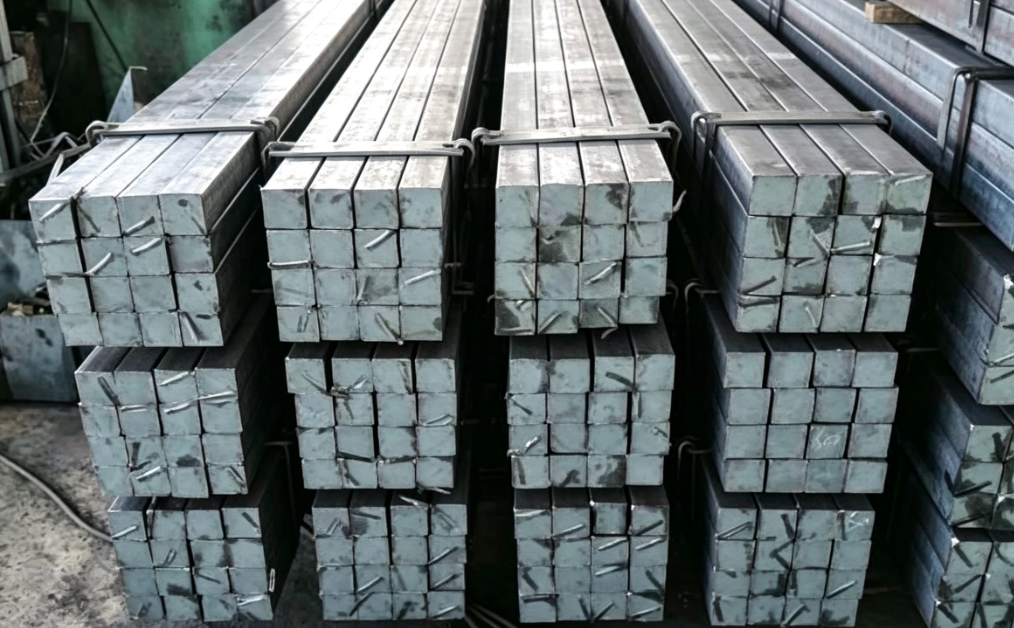
Square Steel Production
The production of square steel begins with high-quality steel billets. These billets undergo rigorous screening to ensure uniform material and no defects. The billets are then fed into a heating furnace and uniformly heated at a high temperature of approximately 1200℃. This step is crucial because temperature directly affects the subsequent rolling effect. After heating, the red-hot billets are fed into a roughing mill, where they are gradually pressed into a near-square shape through multiple rolling passes.
The rough-rolled billets enter the finishing mill, a key stage determining the dimensional accuracy of the square steel. The finishing mill further processes the steel to standard dimensions by precisely controlling the roll spacing. At this point, the surface temperature of the steel is still above 800℃. To ensure material performance, the rolled square steel needs immediate controlled cooling. The cooling rate directly affects the microstructure and mechanical properties of the steel, therefore, cooling parameters need to be adjusted according to different steel grades.
After cooling, the square steel enters the straightening process to eliminate bending deformation generated during rolling. A high-precision straightener uses multiple rollers to repeatedly adjust the straightness of the square steel to meet requirements. Subsequently, according to customer needs, the square steel is cut into specific lengths. Modern production lines mostly use automatic measurement and flying saw cutting technology to ensure that the length error of each section of square steel is controlled within millimeters. Finally, after surface quality inspection and dimensional testing, qualified square steel is packaged and shipped.
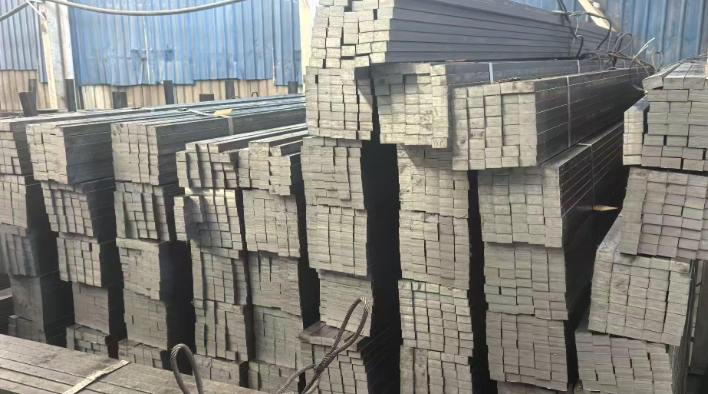
The applications of square steel also include:
1. Construction: Square steel has high strength and hardness, and is often used to construct frame structures, wall supports, and other building components, thereby improving the stability and safety of buildings.
2. Manufacturing: Square steel can be used to manufacture machine tools, automobiles, rail vehicles, and other equipment, and is often used to produce some important support components.
3. Transportation Industry
Square steel is also commonly used in shipbuilding and bridge construction. Its high strength and corrosion resistance ensure the stability and safety of vehicles.
4. Machinery Manufacturing Industry
Square steel is commonly used to manufacture machine bases, bearing housings, and other components. Its strength and durability ensure the stability and lifespan of machinery.
5. Logistics Industry
Square steel is commonly used to make shelving; its load-bearing capacity and stability ensure the safe storage of goods.
As a common metallic material, square steel has significant application value in various fields. Its excellent properties and wide range of uses make it an indispensable material in modern engineering and production.
In China, square steel, like other steel products, is produced and regulated by Chinese National Standards (GB/T) or Industry Standards. The primary standard governing square steel in China is:
GB/T 6728-2017: This standard specifies the classification, code, size, shape, weight, technical requirements, test methods, inspection rules, packaging, marking, and quality certification for cold-formed steel hollow sections, including square steel tubes. It covers both general structural purposes and machinery manufacturing applications.
GB/T 6728-2017 ensures that square steel produced and used in China meets specific quality and safety standards. It includes requirements for dimensions, tolerances, chemical composition, mechanical properties, and other technical specifications to ensure the reliability and suitability of square steel for various construction, manufacturing, and engineering purposes.
In addition to the specific standard mentioned above, other related Chinese National Standards or Industry Standards might apply to square steel depending on the application and the specific product requirements.
In the United States, square steel is typically produced and sold in accordance with ASTM (American Society for Testing and Materials) standards. The most common ASTM standard for square steel is:
ASTM A500: This specification covers cold-formed welded and seamless carbon steel square, rectangular, and special-shaped structural tubing. It defines the requirements for mechanical properties, chemical composition, dimensions, and tolerances of square steel used in various structural applications.
ASTM A500 is widely used in the construction industry for buildings, bridges, and other structures where square steel's strength and versatility are essential. The standard ensures that the square steel tubes meet specific quality and performance criteria, making them reliable for use in a wide range of engineering and architectural projects.
In the United Kingdom, square steel, along with other steel products, is manufactured and supplied in accordance with British Standards (BS) and European Norms (EN). The most relevant standards for square steel in the UK are:
BS EN 10219-2: This standard specifies the technical delivery conditions for cold-formed welded structural hollow sections of non-alloy and fine grain steels. It includes requirements for square and rectangular hollow sections used in construction and structural applications.
BS EN 10210-2: This standard covers the technical delivery conditions for hot-finished structural hollow sections of non-alloy and fine grain steels. It includes requirements for square and rectangular hollow sections used in structural applications.
BS 5950-1: Structural use of steelwork in building - Code of practice for design - Rolled and welded sections: This British Standard provides guidance on the design of structural steelwork using rolled and welded sections, including square steel sections. It outlines design principles, material properties, and safety considerations.
BS 4848-4: Hot-rolled structural steel sections - Part 4: Square and rectangular sections: This standard specifies the dimensions, sectional properties, and mass per unit length of hot-rolled square and rectangular steel sections.
BS EN 10025-2: This standard covers the technical delivery conditions for non-alloy structural steels. While it does not specifically focus on square steel, it includes various grades of steel used in structural applications, and square steel might be produced from these materials.
Copyright Notice © 2022 - 2023 ChinaSteelMarket.com All rights reserved.